
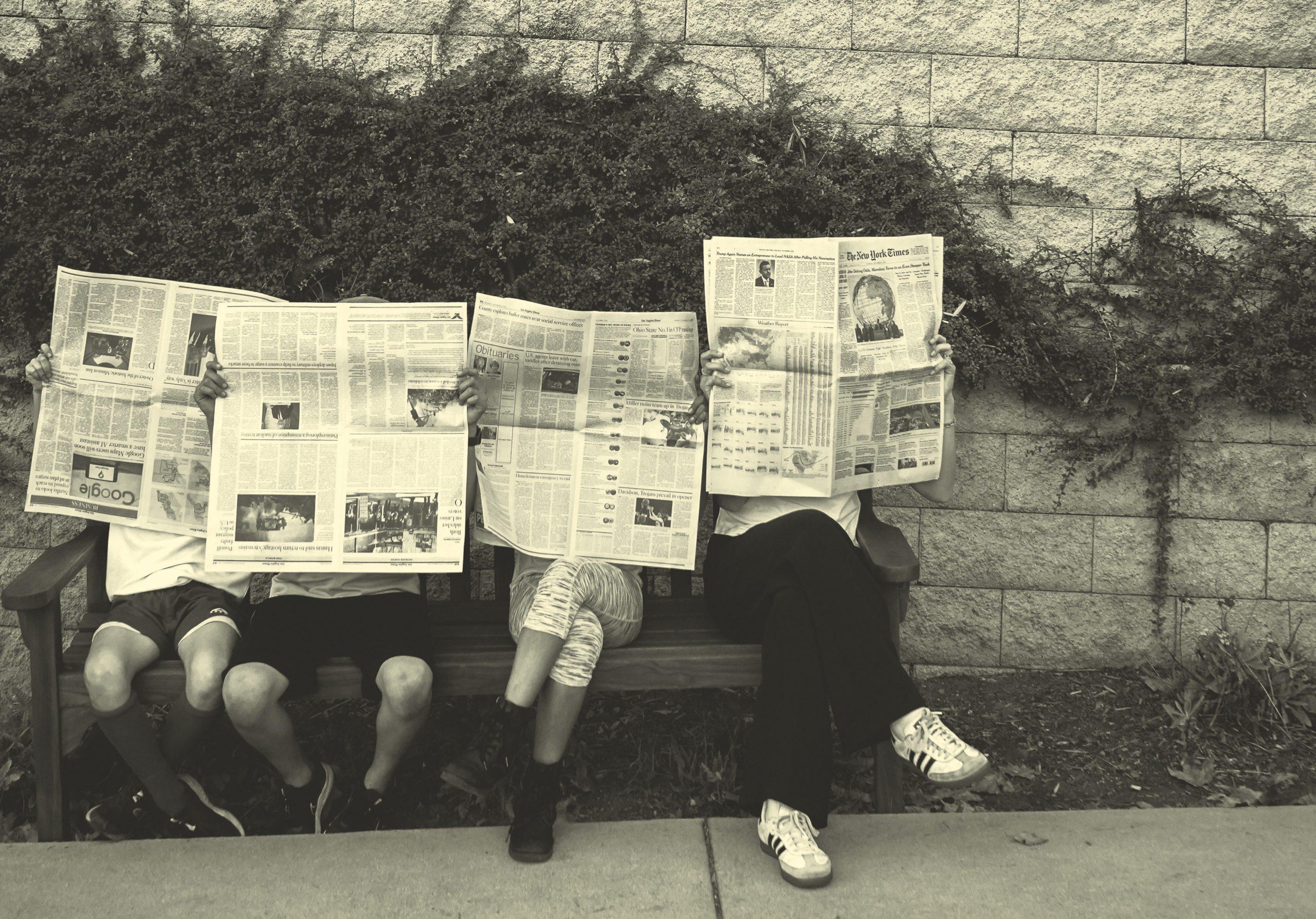
Photo by Betsy Burrow
Polarization. Right and left. Climate change.
These are words that don’t just appear in headlines, but words that have been a part of Generation Z’s (Gen Z’s) vocabulary since childhood.
Growing into an adult is difficult. Buying groceries, paying rent and cooking every meal for oneself is no easy task. But these issues amount to little when polarization is tearing families and friendships apart, and natural disasters have overtaken the world.
“Regardless of where you are, I think everybody has this sense that there’s something broken and that Congress isn’t really working,” Political Science Professor Karie Riddle said. “Our institutions are kind of just deadlocked, and things are failing, and everybody has anxiety over that.”
Several national polls have found that young people today are more “anxious about their lives, disillusioned about the direction of the country and pessimistic about their futures,” according to New York Times reporting. Three Pepperdine students shared their thoughts on their futures in a changing nation.
Senior Evan Inrig said he grapples with a never-ending sense of distress as he looks toward graduating this spring and becoming a “real adult” for the first time. Entering a world that feels so uncertain is daunting, he said.
“It feels like things are gonna go bad quick,” Inrig said. “It feels like a lot of pressure is building, and there’s a lot of short-term changes that I see trying to make some sort of stop, but I kind of feel like it’s a little too late sort of thing.”
Political Polarization
Riddle grew up in a family that prioritized being informed and up to date on current events. This sparked her interest in studying political science, she said.
However, this practice sometimes created an increased sense of anxiety.
“I think as I studied political science more, I was maybe even more concerned with what I thought was the erosion of some of our own democratic norms and principles,” Riddle said.
Riddle teaches a Women in Politics course that addresses several difficult topics. With issues like abortion rights and immigration policies, Riddle emphasized a common idea in politics that “the personal is political,” which she described as the tendency to think one’s struggles are individualized, when in reality, those struggles are tied to much larger social and political forces.
“Sometimes in the past, it’s been occasionally harder to get students to really see what that means,” Riddle said. “But now, in this climate where literally everything seems to be political, everybody’s like, ‘Oh yeah, let me tell you about all the ways that politics is infringing on my personal life right now.’”
Junior Molly Sams spent the Spring 2025 semester studying in Pepperdine’s Washington, D.C. program, where she interned for a Democratic representative on Capitol Hill. She started her internship the day after President Donald Trump‘s inauguration, which she said was an emotionally challenging time for her as well as the rest of the country.
The first few days after the current administration took over, Sams said the Senate received nearly 16,000 calls a minute, which took a personal toll on her.
“I personally was really discouraged, especially when we started getting all of those phone calls,” Sams said. “Because overall, the American people, I feel like a lot of people were really disappointed after the election. We just lost a bit of hope already.”
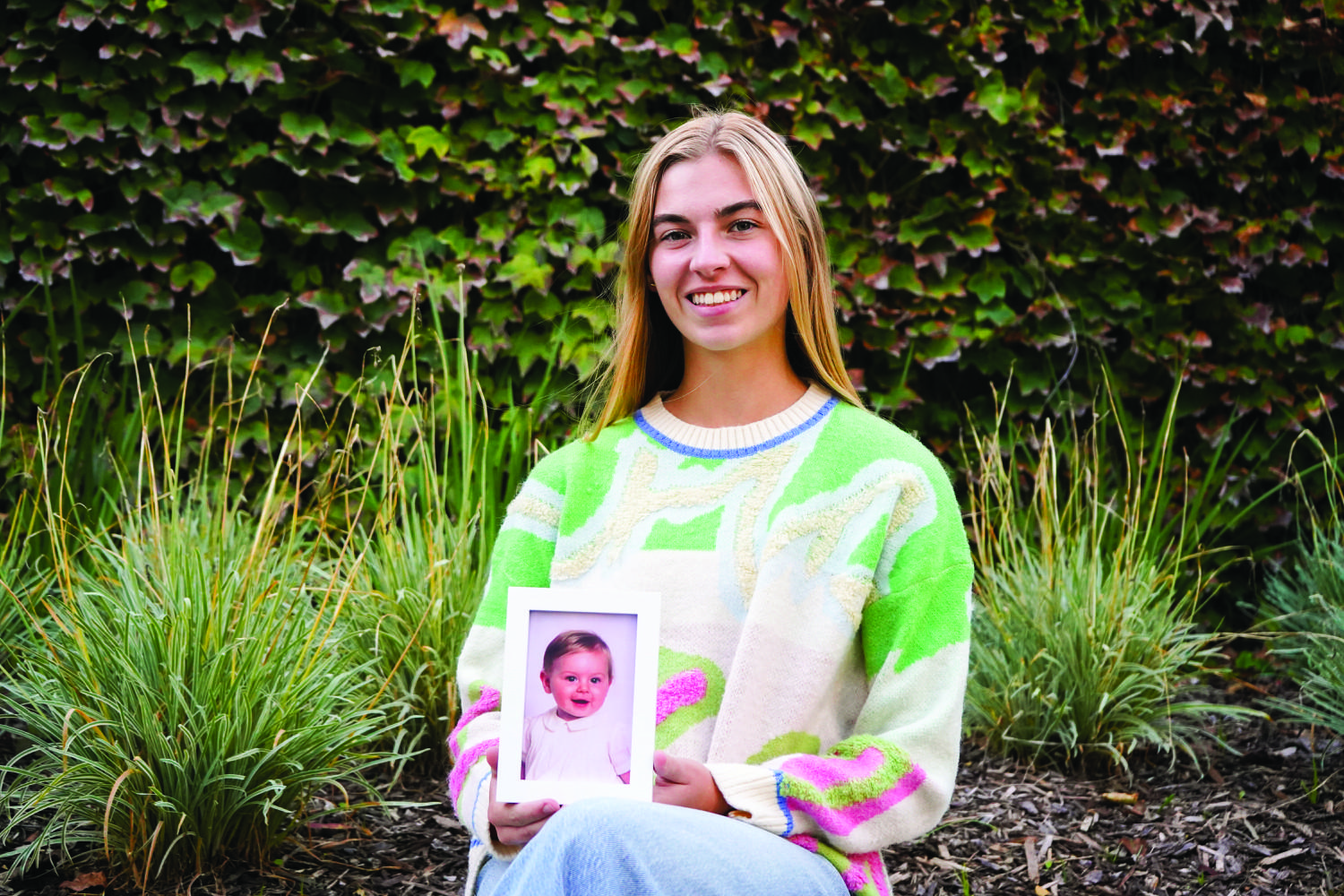
Junior Molly Sams poses with a baby photo of herself. Photo by Betsy Burrow
Though she was answering calls and talking to people who felt just as disheartened as she did, Sams said she felt the level of political polarization was growing. She believes that social media bubbles often lead people to become more closed-minded.
“When [people are] confronted with something that opposes their beliefs, they automatically consider it as incorrect, false information,” Sams said.
Inrig views social media as a severe issue dividing society, especially Gen Z. The way social media feeds its users information that solely aligns with posts they like or view for a longer amount of time creates an unhealthy online environment, he said.
“I think through social media, it can be very easy to just see one side of someone versus seeing a whole human being and talking to them as if they’re a whole human being in person,” Inrig said. “It is really good at polarizing people.”
Common Sense Media conducted a study, “The State of Kids and Families in America 2025,” that found more than half of parents and two thirds of children believe the mental health of children is just fair or poor, with social media being the dominant reason respondents pointed to.
Senior Emi Escobar serves as the president of Pepperdine’s Latino Student Alliance (LSA), which she said is a difficult role to hold during a time of fear within her community. Her primary goal is to create a safe space for people to be able to talk about issues such as Immigration and Customs Enforcement (ICE) raids and immigration policies.
Though she understands every student at Pepperdine grapples with their own challenges, she said being a member of the Latinx community during this time of mass deportations adds an extra layer of distress that no one else can understand.
Despite these struggles, Escobar said she reminds LSA members that regardless of their own stance on issues, being ignorant to opposing viewpoints only worsens polarization.
“I do think it is very important to still understand that people are human and that it feels like we’re very divided because of how easy it is to get outraged at things on social media,” Escobar said. “It leads to even worse compatibility with people, and there’s just no progress if no one’s talking about anything.”
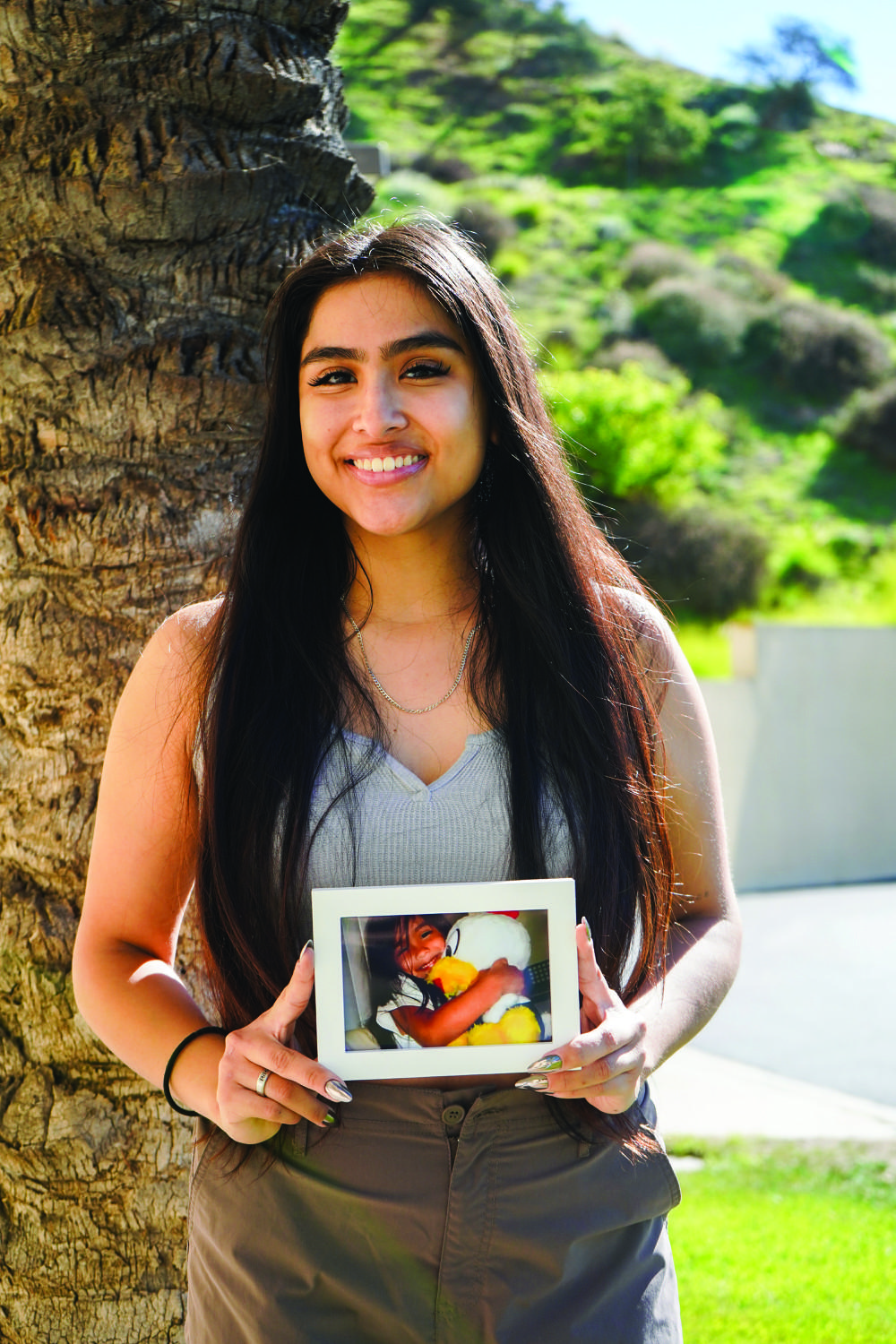
Senior Emi Escobar poses with a baby photo of herself. Photo by Betsy Burrow
All three students interviewed identified with more progressive politics. Members of the Pepperdine College Republicans executive board did not respond to requests for an interview.
Climate Anxiety
Climate anxiety, which Yale experts describe as “distress about climate change and its impacts on the landscape and human existence,” is an issue unique to current college students’ lives, as they are the first to grow up in a time when climate change is undeniably aggravating weather patterns and wildfires have become more frequent.
Chris Doran, Sustainability Program coordinator and Religion professor, said while being informed on issues like climate change is important, overconsumption of information can lead to increased anxiety.
“When you teach about the issue all the time, you’re probably not ‘doom scrolling,’ but you definitely are thinking about worst-case scenarios a lot more than the average citizen,” Doran said.
Doran said climate change and political polarization are linked.
“Climate-related issues have become so partisan, politically-driven and dividing our country when they’re just not in other countries,” Doran said. “It’s not that other countries are dealing with climate change better because I don’t think there’s a perfect place where that’s happening.”
While the recent election has sparked anxiety for a wide range of people for an array of reasons, Doran said there’s been an especially large shift in public perception of climate change, especially looking forward.
“The shift in federal government after the 2024 election has discombobulated a lot of us for a lot of different reasons,” Doran said. “We’re definitely in a full-blown climate denial mode, and I think that’s causing its own type of anxiety for students to think about jobs and futures. Climate deniers now have a far bigger microphone.”
Hopeless
Escobar said if she could encapsulate her feelings about the current state of the U.S. and world, it would be “hopeless.”
“That’s the word I’ve been grappling with lately,” Escobar said. “Whenever I see something come up, I go, ‘We’re hopeless.’”
A main contributor to her feelings of hopelessness stems from seeing people protest but seeing no real change, Escobar said.
“It’s weird to me because I feel like so many people, more than ever, are standing up against [these issues] and, in their social circles, recognizing that they can be a safe space, but no real action is happening,” Escobar said. “And I don’t know if that’s as a result of the pushback from Trump and his government, or if we’re just not doing enough, but I don’t know.”
The current federal administration dismantled the United States Agency for International Development (USAID) soon after Trump came to office, Riddle said. Several of her students are drawn to working in that sector of politics, and she felt dumbfounded as to what advice to provide them with.
“I was teaching two sections of my Global Development course, and we were just about to talk about foreign aid, and I have all these things that I’m prepared to say about USAID and its role in the world,” Riddle said. “And then I’m like, ‘Well, wait a minute, it was dismantled last week, so what do I say now?’”
When the current administration took over, Sams said she most prominently remembers the mass influx of executive orders signed in the first few days. When hearing others’ sense of despondency and realizing her own, Sams realized the United States was no longer the country that many people her age grew up believing it to be.
“I felt really sad for my country because America is a country of opportunity,” Sams said. “To hear all of these stories about opportunity being ripped away from the individuals that live in our country and came to our country for those reasons — it was truly heartbreaking.”
Coping
Though these issues are intense and difficult to grapple with, Riddle and Doran both accentuated the importance of leaning on one another during trying times.
“Creating those safe spaces are important and processing that with students because what the research shows is that climate anxiety is not a pathological condition or a medical condition,” Doran said. “So, in group models, just talking about it can alleviate stress much differently than say, someone with diagnosable anxiety or depression or something else.”
Doran works with several faith communities to educate others about climate change while also helping people approach the issue from a Christian perspective. A difficulty many congregations face is the generational differences over belief in climate change.
“I’ve tended to say that if you have anywhere from 9 to 18-year-olds in your congregation, they’re probably dealing with [climate anxiety], whether they want or are able to articulate it or not,” Doran said. “If you as a person of faith, as a leader in their community are not acknowledging it, then you’re not creating a chance for trust to be built, and you’re just being dismissive of something that is pretty serious.”
With teaching such heavy topics for an entire semester, Riddle said she tries to provide her students with resources at the end of the course. She is not certain it helps with students’ anxiety, but she feels it is necessary after being “down in the depths” for several months.
“I probably feel more anxious while I’m teaching that class — I’m guessing they feel more anxious when they’re taking it too,” Riddle said. “But I think you can’t do anything in a world where you don’t know what’s happening, so I think you need to know — I don’t think it’s helpful to put your head in the sand.”
Similarly to Doran and Riddle, Sams emphasized the importance of engaging in conversations with people from a variety of perspectives and being educated on current issues.
“If I understand what’s going on, I’m not afraid of the issue as much,” Sams said. “I understand it, but I can still be upset about it.”
Inrig said that as passionate as he is about these issues, it can sometimes feel difficult to bring up these conversations, especially at Pepperdine.
“I’m not a very loud-spoken individual to other people about my political ideologies, and sometimes I wish I had more courage to talk to people about ideas and stuff,” Inrig said. “I think it’s a very sensitive line because people can just outburst at any moment.”
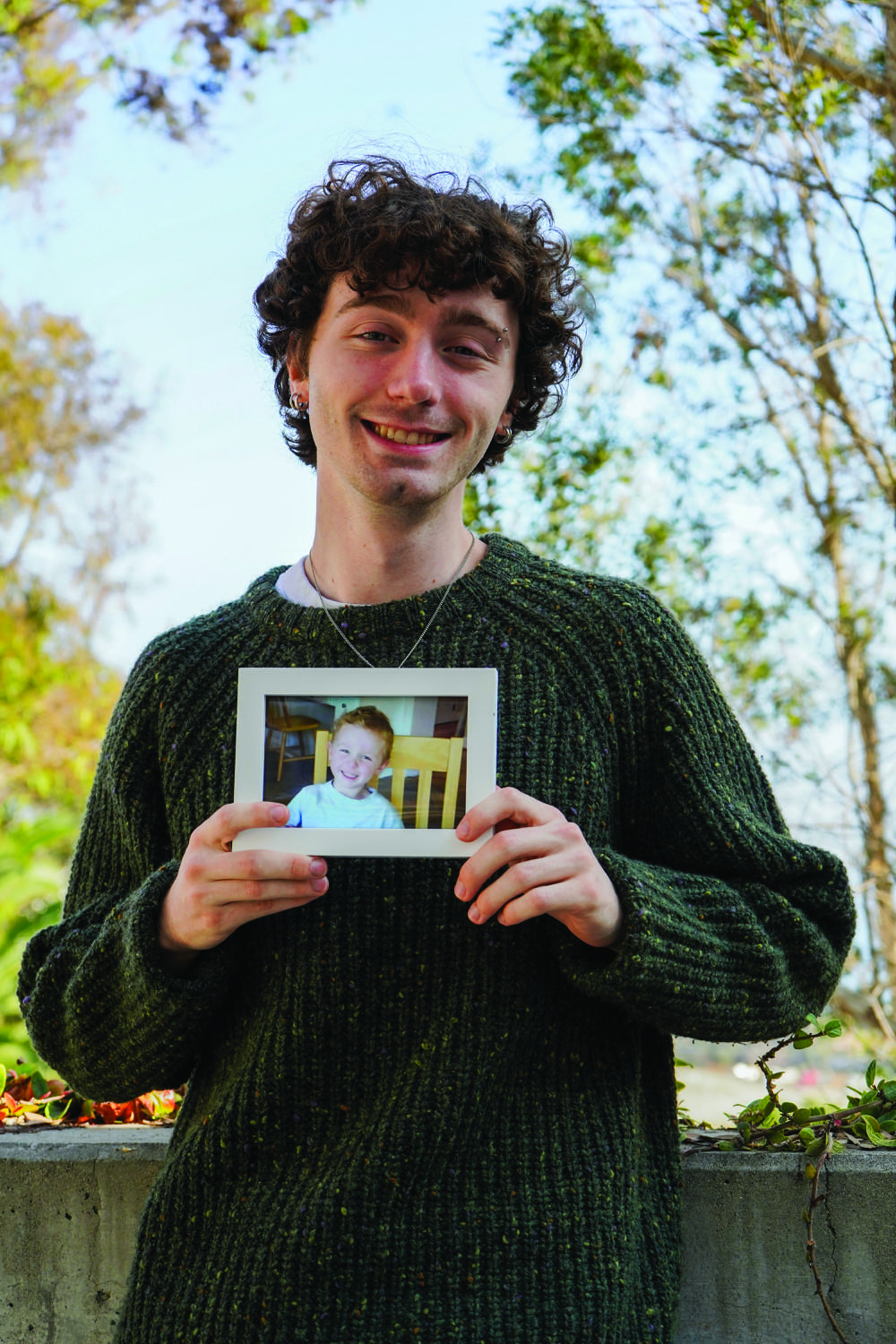
Senior Evan Inrig poses with a baby photo of himself. Photo by Betsy Burrow
While having these conversations can be intimidating, Escobar reiterated the importance of being educated.
“They always say, ‘Trump hates the educated,’” Escobar said. “We try to be as educated as possible. We try to actually have conversations that will impact ourselves, pull from our class material, pull from whatever we remember and use the information we’re getting for the better.”
An Uncertain Future
According to a survey by Gallup and the Walton Family Foundation, members of Gen Z are “significantly less likely to rate their current and future lives highly than millennials were when they were the same age.”
Pepperdine students are reflecting this national trend, believing their futures may be doomed.
Looking toward the end of their Pepperdine journey and into the beginning of “the real world,” Escobar and Inrig, though both American citizens, said they have both considered leaving the U.S.
“The idea of there being more stability in a country, like say Germany, where their economy is not currently as strong as the United States, but it’s not as remarkably unstable as the United States, right now, the idea of living somewhere else does seem more appealing to me,” Inrig said.
As the government continues to look more and more unstable, Sams, similarly to many of Riddle’s students, is realizing she may not be able to go into the field she always foresaw.
“For me, I don’t know if I can give that many years of my life to public service like I would like to do,” Sams said. “I’m a little fearful, especially as a lot of states are looking toward redistricting and gerrymandering, how many Democratic seats are going to be available, which would directly affect whether or not I can get a job.”
Beyond her own future path, Sams said she is unsure whether or not she can put a child through such trying circumstances.
“It just keeps building and building, and what does life look like in 20 years if it continues to build at that rate?” Sams said. “I don’t know if I can have a child that would have to see 80 more years of this. I don’t want to be responsible for bringing something into this world that’s going to watch our world die.”
As difficult as this time is, Doran believes it will not end any time soon. He said he would encourage students to support one another to face what comes next together.
“It’s going to feel very, very difficult for a while,” Doran said. “We’re going to have to rely on each other in an even more serious way because it’s going to be a much rougher, bumpier ride with this particular federal administration.”
_________________________________
Follow Currents Magazine on X: @PeppCurrents and Instagram: @currentsmagazine
Contact Amanda Monahan via email: amanda.monahan@pepperdine.edu or via Instagram: @amandamonahanjournalism