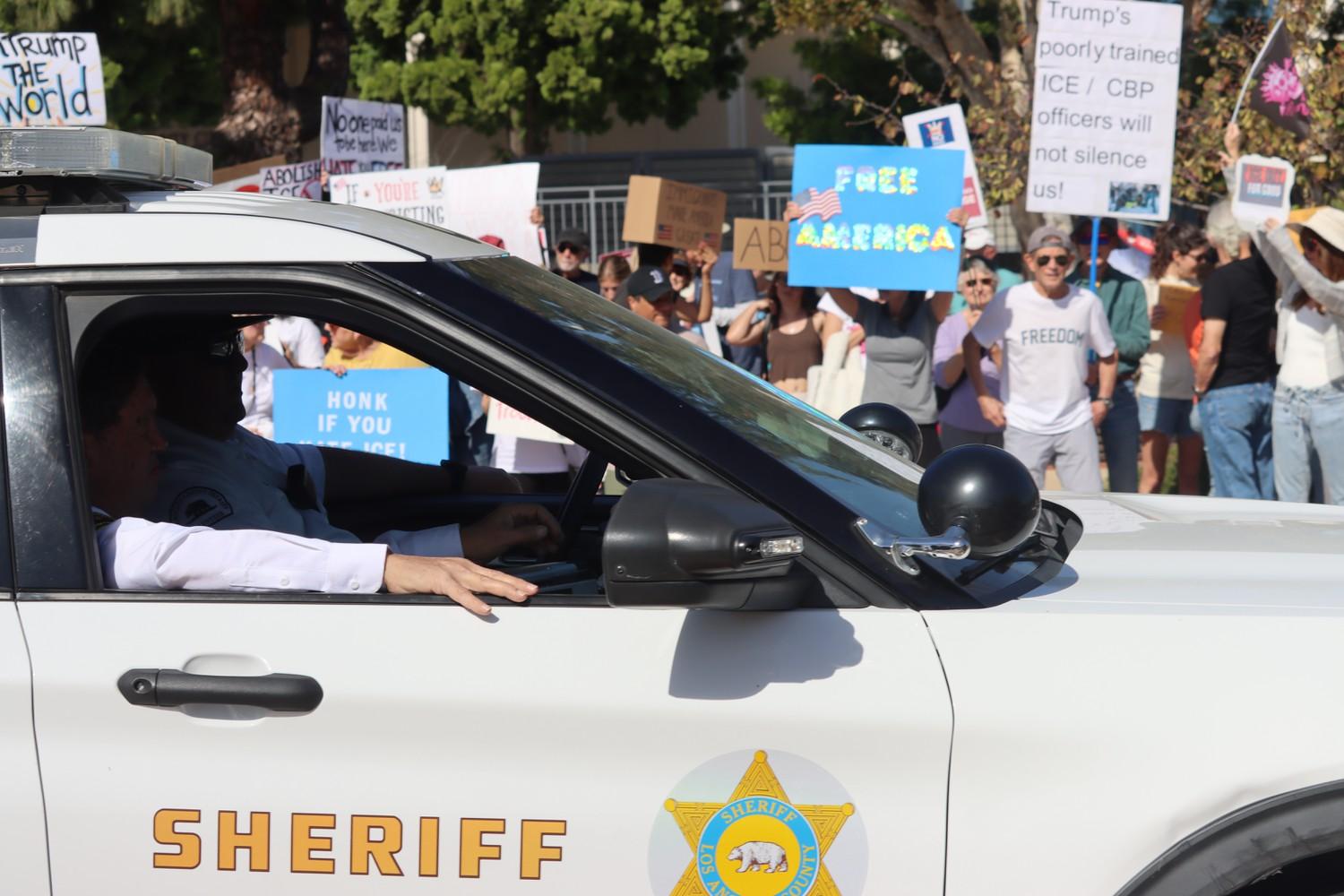
Local law enforcement drive by an anti-ICE protest outside the Malibu Library on Feb. 1. The Malibu Democratic Club organized the protest. Photo by Katherine Lytle
Censorship and free speech are often a hot topic on college campuses, and Pepperdine is no exception. Over the past academic year alone, students across campus have debated free speech issues, including art censorship and TPUSA’s deportation-themed Valentine’s Day cards.
In the midst of this campus climate, members of Pepperdine College Republicans, Pepperdine College Democrats and Pepperdine’s Turning Point USA chapter talked about what free speech means to them.
“I don’t think that it [free speech] should be abused or used for hate or anything in that realm,” said Anniah Smith, president of Pepperdine College Democrats and Graphic staff member. “It’s something that carries a lot of weight, and you have to be responsible when you’re engaging in it.”
What Is Free Speech?
The First Amendment to the U.S. Constitution was ratified Dec. 15, 1791, along with nine other amendments, according to National Archives. These amendments formed the Bill of Rights, and would serve as a basis for the liberties of Americans throughout history. The First Amendment reads:
“Congress shall make no law respecting an establishment of religion, or prohibiting the free exercise thereof; or abridging the freedom of speech, or of the press; or the right of the people peaceably to assemble, and to petition the Government for a redress of grievances.”
Pepperdine College Republicans
Audrey Riesbeck, president of Pepperdine College Republicans, said freedom of speech is one of the most important things in the U.S. Constitution.
“It’s [free speech] the idea that we can have a free and open civil discussion without fear of punishment,” Riesbeck said. “James Madison — he put free speech in the First Amendment because he felt that public opinion should be sovereign over the government.”
Even if a person doesn’t agree with somebody, there’s always something to learn, Riesbeck said. She believes people have the right to tell others if they think they’re wrong, and people have the right to try to understand where others are coming from.
Riesbeck said she doesn’t think anybody is necessarily afraid of speaking at Pepperdine.
“The school has created a culture where people feel like they can have an open discussion — at least, I hope people feel that way,” Riesbeck said.
Riesbeck said there are certainly people on campus who don’t respect others’ free speech, but for the most part, people are pretty good at having a respectful discussion.
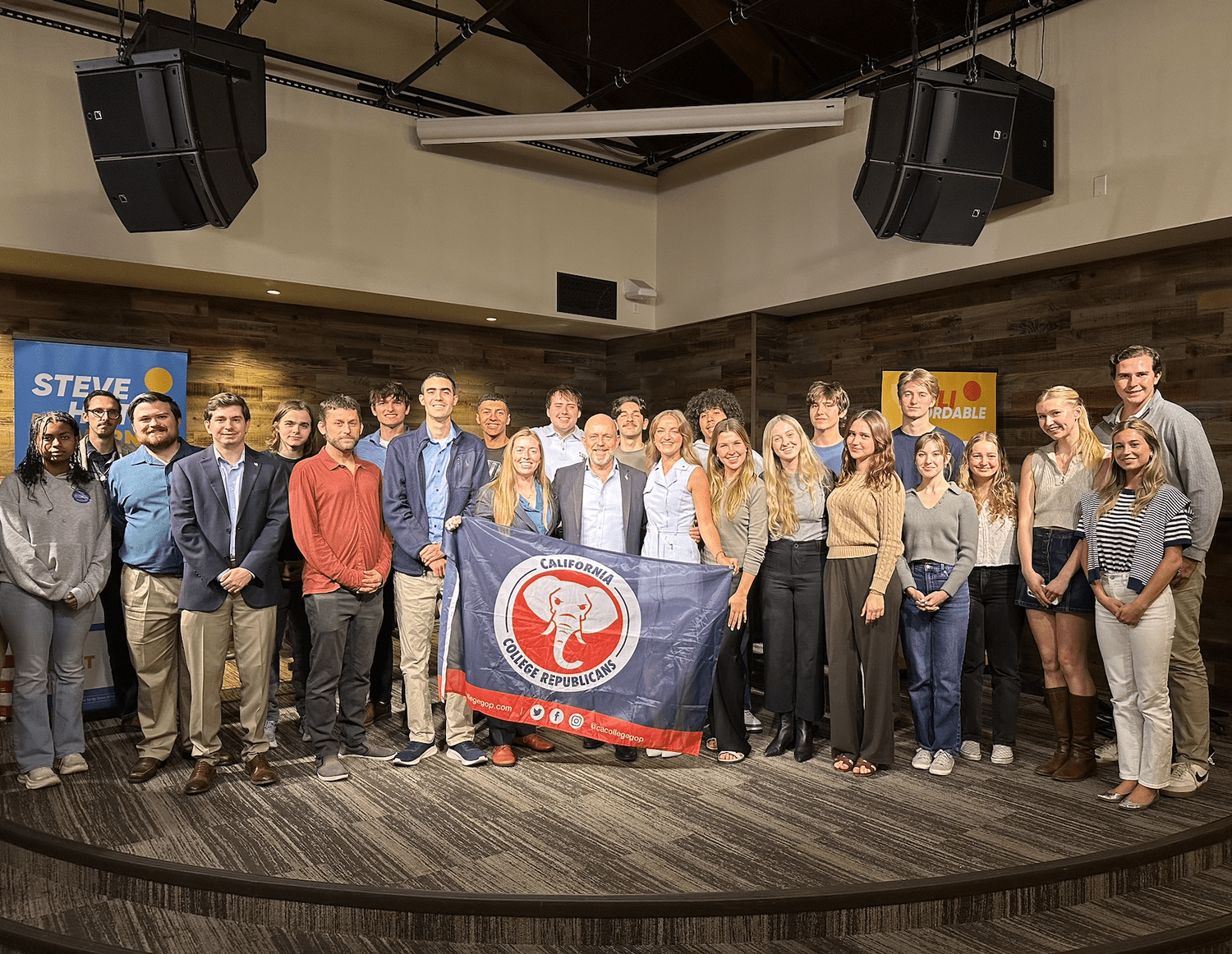
Pepperdine College Republicans host California gubernatorial candidate Steve Hilton in the Lighthouse on March 10. Pepperdine College Republicans started in the 1970s, according to previous Graphic reporting. Photo courtesy of Audrey Riesbeck
Pepperdine College Democrats
Alternatively, Smith said it’s sometimes really hard to engage in free speech on campus if the speech you’re promoting isn’t popular.
While Smith said she believes Pepperdine College Democrats has never had an administrator or faculty member censor them, she believes they’ve implicitly been warned against promoting certain things. She said former President Olivia Berryman had to jump through a lot of hoops in order to protest when conservative intellectual Jordan Peterson came to campus for the President’s Speaker Series on April 7, 2025.
Alumna Cassandra Barron (’25), former Graphic staff member and former president of Pepperdine’s GSA and Feminist clubs, helped organize the protests. Barron said she met with associate deans of Student Affairs and Student Activities about how they could voice concerns, and they were told about the University’s Time, Place, and Manner policy.
Students who wanted to protest had several demonstration location options, both of which were out of sight — closer to Raleigh Runnels Memorial Pool — of the Firestone Fieldhouse entrance attendees used. Additionally, Barron said students participating in an on-campus protest would have had to check in with their student IDs.
Students were told to be be careful what they put on signs, not to damage anyone’s reputation and not to to put Peterson’s name on a sign, Barron said.
Due to all of these obstacles, the protest organizers ultimately decided to move their demonstration off campus, near the University entrance at John Tyler Drive, Barron said.
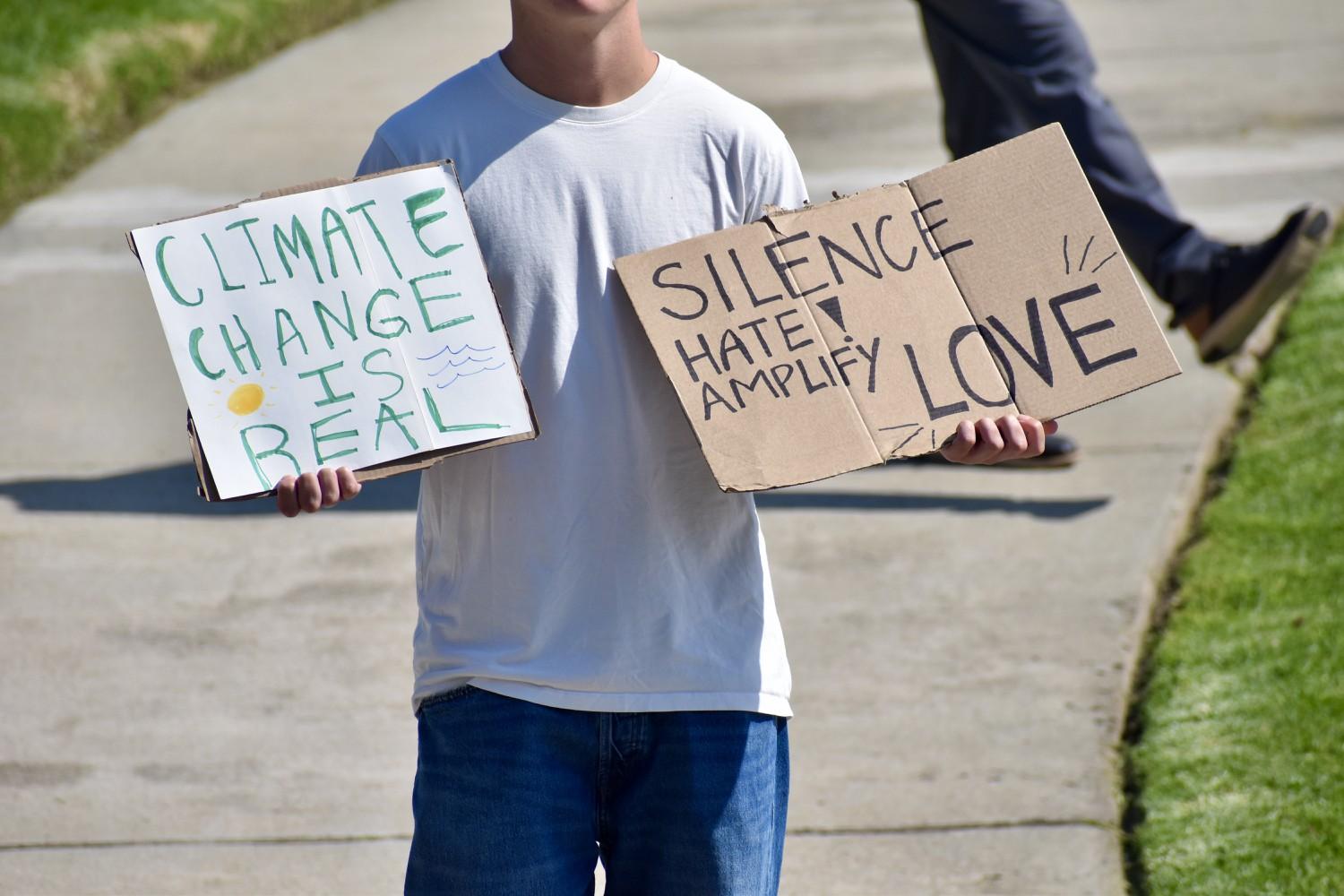
A student protests conservative intellectual Jordan Peterson’s campus appearance near the John Tyler Drive and Pacific Coast Highway intersection April 2025. Students decided to move the protest slightly off campus. File photo by Mary Elisabeth (’25)
Smith said the First Amendment was created to protect speech, but that doesn’t mean it’s a way for people to be disrespectful to each other. Smith believes Pepperdine College Democrats tries to make that evident in the way they engage in free speech.
“Free speech is really important to me,” Smith said. “I’ve always viewed free speech as a story of gaining dignity and respect for disenfranchised people. I think I’ve always viewed it through the lens of advocacy.”
Smith said free speech is a framework to stand against oppression, and throughout history, the First Amendment has helped people gain back their rights or their voice. She also believes free speech is a responsibility, not a weapon, because there are limits on free speech.
Smith said the barometer for respect has lowered significantly in this country because of the Trump administration. She said a lot of its rhetoric is hateful and can be harmful to certain people groups such as immigrants, people of color and women.
On campus, there can be a tendency to forget the humanity behind people and engage solely in politics without remembering people have souls and dignity, Smith said. Smith sees respect of human belief, autonomy and dignity as the central tenets of America, and hopes Americans can circle back to those core values rather than the polarization and hatred that’s dividing them.
Pepperdine Turning Point USA
Sophia Markle, president of Pepperdine’s TPUSA chapter, said when people are unable to listen to people they disagree with, that’s when people dehumanize others. Markle, a Political Science major and Journalism minor, is a guest contributor to the Graphic.
This country was founded on the ability to have free speech, and Markle said she believes it’s important to ground ourselves in free speech, but to also not hate or impose violence onto others.
“We think everyone deserves a voice on both sides,” Markle said. “Every belief you have — you deserve a voice, and it should be said.”
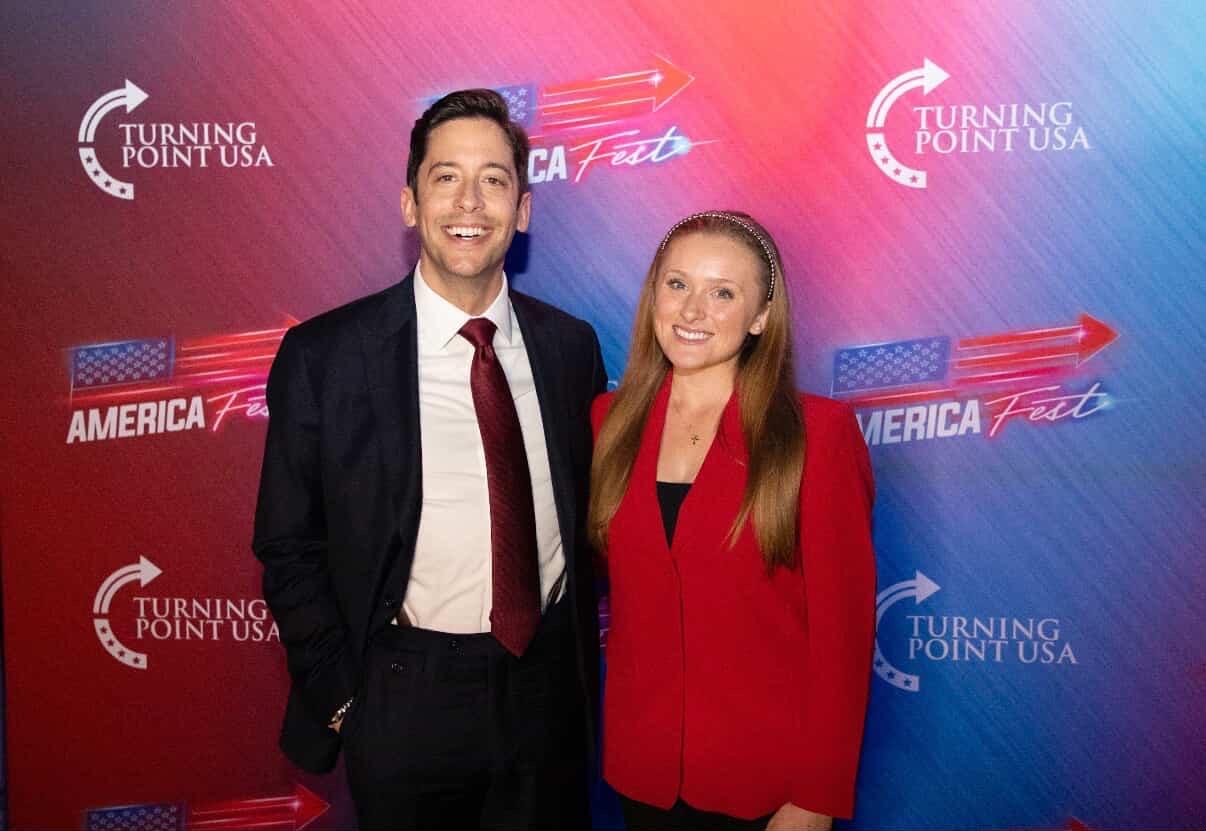
Sophia Markle poses for a photo with conservative political commentator Michael Knowles at AmericaFest on Dec. 21. AmericaFest is an annual convention held by Turning Point USA. Photo courtesy of Sophia Markle
Markle said the TPUSA chapter wants all voices at their meetings to have and foster civil discourse.
On March 25, Pepperdine TPUSA hosted The Leadership Institute for a workshop that aimed to teach attendees how to have good conversations when people disagree with them and how to respect their opinion and listen. The Leadership Institute identifies, recruits, trains and places conservatives in government, politics and the media, according to their website.
Pepperdine TPUSA’s biggest goal as an organization is to spread God’s love, teach people who God is and let their faith into their politics, Markle said. Their second biggest goal is free speech.
Markle said Pepperdine TPUSA has come across censorship on campus, but declined to elaborate.
__________________
Follow the Graphic on X: @PeppGraphic
Email Nick Charkhedian: nareg.charkhedian@pepperdine.edu or via Instagram: @nickcharkhedianjournalism