
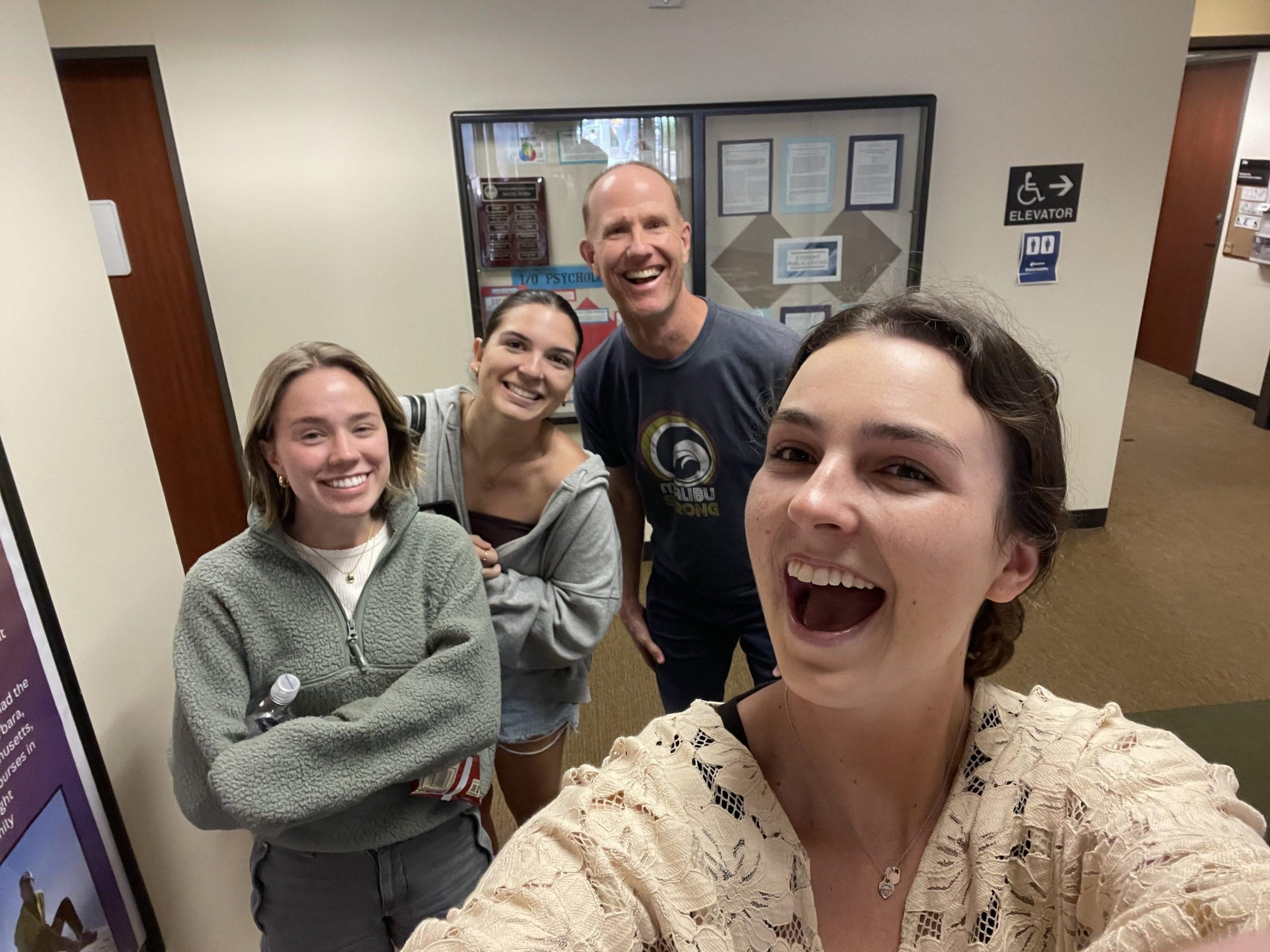
Professor Michael Folkerts (center) poses with grad students Avery Encalade (left), Kelsey Carlton (second from left) and Sabrina Krebs (right) on April 13. Folkerts said students should ask upperclassmen for class advice. Photo courtesy of Michael Folkerts
Before attending the first day of class, students said they had already formed judgments on their new professors through a popular online resource: Rate My Professors.
As a new semester begins at Pepperdine, students tend to rely on the unofficial rating site to shape their academic decisions, using the reviews on Rate My Professors to gauge workload, teaching style and even their professors’ personalities before meeting them. While several students said the platform can be a planning tool, professors said they doubt its accuracy.
“Some students give pretty helpful context for my class — what they liked or didn’t like,” Religion Professor Laura Estes said. “Other students don’t give rationale for why they liked the class or didn’t like the class — or sometimes they write information that’s untrue.”
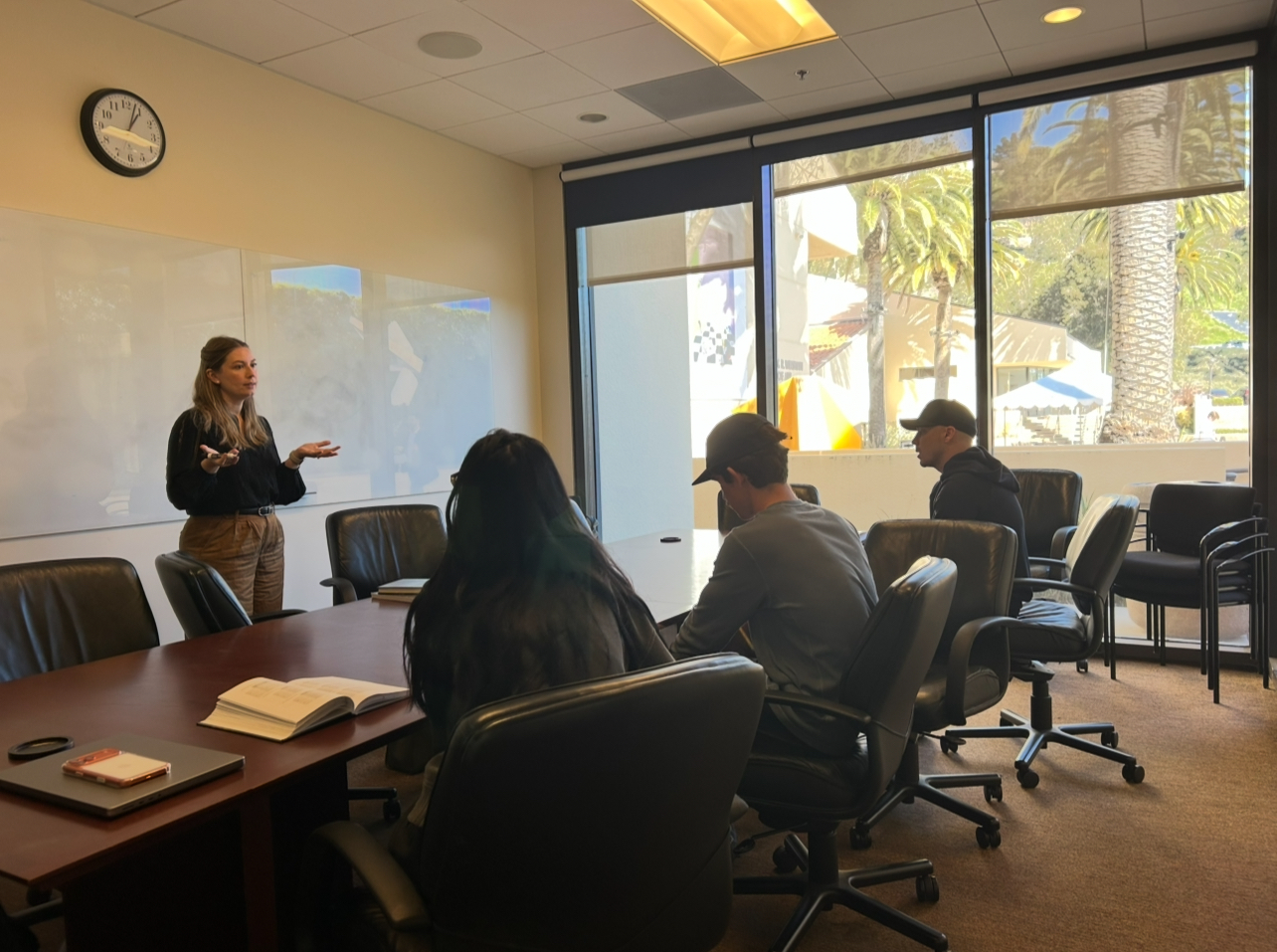
Professor Laura Estes teaches a class in the Appleby Center on Jan. 16. Estes said she is surprised students view her as a difficult grader. Photo by Annslee Mitchell
Student Opinion
Students said Rate My Professors can be helpful in selecting classes, especially as a first-year student, but the information and ratings can be unreliable.
“I prefer to ask people who’ve taken the classes,” sophomore Alana Mendoza said. “In some ways, it [Rate My Professors] is biased. For Pepperdine, not a lot of our professors are even on it. I had a difficult time finding the professors that were actually teaching my classes.”
The website can be a helpful tool when picking classes for the new semester, but Mendoza said students should take the written comments with a grain of salt.
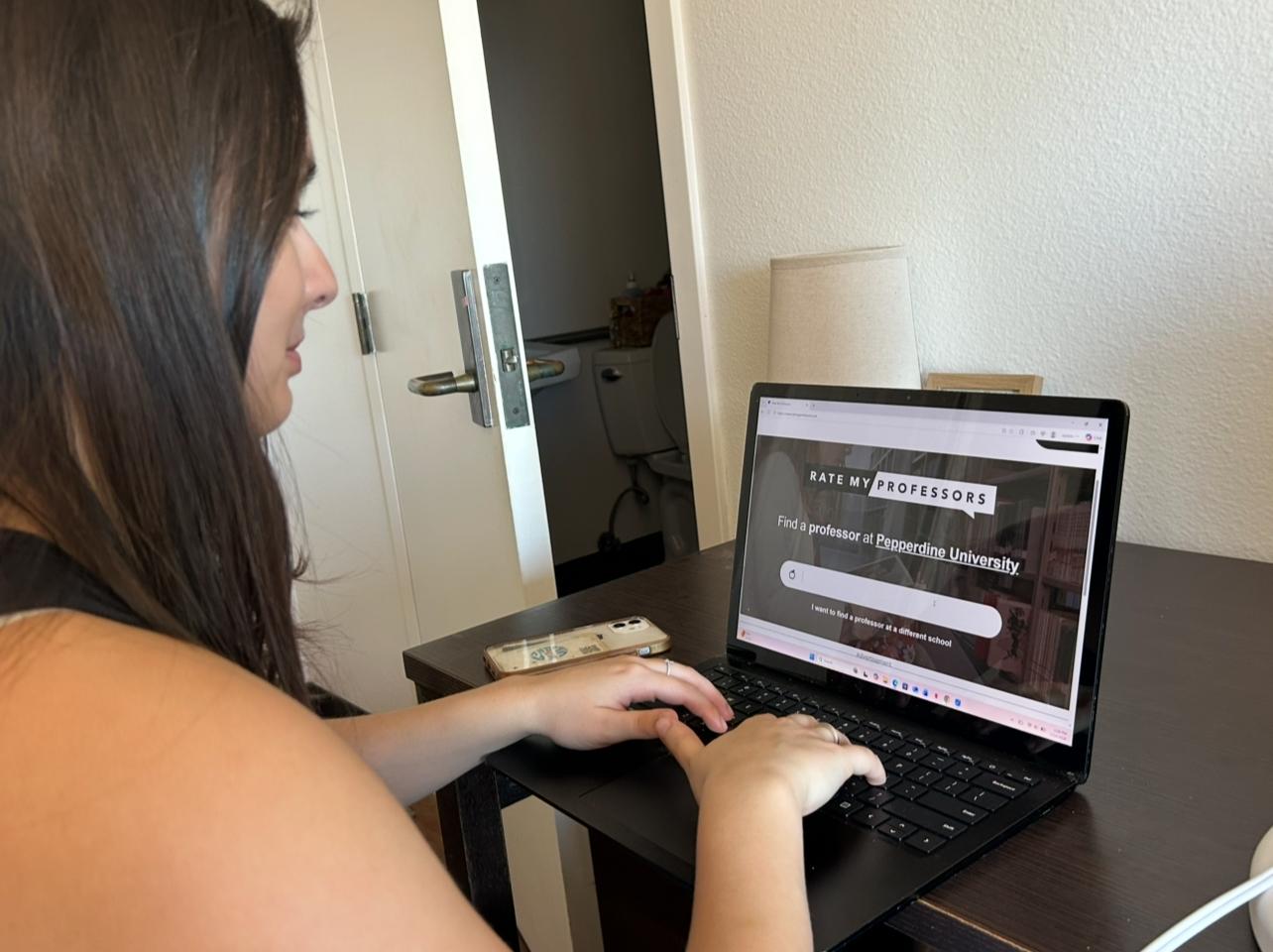
Sophomore Alana Mendoza checks Rate My Professors in Rockwell Towers on Jan. 14. Mendoza said she tends to like her professors regardless of how they are rated on the website. Photo by Annslee Mitchell
Data
A study published in 2021 by the International Conference on Computing and Data Science found a negative correlation on Rate My Professors between perceived class difficulty and teaching quality ratings. This means the more difficult a class, the lower the professors score on the platform.
Psychology Professor Michael Folkerts said students should be wary of trusting the website’s data.
“In psychology, we would very much be concerned with reliability,” Folkerts said. “Maybe a lot of negative scores were just from one semester, and the weight of that semester is stopping a professor’s average score from going up.”
Students should consider the motivations behind the people who post reviews on Rate My Professors, Folkerts said.
“Usually, you’re motivated out of frustration or you’re motivated because you had a wonderful experience,” Folkerts said.
Estes said she has noticed evaluations are often polarized.
“It does seem to be either heavily skewed at the five or at the one,” Estes said. “Not a lot of in-betweens, but probably most professors aren’t fives and aren’t ones. We mostly fall in the middle.”
Rate My Professors also lacks the regulations needed for validating the authenticity of reviewers, undermining its reliability for student-led evaluations, as reported in the International Conference on Computing and Data Science study.
Folkerts said there is no guarantee a “student reviewer” is even a student.
“Is there something that you have to clear that officially recognizes you as a college student in the United States?” Folkerts said. “Do you have to register? That is a question I have. Who has access to Rate My Professors? That’s another variable.”
Estes said she was also concerned over the limited sample size of students who submitted reviews.
“We’re talking about a sample size of 18,” Estes said. “I’ve taught 650 students since I’ve been here, just in Religion 100.”
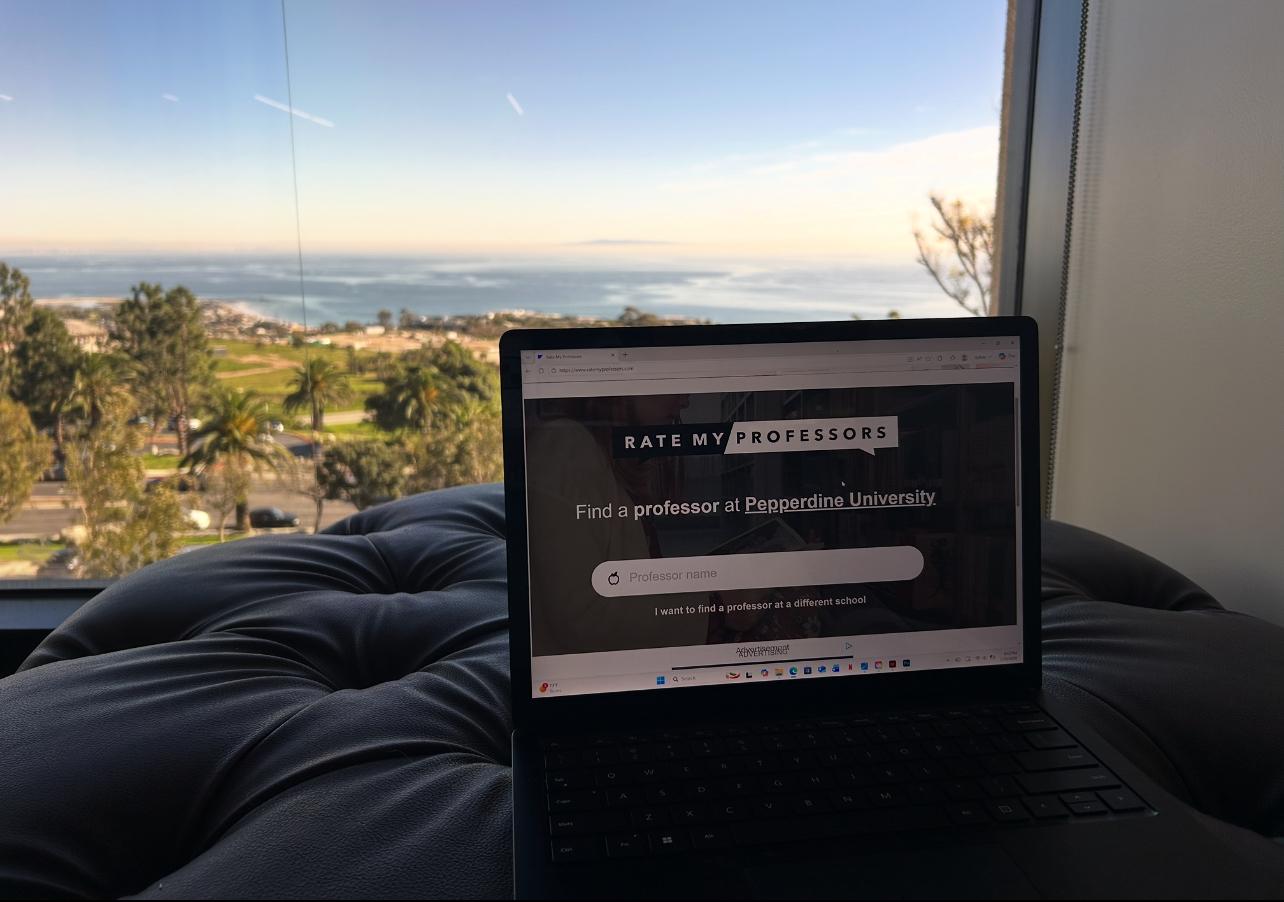
A computer displays the homepage of the Rate My Professors website in Payson Library on Jan. 16. Alana Mendoza said students often exaggerate when writing reviews. Photo by Annslee Mitchell
The study found the lowest average ratings appeared among female professors in STEM fields, which suggests the presence of gender bias among reviewers. For 17 years, the website also featured a “hotness rating,” which was not removed until the site faced widespread criticism for including a metric that doesn’t correlate with teaching proficiency, according to Inside Higher Ed.
Estes said she was happy to be labeled “caring” by student reviewers but noted the tag seemed more likely to be applied to a woman than a man.
“It does strike me that I was described as caring,” Estes said. “I also would describe myself as caring. I value that, but it is one of those terms that I find is much more often applied to women professors than it is to men professors.”
Using Judgment
Anonymous rating can be done responsibly, Folkerts said. Although the website is a scientifically invalid measure, students can still learn about their potential professors from the platform if they utilize caution.
For students seeking a general idea of what their upcoming professor may be like, Estes said she believes the website can be used thoughtfully.
“You should probably filter out a lot of the uncritical and also the too critical,” Estes said. “Try to see the things that people are specifically pointing to, recognizing that sometimes people are just angry about something in particular that might be specific to that student.”
She said talking to older students is a better way to learn about Pepperdine professors.
“It [Rate My Professors] is not where I would suggest students go primarily for recommendations,” Estes said. “They’re much more likely to get good, nuanced recommendations from actually having conversations with people, mostly because then you have some sort of context.”
___________________
Follow the Graphic on X: @PeppGraphic
Contact Annslee Mitchell via email: annslee.mitchell@pepperdine.edu