

A pair shares a meal in a park in Venice Beach, Calif. Food can bring people closer together in an intimate setting. Photo by Melissa Houston
Ali De La Torre, a third-year student at UCSB, said even as a self-sufficient adult, she can still recall the fond memories she shared with her grandmother in the kitchen.
As she prepares her own meals, De La Torre always thinks about the feeling of sitting on a little step stool next to her grandmother while she cooked frijoles or prepared chilaquiles. For as far back as she can remember, De La Torre used food as a means to connect with her family and the numerous loved ones in her life.
“It’s really, really heartwarming because all of that is just ingrained in my brain,” De La Torre said. “There’s almost a sense of comfort and warmth when I make those same things again that gets brought back up.”
People find ways to connect through a variety of platforms. Music, conversation and similar interests are all ways individuals can be brought closer together through a shared bond.
But overarching all of these connective sources is the intimacy found through food.
Having a meal with someone else can turn into a lifelong connection, as the simplicity of dining together can bring about an unknown world of pure friendship.
“People are their most honest and raw selves when they share a meal,” De La Torre said. “It’s something we’ve done since before we could even talk — we were cavemen. We’ve always joined together in group settings and eaten meals together, so there’s something really cool about that.”
Building Community
De La Torre said a sense of honesty has helped her become closer to her community. While navigating the variety of opportunities offered in Santa Barbara, she was able to build closer connections through food.
“When you do share a meal, you are in a very vulnerable state,” De La Torre said. “There’s a sense of comfortability that can be fostered over a meal.”
In smaller communities, such as that of Pepperdine, there is a unique intimacy shared over meals. Professors often invite students to their houses for dinner, allowing a closer relationship to form between teacher and student.
Hung Le, senior vice chancellor of the University, was positively impacted by this experience during his undergraduate time as a Wave.
“It would be a rare thing for me to not be in someone’s home on a Sunday during the whole time I was a student,” Le said. “That’s when I felt like I found a family here. It was so natural for me to have table fellowship with my faculty, my staff, my church, and that meant a lot to me.”
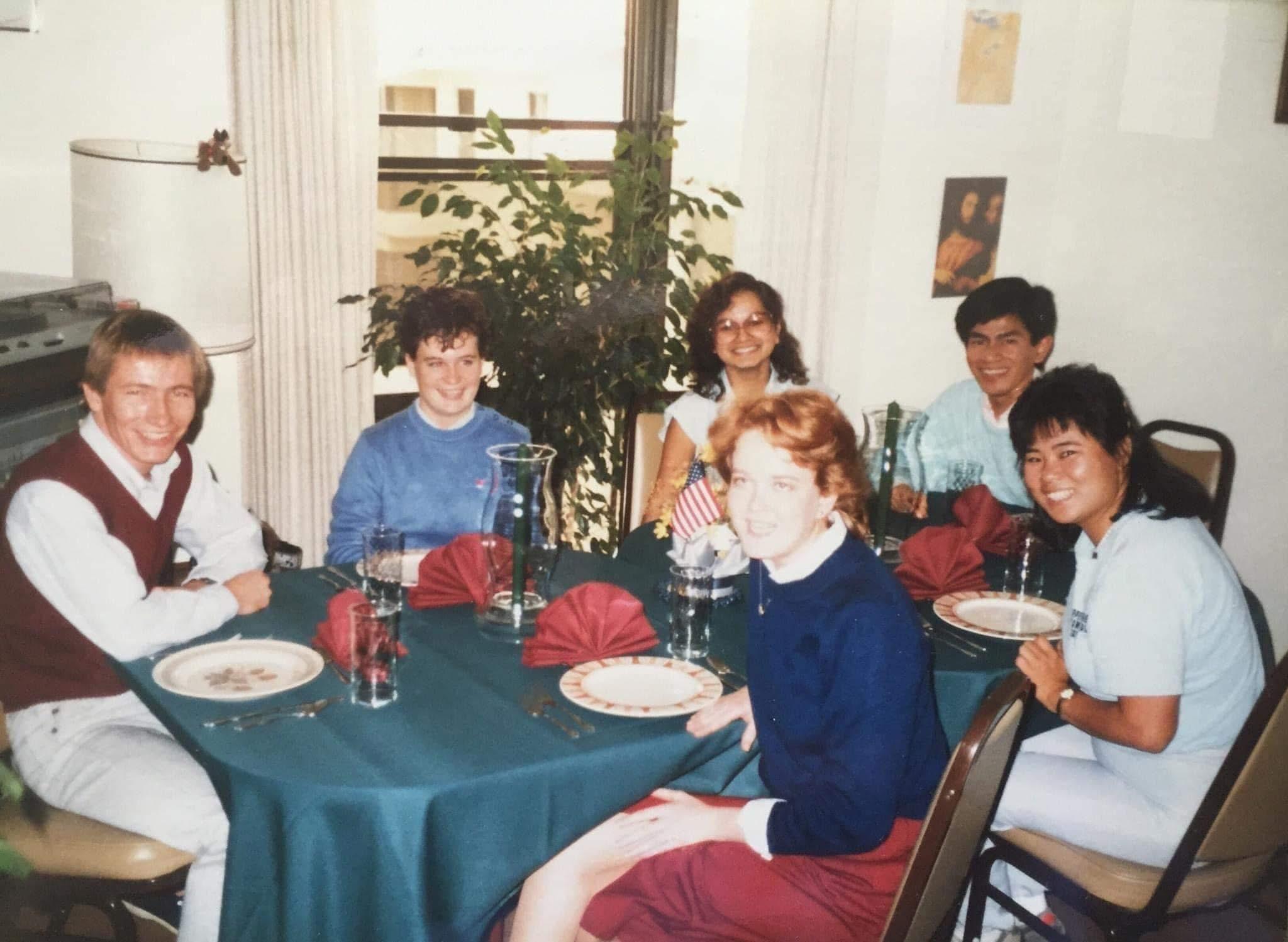
Hung Le (back right) shares a meal with friends for Thanksgiving dinner in 1985. The woman to Hung’s left eventually became his wife, Corinne, although they were just friends in Le’s Lovernich apartment in this photo. Photo courtesy of Hung Le
Now as a prominent leader on campus, Le said he likes to spread this joy to the current students. Although he was involved in a variety of groups on campus, he said he always felt like food was the way he was able to build his most meaningful connections.
“Food is a uniter,” Le said. “Often when we think of a meal, the food is the focus, but in our home, the focus is really on each other. Being in someone’s home — that’s a feeling that is so special but hard to describe. I want to give to our students what was given to me.”
Lisette Isiordia, Seaver alumna of 2023, former staff member of the Graphic and now assistant director of Alumni Engagement, said her undergraduate experience was shaped by the Le family. Particularly in her senior year while navigating a world of chaos — finishing out college and trying to figure out what was in store for the future — Isiordia said she found a safe space in the dinners she had at the Le house.
“It was nice to have a common place to walk in and have dinner and just have shared time and shared space with people,” Isiordia said. “I always appreciated the intentionality behind those small moments.”
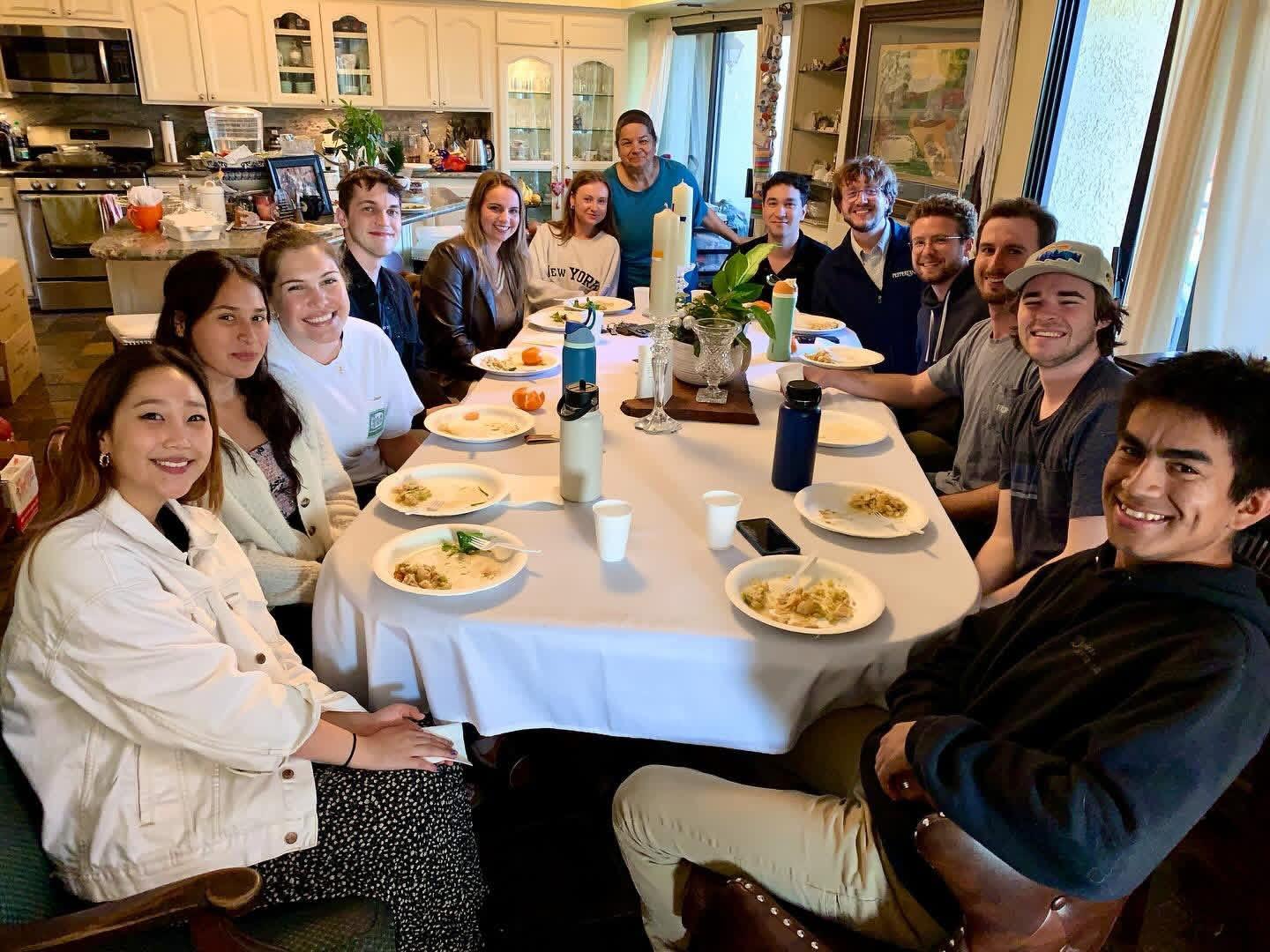
Lisette Isiordia (second from left), an alumna and former Graphic staff member, joins a meal hosted by Hung and Corinne Le in their on-campus house. It is typical for the Le family to invite current and former students and faculty to their house to share a meal together. Photo courtesy of Lisette Isiordia
Since Le began working for the University in 1990 as associate director of Campus Life, he has taken sharing meals to a whole new level. Each year, Le and his family open their house during the holidays for the Annual Le Family Christmas Desserts Party.
“It all comes from the desire to bring people together,” Le said. “It’s grown into a real community-wide thing where people feel very comfortable coming. People will come back — even if they’ve moved away, they’ll come back — and it’s a great reunion for so many friends from different walks of life. It’s a great celebration of community and family.”
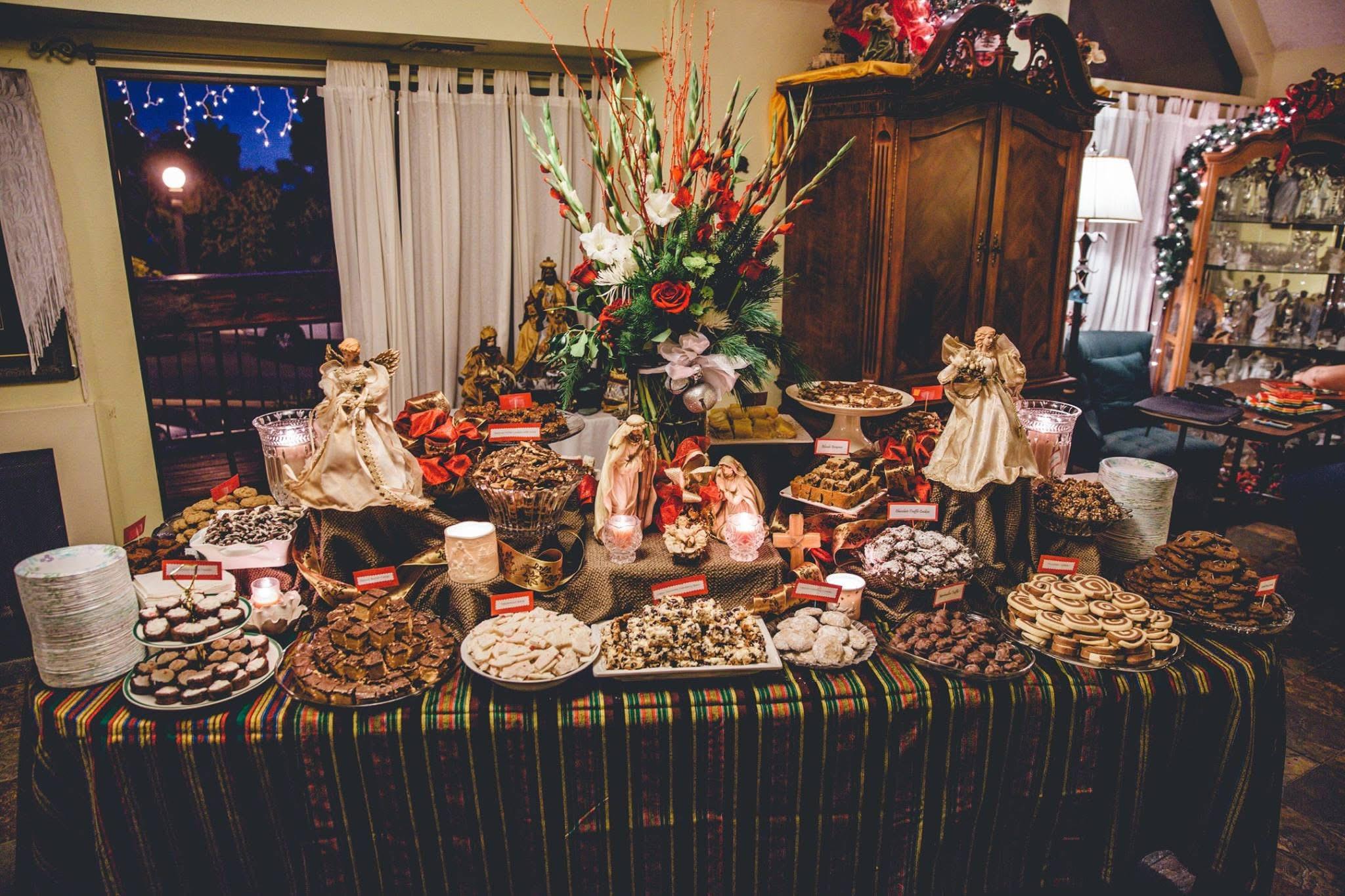
Desserts are placed on a table for the Annual Le Family Christmas Desserts Party table. The Le family opens up their house to the surrounding communities each year in December for a time of togetherness. Photo courtesy of Hung Le
Le said out of all the ways for people to connect, food is one of the most powerful tools — something represented throughout multiple eras of history. For Le, this historical context ties into his religious beliefs, making its power to connect especially special.
“In scriptures, there’s so many examples of people gathering over meals, stories are told, traditions are passed down, lives are lived,” Le said. “It’s a basic human need, and it is a beautiful act of hospitality and an act of love. What is so special about a meal is that it’s tied to family.”
Eye of the Storm
As undergraduate students begin planning their life out and looking toward the future, the stress of becoming a full-time adult can weigh on those trying to navigate life. Isiordia said in these moments, sharing food helped take her mind off the busyness of everyday life.
“In those moments when I just felt very overwhelmed and really stressed, it was really sweet to be able to take a break from everything that was happening,” Isiordia said. “Setting aside time to step away from everything that’s happening and invest in sitting at the dinner table, chatting and building those relationships was so beneficial to my success and my well being.”
Le said it was these moments that make cooking for students worth all the work. Even though he hosts bigger events, he finds a lot of joy in the smaller meals he can share on weekends or weekdays.
“That’s where the connections occur,” Le said. “It’s more informal and it’s familial. It strengthens the community.”
Everyday tasks would sometimes cloud Isiordia’s mind, and she wouldn’t be able to find time to relax. When she would turn to those around her for support, she said their relationships blossomed over the shared meals they would have together.
“It was really just a good opportunity to nurture our relationships on a deeper level,” Isiordia said. “Those moments were so authentic and filled with natural conversation that didn’t feel scripted – that was very special to me.”
In larger communities, such as that in Santa Barbara with over 20,000 undergraduate students according to the University’s website, De La Torre said she used food to ground herself in a new place. When she started living on her own, De La Torre used food to find community.
“I love that food brings people together,” De La Torre said. “At the end of the day, it isn’t even really about the food, it’s about the connection.”
During her time as an undergrad, Isiordia studied history and was always intrigued by the storytelling that could occur through shared meals. She said food, whether she was making or eating it, opened doors to many opportunities for her to learn more about those around her.
“There’s so much power in having a shared meal or shared food,” Isiordia said. “Food is a unifying thing. It was really fun and really special to get to experience part of people’s cultures and part of their stories and life through food.”
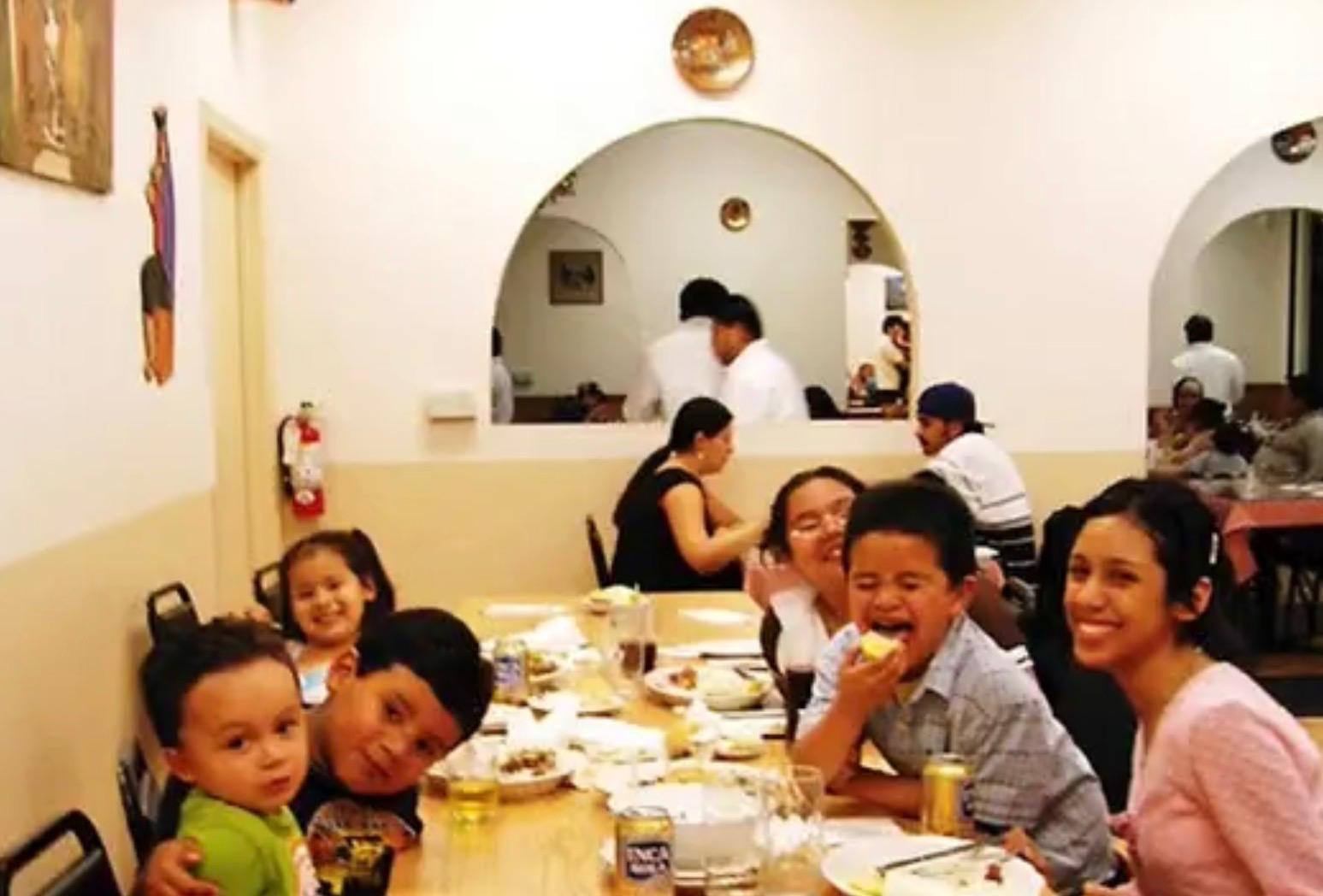
Lisette Isiordia (third from left) smiles with some of her family as they share a meal together. As a woman of Hispanic origin, food has always been a big part of her family’s blended culture, Isiordia said. Photo courtesy of Lisette Isiordia
Cultural Connections
Sharing meals is an important part of many cultures. De La Torre and Isiordia are both of Hispanic descent, and food has been a critical part of their families for their entire lives.
“Food is a very big part of Hispanic culture,” Isiordia said. “Food was always integral to my experience growing up.”
In a similar sense, De La Torre said she uses food to remind her of family while she’s away at college. Even as she made a multitude of friends, food always brought her back to her roots.
“Regardless of the meal, food can bring a lot of culture into a meeting,” De La Torre said. “It can really bring up a lot of memories and nostalgia. With friends, being able to share all our different cultures and normalities in what we eat helps us let our guard down.”
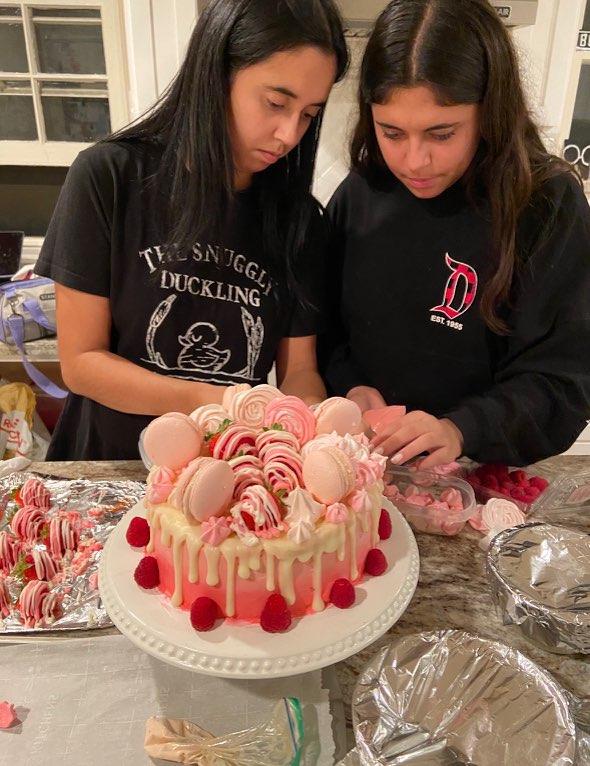
Ali De La Torre (right) prepares a cake with her sister (left) in their Long Beach, Calif., home. De La Torre said she uses food to stay close to her family while she is away at college. Photo courtesy of Ali De La Torre
As Isiordia grew up, she used food to remain close to family members she wouldn’t see often, or even those that were no longer alive. Isiordia said food helps her remember her grandmother, the matriarch of her family who would pass down recipes and traditions through culinary practices.
“It was really sweet to get to see her lead like my tias, cousins and I in the kitchen, whether it was me chopping or my aunts making food, that was really special to bonding us as a family,” Isiordia said. “We kept her memory alive through food, and those are memories I hold really close to my heart.”
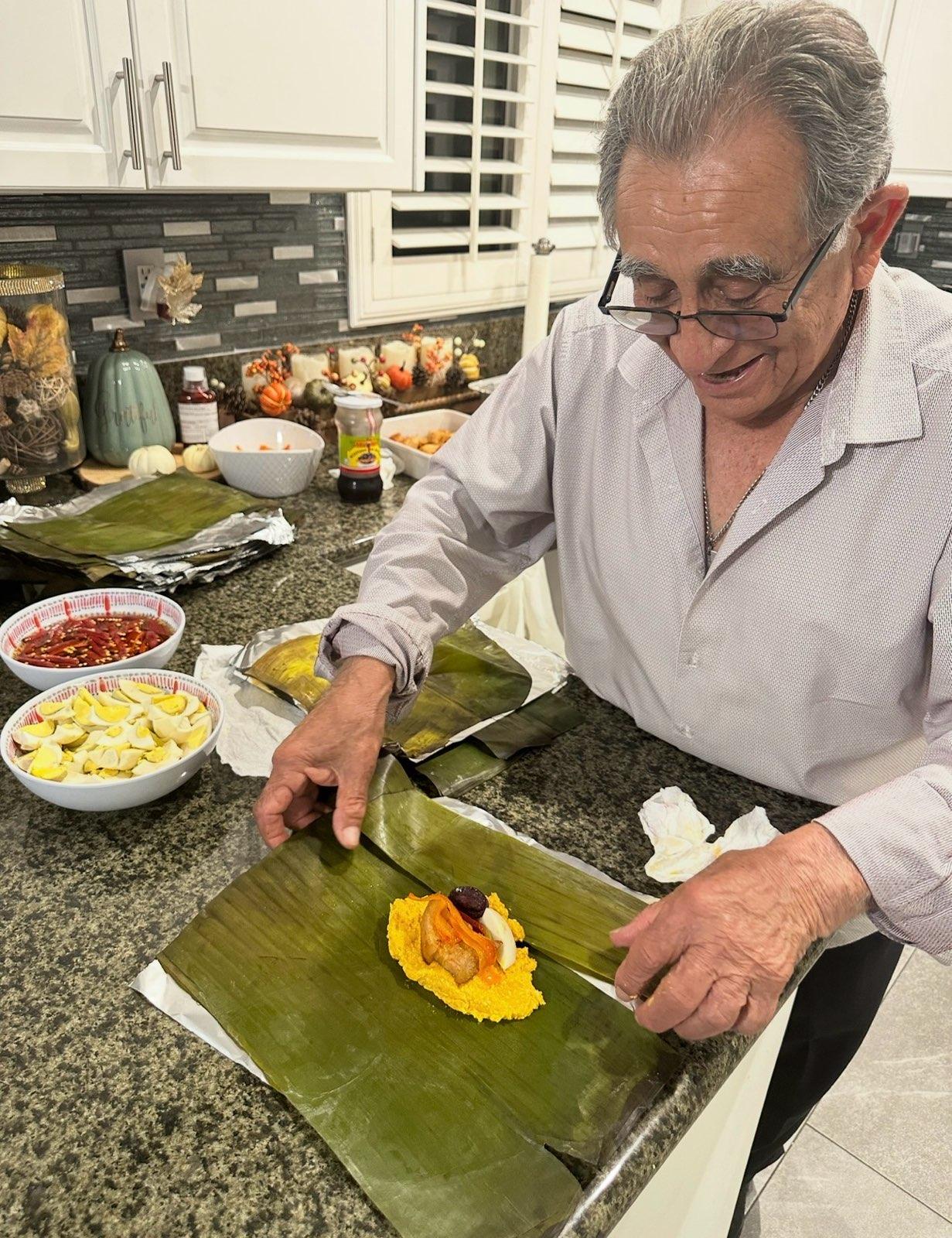
Lisette Isiordia’s grandfather teaches his family how to make some of the cultural dishes his family has shared. Isiordia said these moments helped bring her family together while honoring her late grandmother. Photo courtesy of Lisette Isiordia
With food being such a vital part of her experience growing up, De La Torre said cooking has become an integral part of her adult life. Sharing meals combines her two love languages of acts of service and gift giving.
“Cooking a meal is just a perfect blend of both of those,” De La Torre said. “I love that I’m able to show my appreciation and love for whoever I’m doing that with.”
As De La Torre has transitioned into a cook herself, pulling on the traditions she learned from her family, she has found that the best ingredient to use while cooking isn’t actually edible.
“The most important thing to do when you cook is to have intention and to cook with love,” De La Torre said. “That’s the second ingredient that a lot of people sometimes miss or forget.”
Love is the basis of all connections — love for the same music, love for the same food and love for the people around you. Le said sharing meals isn’t just about filling your stomach, it’s about filling your life experience as a human.
“Fill your soul, fill your heart, fill your mind — let the meal be the excuse,” Le said.
_________________________________
Follow the Graphic on X: @PeppGraphic
Contact Nina Fife via X: (@ninafife_ ) or by email: nina.fife@pepperdine.edu