 LANDON PHILLIPS/Assistant Art Editor
STAFF EDITORIAL
Pepperdine was prepared when the Canyon Fire burst the Malibu bubble last week and threatened the campus.
Resident Advisors woke students from their beds. Firefighters protected the campus from the flames. Administrators kept the school calm and organized.
The events of Sunday Oct. 21 are a testament to the emergency preparedness of the university and the community. Many people and organizations provided leadership during a fire that was, according to University Executive Vice President Gary Hanson, “one of the worst threats we’ve ever had.”
Emergency Operations Committee
This group of top university administrators plans every year for crises like the Canyon Fire. They were the ones calling the shots and executing the university response plan throughout the day.
This fall, they had also implemented a new high-tech emergency alert system at Pepperdine that called and texted students on their cell phones during the fire. Despite a few kinks with the texting, the new program kept members of the Pepperdine community safe and informed about the situation.
Department of Public Safety
Nine DPS officers are trained in a fire cross-training program, which focuses on wild land fires. This played a great role in helping with the Malibu Canyon Fire, as the DPS officers had special training in dealing with this specific land. The firefighters worked closely with the Los Angeles County Fire Department to battle the flames. They were in close coordination and communication each step of the way.
President Benton
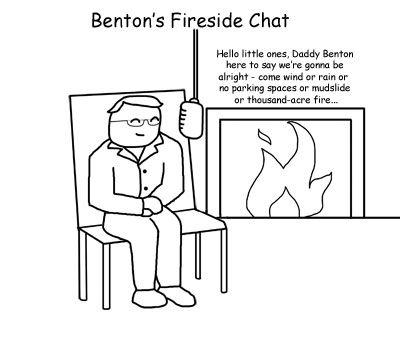
The tension in the Waves Café that morning was palpable, as rumors circled about which Malibu structures were burning and whether the fire had touched down at Pepperdine yet. But the anxiety of the moment subsided quickly after President Andrew K. Benton took to the microphone, offering prayers, updates and reassurance that students were in the “best place you could be.”
After his first announcement at about 8:15 a.m., Benton continued to provide updates throughout the day, while making sure his presence was known in the Café wearing his bright orange hat and his dependable smile.
Housing and Community Living
The evacuation effort would not have run as smoothly without the leadership of the Resident Directors and Advisors. These staff members woke students from their beds and often offered the first emergency notice of day.
RDs and RAs continued to work throughout the morning, relating the University’s message to students in the Waves Café and Firestone Fieldhouse.
Facilities Management & Planning
The day-to-day work of landscapers at FM&P pruning vegetation on campus prevented the fire’s spread to university buildings. Since the fire, FM&P employees have been cleaning up the debris and continuing to provide a safe natural environment for the Pepperdine community.
Waves Café
It was evacuation site for hundreds of students, faculty and on-campus families. While students slept in the hallways and faculty children played near the Fireside Room, a handful of Cafe workers were able to feed hundreds of hungry people and provide a safe, calm atmosphere.
For the next two days, even though classes were cancelled and most employees were told to stay home, Café workers came anyway to provide a bit of normalcy for students who remained on campus.
Los Angeles County Fire Department
These are the undisputed heroes of the fire effort all over Southern California. A department representative said 898 firefighters and 247 engines helped battle the Canyon Fire, which burned 4,400 acres in Malibu. That fire destroyed eight structures off campus, including homes and the Malibu Presbyterian Church. Fourteen structures were damaged.
However, Pepperdine buildings escaped unscathed, sustaining damage only to landscaping and one pool shack on Baxter Drive. With spot fires burning all over campus, from the front lawns to faculty housing to the Drescher hills, these firefighters pushed the flames back and protected campus structures.
But Pepperdine was there for them, too. LACFD’s control center was located on the Drescher Graduate Campus and about 500 firefighters spent three nights living in the Firestone Fieldhouse.
Hanson told the Graphic earlier this year that the best thing for campus fire safety is to maintain a great relationship with LACFD. He proved correct.
Students, staff and faculty can help during Pepperdine’s next natural disaster by joining the Residential Emergency Response Team (RERT,) whose members foster communication during campus crises. Contact Director of Housing Jim Brock to volunteer.
11-01-2007