
 LANDON PHILLIPS/Assistant Art Director
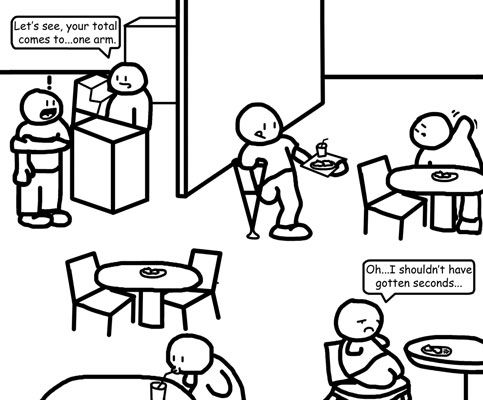
It will be no surprise to returning Pepperdine students that food prices in the Waves Cafe and across campus increased significantly this semester.
The price for a fruit cup more than doubled from $2.05 in March to $4.29 in August, before Dining Services dropped the price to $3.59 this week. It channeled the pricing patterns of oil companies, who raise prices so unreasonably high that when they lower them slightly, it silences calls of “price gouging” from consumers, or in this case, from students.
For a chicken Caesar salad, students will pay 70 cents more than they did last semester. And for a deli sandwich on a bagel? Another $1 increase.
And those are just the grab-and-go items.
Pepperdine Dining Services maintain that the price increases—which they place at about 3.6 percent overall—are in line with national inflation.
Of course neither the university, nor Sodexho, Pepperdine’s food distributor, can control market prices.
Still, Pepperdine officials need to understand that most students cannot afford to spend $10 or more food points per meal. Dining Services needs to actively seek and offer cheaper alternative food items so students won’t run out of points or money before the semester ends.
If Pepperdine continues to raise prices, they also have to begin offering additional cheap options so students can make their meal points last.
Pepperdine Dining Services has done well in its efforts to improve the quality of the on-campus food selection over the past few years—and many students have noticed. Now it’s time for them to balance the better, more expensive options it has provided with new, cheaper ones.
Quality does matter, of course. It’s just not the only thing that matters to thrifty college students.
This is especially true for dorm residents who don’t own a car. These students often rely solely on the Cafe for a year’s worth of meals.
Sodexho’s exclusive contract with the university gives it a monopoly on campus food service. Though this is a mutually profitable agreement between the university and Sodexho, the lack of competition does a disservice to Pepperdine students. If Sodexho can’t provide inexpensive food choices, perhaps the task falls to the university to find a new food provider.
Here is a to-do list for Pepperdine Dining Services to improve on-campus food service and make it more student-focused.
• Set lower prices. Sodexho doesn’t control market prices, but there was no reason a fruit cup that cost $2 last year could have possibly been worth more than $4 in August. Skip the very expensive items if necessary: If the price of watermelon shoots sky high, replace it with extra grapes.
• Bring back the cheap stuff. While the improvement in the overall quality of Cafe food is much appreciated, cutting the cheaper items off the menu entirely was not the best option.
The frozen yogurt machine in the Cafe was replaced by more expensive treats served in the Sandbar. The CCB’s Café Fresca no longer stocks cups, so thirsty students have to buy water or soda bottles instead of filling up at a water fountain. These cuts did little for the quality of the Pepperdine dining experience, and lots to chip away at students’ meal points and shrink their wallet sizes faster than ever
A Cafe Fresca employee also said that the prices in the CCB are higher than on main campus. She speculated that this is because students who need a snack are unwilling to go all the way down to main campus to get food and they’ll be willing to pay extra for convenience’s sake.
• Start a “value menu.” Fast food restaurants offer 99 cent value menus—smaller portions for customers who want to eat and spend less. Why can’t Oasis sell single pizza slices for half the price? What about half sandwiches?
• Give Cindy an official crown and throne. She’s the queen of Pepperdine anyway.
Meanwhile, Pepperdine students will just have to stretch their meal points more than ever before. Drinking cups of water instead of bottles or sodas, skipping desert, and perhaps trying to scale back that coffee addiction are good ways to pinch pennies.
And if you do run out of points, there’s always Jack in the Box. Yum.
09-13-2007