
 Infographics by Christine Park
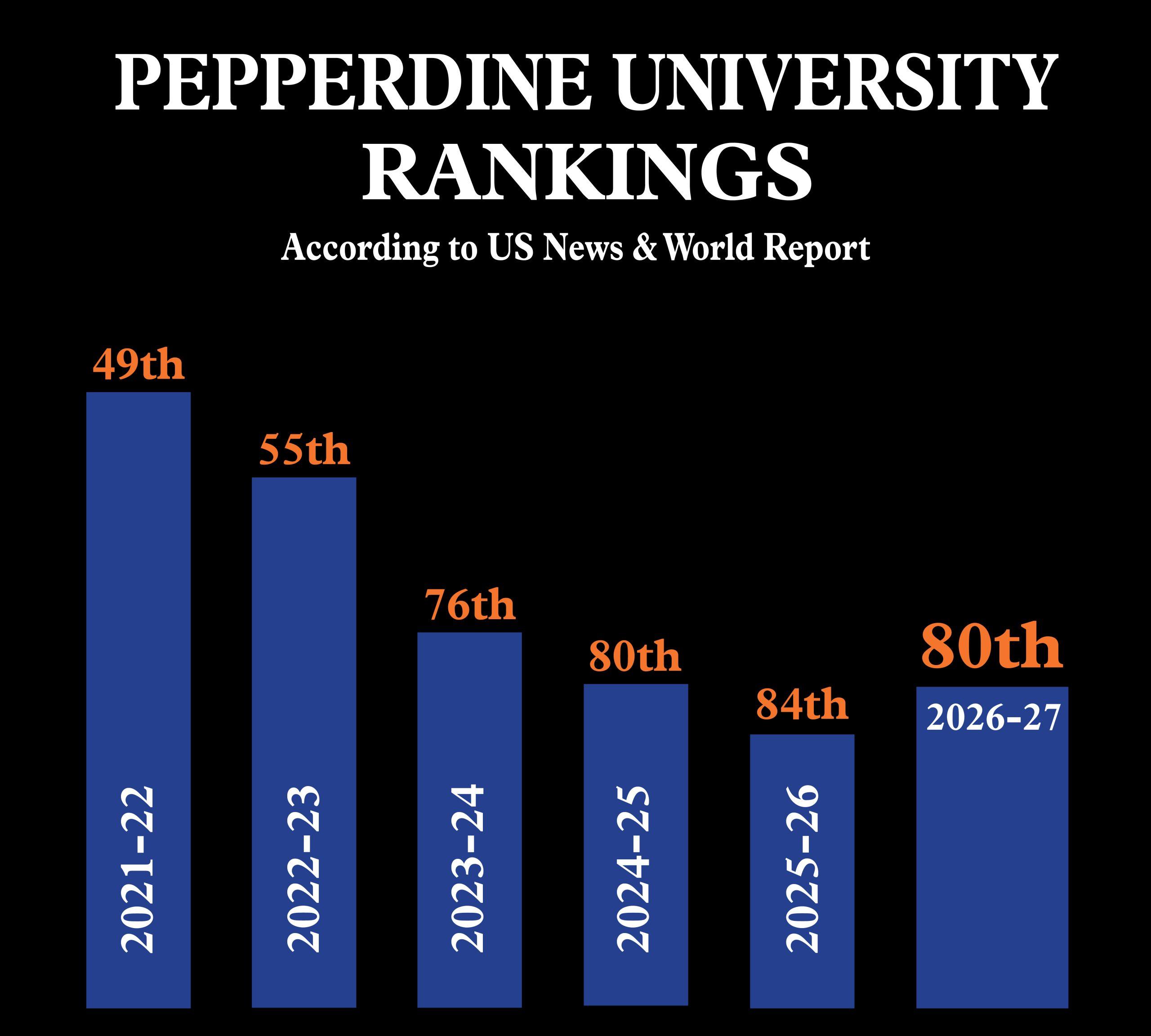
Pepperdine University rose four spots from No. 84 to No. 80 in the 2027 edition of the U.S News & World Report’s Best National Universities rankings. The national university rankings were released Tuesday, Sept. 22.
Pepperdine’s climb comes after three consecutive years of decline. The University fell from No. 76 to No. 80 in the 2026 edition, then from No. 80 to a four-way tie at No. 84 the year after that. This year’s four-spot gain puts Pepperdine back at the same position it held two years ago.
“It’s exciting because some indicators moved in a very positive direction,” said Lee Kats, dean of Seaver College. “Had that lower-than-normal retention rate been at our typical 88 to 89 percent, that four spot jump likely would have been bigger.”
New Methodology
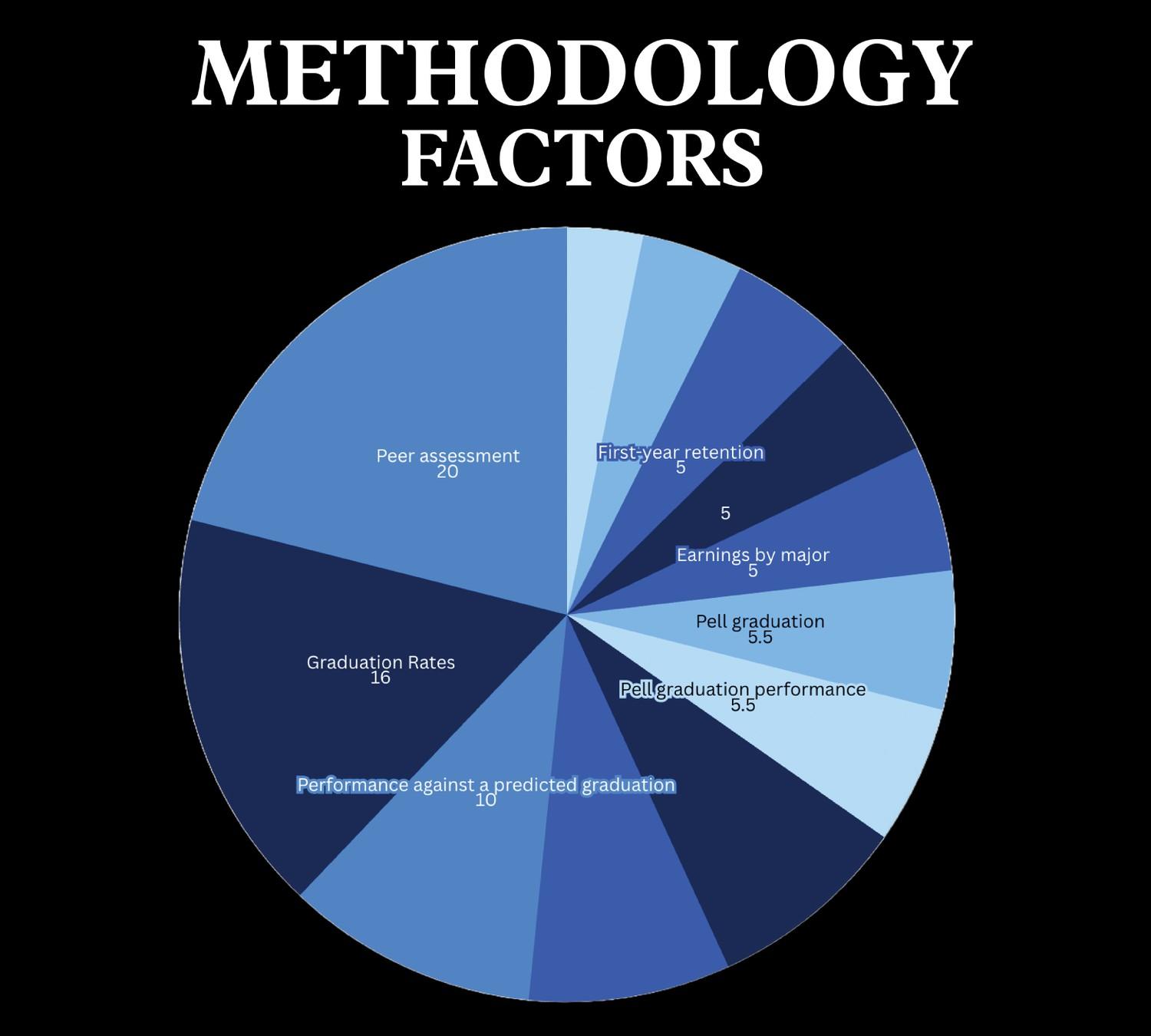
Student outcomes remain the highest weighted category in the methodology, worth 52% of a school’s overall score. This includes bachelor’s degree graduation rates at 16% and a school’s performance against predicted graduation rate at 10%. Followed by Pell Grant graduation rate and performance for low-income students at 5.5% each, first-year retention at 5% and the share of graduates out-earning a typical high school graduate at 5% as well.
Unlike last year’s edition, the 2027 edition has introduced a significant methodology change: a 5% weight for new earnings-by-major factor, according to the newspaper.
The new feature focuses on federal aid recipients within individual fields, evaluating the true financial value an institution adds while minimizing the influence of family wealth or high-paying degree mixes, according to the publication’s rankings press release. Pepperdine ranked No. 45 in the new metric.
Peer assessment makes up 20% of the score, built from a survey asking presidents, provosts and deans to rate other schools’ academic quality on a 1-to-5 scale. Faculty resources are worth 11% to 15% of the total. Lastly, financial resources, standardized tests and faculty research make up the remaining 13%.
The Results
Pepperdine’s Best Colleges for Veterans ranking jumped five spots, now sitting at No. 48 from 53 last year.
The University’s rank in Top Performers on Social Mobility dropped sharply, falling to a nine-way tie at 100 — a 23-spot slide even as the University’s overall rank improved. Its Best Undergraduate Teaching ranking fell one spot from 39 to 40.
Pepperdine’s student-faculty ratio held steady at 12:1, the same number the University reported last year after improving from 13:1 in the 2024 edition.
Ever since Pepperdine earned an R2 designation from the Carnegie Classification of Institutions of Higher Educations in February 2025, the University has improved to the fifth-highest ranked R2 institution. To earn an R2 classification, a university must spend at least $5 million in total annual research and development as well as award at least 20 research/scholarship doctoral degrees annually.
There are currently 139 R2 institutions in the United States, according to the Carnegie Classifications website.
In a September 2025 interview with the Graphic, Kats said when a university moves up or down two or three spots, the change is insignificant.
U.S News and World Report makes a similar point in its own rankings explanation. The newspaper adds that small rank changes, especially in the middle tiers, are often statistically insignificant, reflecting normal data and methodology fluctuations rather than genuine shifts in institutional quality, according to its rankings interpretation page.
Kats said the publication doesn’t notify schools in advance if there are new changes to the methodology, calling the rankings “a black box” that the University looks into once a year.
Religion and Sustainability Professor Chris Doran, president of the Seaver Faculty Senate, said that he is glad to see Pepperdine improve.
“It’s always better to go up rather than down,” Doran said. “I know the methodology has changed and I’m curious once Pepperdine’s team looks at it, which percentages benefit us the most.”
Doran said there is still more work to be done in furthering Pepperdine’s rank.
“The phrase is often, ‘Are we chasing the rankings in order to go up?” Doran said. “I don’t think its chasing the rankings to spend a little money to highlight what we’re doing really well here.”
__________________
Follow the Graphic on X: @PeppGraphic
Contact Marcos Lizarraga via email: marcos.lizarraga@pepperdine.edu