
Author
AuthorTitle
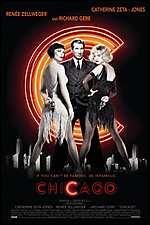 With a 2003 Golden Globe win for “Best Comedy or Musical,” ‘Chicago’ is a must-see film for this year. A fairly tight adaptation of the musical play, the movie features most of the same great tunes as the “live” version. Despite taking some wrong turns, the album provides a welcome change of pace from today’s limited musical options and proves a needed addition to most ‘Chicago’ fans’ collections.
Released by Epic Records, the soundtrack offers listeners 15 tracks from the film, one song not performed in the film and two bonus tracks inspired by the motion picture. Five vocal numbers from the theater version have been omitted from both the film and the soundtrack, and listeners won’t miss them.
Executive producers Ric Wake (Celine Deion, Kelly Osbourne) and Randy Spendlove (Miramax president of music) show a rare sensitivity to the production of such a different genre and still manage to package these original tunes with a “pop” sensibility. (The tempo has been slightly slowed and the songs are edited for repetition). As a whole, these included songs delightfully unify the film’s storyline, as well as the soundtrack.
From the same songwriting team that brought us “Kiss of the Spider Woman” and “Cabaret,” “Chicago” is a tale of fame, sex and money in the late 1920s. John Kander’s music and Fred Ebb’s lyrics continue to ring painfully but humorously true. In the cynical “Class” performed by Velma (Catherine Zeta-Jones) and Mama (Queen Latifah), the girls lament “contemporary” society’s lack of old-fashioned manners: “No one even says oops when they’re passing their gas; whatever happened to class?”
As good musically as any of the tracks on the record, it’s likely the ballad was not included in the movie not because of its mild profanity, but because it ran a high risk of slowing the film’s pace. It’s welcome here. Throughout “Chicago’s” numbers Ebb’s lyrics convey genuine emotion even as flawed and hypocritical characters deliver the lines. Treating somewhat lewd and corny subjects with a sense of decency and truth, Ebb is rarely matched by contemporary lyricists both in and out of his genre.
The music does not take a backseat, however. Kander’s beautiful but spunky instrumental opening to “I Move On” proves as delightful to listen to as “Chicago’s” lyrics. Renowned film composer Danny Elfman (“Edward Scissorhands”) has contributed two original instrumentations to the film and soundtrack: “After Midnight” and “Roxie’s Suite.” Complementing “Chicago’s” original brassy numbers with subtlety and understated sexiness, the tunes amazingly accomplish their goal of seamlessly weaving film score with classic musical theater.
The vocal performances are surprisingly good. As Roxie, Renee Zellweger courageously makes up for her lack of vocal training with attitude and vocal character (and in some cases, a key change), her voice much stronger than Marilyn Monroe’s but still possessing that “it” quality. A semi-pop star in the United Kingdom in the early 1990s, Catherine Zeta-Jones already knows her stuff, and Richard Gere astonishes us all with his dead-on performance in “We Both Reached for the Gun.”
The album takes a turn for the worse with the appearance of a hip-hop rendition of the “Cell Block Tango.” Featuring Queen Latifah, Lil’ Kim and the amazingly painful-to-listen-to Macy Gray, the track is awkward in beat and lyrics. Although an interesting idea, the song should not be included here. Perhaps Mya (who makes an appearance as a death-row inmate in the movie) would have been a better choice for a soundtrack contribution considering her past success with “Lady Marmalade” from the film “Moulin Rouge” and “Ghetto Supastar” from Bulworth. Anastacia’s “Love is a Crime” proves uneven and is a last-minute attempt to compensate for the audience’s alleged lack of exposure to jazz.
Diehard music theater fans may prefer the original 1975 and/or Grammy-winning 1997 cast recordings to this edited and seemingly diluted album, but the record works because it never claims to be more than what it is: a film soundtrack. The producers have correctly embraced its commercial appeal and successfully created a “crash-course” in “Chicago”, more digestible for today’s average listener but still filled with the spirit of the musical. With the ability to download behind-the-scenes footage and cast interviews online, “Chicago” and its soundtrack will conquer entertainment lovers for a third time. Take out the corny hip-hop and contemporary tracks and audiences have a crop of classic tunes that new fans can fall in love with for the first time, and old fans can rediscover the music in a non-threatening way.
— Review by Jennifer Clay
January 30, 2003