
Library exhibit compiles L.A.-area water art
Lauren Dodds
Staff Writer
A former water fountain, an aquarium and a wishing well lined with spare change may not be part of a typical art exhibit. But these structures, found throughout the Los Angeles area, collectively make up Drescher Library’s featured “Liquid Art” exhibit.
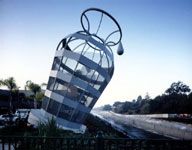 Photo Courtesy of Metropolitan Water District of Southern California
The exhibit will be on display through Nov. 9. It consists of 20 photographs of the art that can be found throughout the Los Angeles area. The pieces include paintings, fountains and sculptures all focused around the water theme.
Mark Roosa, the dean of libraries at Pepperdine, said libraries and museums are changing in order to attract more people.
This is an exciting step for the library and hopefully will spark interest in the community. Southern California is becoming an artistically aware society right now and the library should reflect that, Roosa said.
One of the pieces is a set of paintings by Roxie Ray-Bordelon, an artist in the Camarillo area. “Splash” and “Treading Water” are two of a 17-painting series by Ray-Bordelon focusing on the human figure in water.
Water creates life, it nurtures us, and therefore it is a feminine and beautiful force in life, Ray-Bordelon said.
“Treading Water” depicts a woman waiting in three different ways. First, there is the bottom where there are shadows, in the middle there are refractions, and on top there are reflections, and this is similar to how we look at life, she explained.
Ray-Bordelon is the only artist who has paintings in this “Liquid Arts” collection. The rest of the collection consists of sculptures ranging from artistically designed drinking fountains to a mosaic documenting the twists and turns of the San Diego River.
One of the pieces is a 210,000-square-foot emergency storage pond. It is located near homes, so the city of San Diego wanted to find a way to make it both functional and aesthetically pleasing. San Diego artist Paul Hobson created the pond with blocks of colored concrete The squares, which are different shades of blue, made art out of the mundane.
A topographical map, created by Joseph Young, is also a featured work. It was built out of different stones and glass mosaic tiles. Located in the Los Angeles County Hall of Records, it is a beautiful depiction of the county’s geological features. Originally designed to be a fountain, lakes and reservoirs are represented by bronze cups on the map, and water was supposed to flow from the cups down the wall into a reflecting pool. However, the fountain was turned off in the 1980s to conserve water and remains dry today.
This exhibit was first displayed by the Metropolitan Water District of Southern California in 2001. The group provides water to six counties in Southern California and nineteen million people.
During the droughts in the 1990s, it became clear that new efforts would be necessary to prevent water shortages. Now due to careful conservation and recycling, water will be stored in the wet years in order that it is available for the dry years. Creating the exhibit provided the Metropolitan Water District with a way to make people aware of conservation efforts. Adán Ortega, Jr., the vice president of external affairs at the Metropolitan Water District, said he noticed that public art shows display what matters most to a community, and here in Southern California, that common theme is water. Once the Metropolitan Water District realized this, they decided to create an exhibit to showcase this art.
“Art pays homage to what we value,” said Glen Peterson, a representative of the Metropolitan Water District.
More than 100 artists sent in photographs of their work, and 20 were chosen to be included. The majority of these pieces are large public sculptures. To display them together, all of the pieces were photographed.
Tom Bonner, the official photographer for the Getty Museum, took the photographs, and they are displayed together to create the “Liquid Arts” Exhibit.
The exhibit closed last year in San Francisco. However, when Pepperdine approached the Metropolitan Water District of Southern California about displaying it on campus, they brought the exhibit out again.
09-23-2004