
Weeks of professors’ work ruined after space shuttle crashes on reentry.
By Michael Travis
Editor in Chief
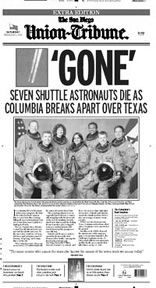
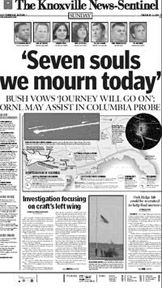
Wreckage was not the only thing strewn across the country when the Columbia space shuttle disintegrated.
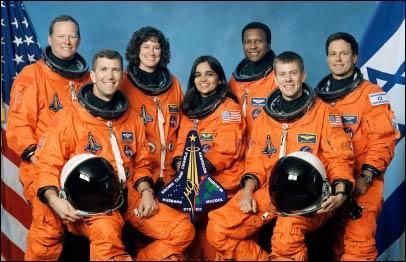
In addition to the lives of seven astronauts, more than 16 days of round-the-clock scientific experiments were ruined. The mission was the first space launch almost solely dedicated to science in more than two years.
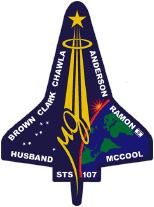 Though the loss of simple research may seem insignificant when compared to the loss of human life, the disaster struck a disheartening blow to the scientific community.
Dr. Jeffrey Jasperse, Pepperdine assistant professor of sports medicine, was involved in one of the 80 experiments that were taking place on the Columbia before it exploded.
“You have this empty feeling, after putting so much time and work into something, then coming back empty-handed,” he said. “But it is nothing compared to the loss being experienced by the astronauts’ families.”
Jasperse was part of a research team that was conducting experiments on the effects of microgravity on the body’s cardiovascular system, which is responsible for regulating blood pressure and blood flow.
“When you get up out of bed or stand up really fast, you can get lightheaded and dizzy,” Jasperse said. “This happens because gravity pulls blood down to the legs, and your brain doesn’t get any oxygen.”
According to Jasperse, there is a reflex in the human brain that corrects this problem and prevents people from passing out when they stand up. However, something causes the reflex to malfunction after extended time is spent in space.
 “When astronauts return to Earth, the reflex is compromised,” Jasperse said. “They can hardly walk or even stand up, sometimes for up to a week or longer. This can be a significant problem when they have to land the (space) shuttle or perform spacewalks that require significant muscle use.”
This is the reason that astronauts remain in space shuttles for hours after returning to Earth on successful missions — if they tried to get up and leave, they would pass out.
Jasperse and numerous other scientists had conducted ground-based experiments simulating the effects of microgravity on lab rats in the past in an attempt to understand what was happening.
However, simulated microgravity was no substitute for the real thing.
As a result, one of the leading researchers in the field, Dr. Michael Delp of Texas A&M University, put together a research grant proposal to send 13 lab rats into space, which would then be tested for the effects of microgravity when they returned to Earth.
Since there hadn’t been a NASA mission dedicated to science in several years, there were many other proposals competing for the limited amount of space on the shuttle.
Delp’s proposal was reviewed by NASA scientists and eventually won out against the hundreds of others in the running.
 “Dr. Delp wrote the proposal almost four years before the mission,” Jasperse said. “He put an estimated four to six months of full-time work into preparing experiments for the project.”
Once NASA accepted the proposal, Delp began assembling the team of scientists that would conduct the research.
Jasperse was chosen because of his experience and expertise in handling microscopic instruments, as well as studies about effects of microgravity he had done in the past.
Researchers from Penn State and John Hopkins University were also included in the team.
After the scientists were assembled, they traveled to Cape Canaveral, Fla., three weeks before the Columbia was supposed to land to prepare for the experiments that would await the spaceborne lab rats.
“We conducted experiments every day, setting up equipment and ironing out the procedures we would use,” Jasperse said.
The team was planning on working for 30 hours straight once the specimens arrived, because the rats would start acclimating to Earth’s gravity almost immediately.
Jasperse said that there is only a slim possibility that NASA may fund another science mission in the future.
 “Even if there is a chance, it will not happen for another three to five years,” he said.
As for now, NASA’s entire fleet of space shuttles is grounded until the investigation of the Columbia disaster is completed. All of the labs that scientists were using are also sealed, locking away all the equipment that was set up for experiments.
Jasperse said this was because some of the computers used in ongoing experiments had satellite links to the shuttle, and could possibly have useful information in determining what went wrong.
February 06, 2003