

Photo by Katherine Lytle. Design by Christine Park.
Addiction can creep into someone’s life — sometimes slowly and sometimes taking over all at once. Relationships can disappear, trust can be lost and life’s focus can come down to the next time the addiction gets fed.
Addiction extends beyond what is visible to the outside world. It can alter the brain’s reward, motivation and decision-making systems, reinforcing behaviors even when they are harmful.
Recovery, then, is not simply deciding to stop. It is a physical and psychological process in which the brain and body can gradually adapt while a person rebuilds the routines, relationships and support systems that addiction disrupted.
Recovery is the process of reclaiming that brokenness one day at a time until the light shines again.
“The people that struggle with addiction, there’s a label that’s put on them, either by other people or by themselves, and that causes so, so, so much harm — sometimes maybe even more than the actual addiction itself,” said Matthew Reynolds, a Biola University student pursuing his master’s degree in Marriage and Family Therapy. “A lot of freedom comes from realizing that you are not what you do; that you’re something apart from it.”
From Escape to Addiction
Many 22-year-olds are focused on what’s ahead: graduating college, finding a job, moving into an apartment in a new city. But Emmalee Shelley, a 22-year-old from Houston, is focused on living in the moment and celebrating every milestone along the way.
Every year, Shelley celebrates a major milestone in her journey of life: another year of sobriety.
Now a junior at the University of Houston, Shelley is four years into her recovery. She said she struggled the most with addiction to drugs, alcohol and self-harm when she was 17 and 18, making the decision to become sober as she legally entered adulthood.
For Shelley, her substance abuse stemmed from moments of youthful inquisitiveness. Those interests carried into teenage social experiences, where Shelley said her friends were just “trying to have fun.”
“It’s just curiosity, and a lot of it was wanting to just feel differently than the way that I felt,” Shelley said.
But for the years after, Shelley’s addiction managed to crawl into other factors of her life, growing with each step and weaving through more and more aspects of her life.
“It was a very slow progression from not really being able to tell and hiding it really well to not really caring about that sort of thing,” Shelley said. “As it progressed, I cared less — less about protecting that image or hiding it in any kind of way. I didn’t have any connection with my family. I was couch hopping. I dropped out of high school. I was using a lot harder drugs.”
Shelley said she had originally turned to substances as a means of “feeling different.” But as she approached adulthood, the feeling substances once offered started fading. What had started as a way to run from painful emotions eventually led Shelley back to confronting those same feelings — only now with addiction alongside them.
“At a certain point, it wasn’t doing anything for me — I still felt very alone,” Shelley said. “I still felt angry, depressed and all those things, and drugs and alcohol weren’t a solution for that anymore — which was the whole reason I’d been using in the first place.”
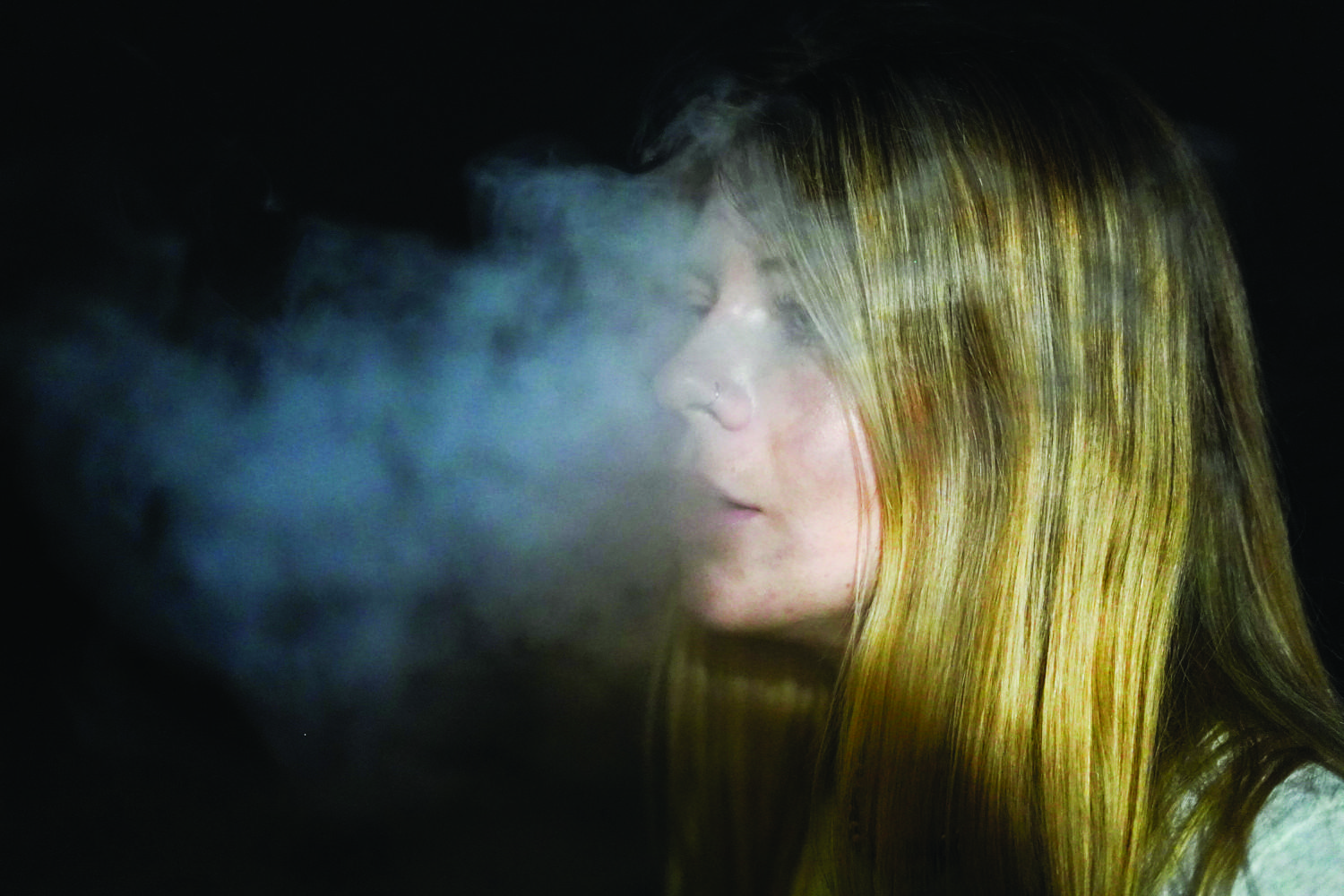
Photo by Katherine Lytle
Addiction Beyond Substances
Addictions aren’t always based on the reliance of a substance or need to have a materialistic item. Luis Lopez, an associate marriage and family therapist in the state of California, said today, there is a rise in behavioral addiction and the compulsions that fuel those desires.
“So addiction is basically anything that you use to cope with life — that’s one way you can think about addiction,” Lopez said. “That could be pornography. That could be gambling. That could be online shopping. That could be social media and technology. It could be a variety of things.”
Those coping mechanisms can take vastly different forms. In a world where technology, social media and comparison can dominate daily life, addictive behaviors have become common struggles in younger generations.
Every day, sophomore Andersen Barger does something that once felt impossible: eat one full meal. This step seems simple — something part of an ordinary routine. For Barger, that is exactly what makes it extraordinary.
For more than half of her life, Barger said she has struggled with something that doesn’t fall under the label of addictions — but is equally as harmful. Since she was 8 years old, Barger has struggled with different eating disorders, alongside addictions to drugs, alcohol and self-harm.
Although eating disorders are not classified as addictions themselves, the experiences parallel those of addictive compulsions, according to the National Library of Medicine.
“I was addicted to starving myself,” Barger said. “It gave me, in a twisted sense, a feeling of life, but it was slowly but surely draining all of the physical and mental life out of me. I’ll look at photos of me and I can see in my eyes something’s missing.”
When she was 12 years old, Barger was diagnosed with anorexia nervosa — a psychiatric disorder with the highest mortality rate, according to the National Institutes of Health. Anorexia is characterized by severe restriction on eating food, typically caused by an extreme fear of weight gain.
While Barger said she fought the battle with anorexia, her eating disorder also evolved into bulimia — an eating disorder where eating is followed by behaviors meant to compensate for food intake, such as vomiting, fasting or excessive exercise, according to the National Library of Medicine.
For Barger, she said her experience was heavily focused on restriction.
“Eating disorders, a lot of the time, are portrayed as something that’s all about how you look, and while that is a big part of it, there’s a deeper meaning of it,” Barger said. “Especially with anorexia, it is about control. It becomes all you think about.”
Barger’s hardest battle with her addictions came during high school, rising to its peak during her senior year when her father was rediagnosed with cancer for the third time — this time with Stage 4 laryngeal and lung cancer.
“I felt like I had lost all control over what was happening in my life,” Barger said. “I saw the foundation of my father leaving, and the next day I started restricting.”
Barger said she disguised her addiction as a “health journey.” She became obsessed with working out, counting calories and tracking all nutritional facts. It became so extreme that Barger stopped taking her prescribed medication out of fear because she couldn’t figure out how many calories were in each pill.
“My brain was so focused on eating, my body and food that I had no time to think about the fact that my dad was dying in front of my eyes,” Barger said. “When you’re that deep in an eating disorder, you literally don’t think about anything else. I was ‘controlling’ what I thought about and that became my main coping mechanism. I thought I was protecting myself.”
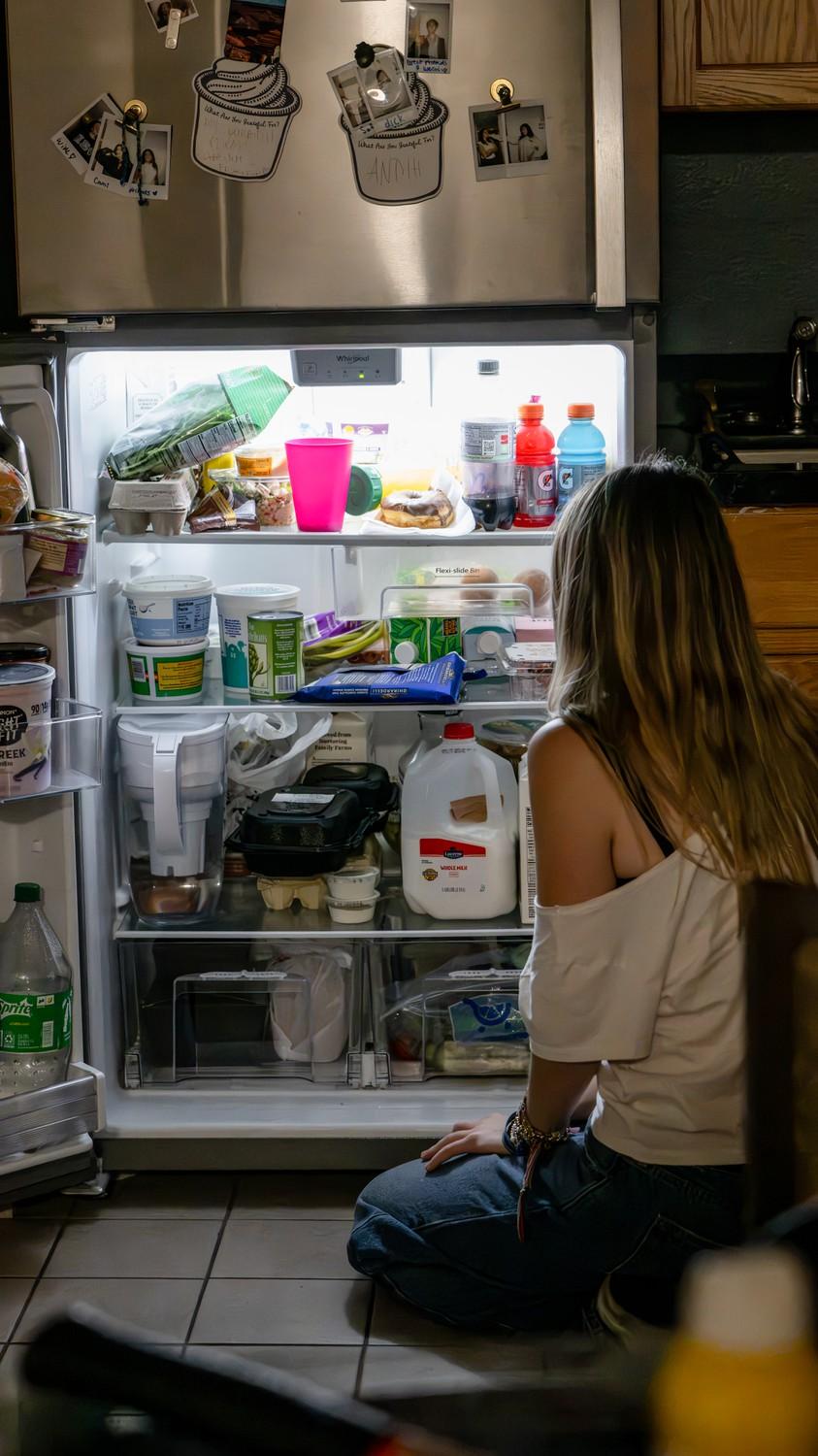
Sophomore Andersen Barger was diagnosed with anorexia nervosa — a psychiatric disorder with the highest mortality rate characterized by severe restriction on eating food, typically caused by an extreme fear of weight gain — when she was 12 years old. Although eating disorders are not classified as addictions themselves, the experiences parallel those of addictive compulsions, according to the National Library of Medicine. Photo by Gabriella Anzelc
Reynolds battled his addictions as a high school student as well. At the time, Reynolds said he struggled with his self image while navigating the loss of his grandparents and mother in the early stages of the COVID-19 pandemic.
“These are all ultimately actions of coping and coping with the ways we feel because we are not in a position mentally, emotionally or spiritually to actually process and sit with what we were experiencing, so we turned to these shortcuts to feeling better,” Reynolds said. “I turned toward activities that were entirely independent and then similarly controllable.”
Addiction for Lopez started at a young age before he was even a teenager. He fell into addictive behaviors when he was 11 years old, stating that addiction for him was merely a means of calming a situation — not solving it.
“There are moments when [addiction is] worse, and that’s usually when you’re stressed or you’re feeling a lot of shame,” Lopez said. “Any time when you’re really overwhelmed, there’s a good chance for addiction or addictive behaviors to come in and put out that fire. That’s what they do, that’s one way to think about addiction — they’re there to put out a fire.”
Lopez is a psychotherapist, honing his skills as an associate marriage and family therapist in the state of California. He said addiction prevents someone from having a deeper relationship with themselves, serving as an unhealthy substitute for processing emotions.
“You have to start to slow down and see what’s really driving the pain or the discomfort that’s leading you back to that addiction,” Lopez said. “Revival looks like realizing that you do have the capacity and the strength to endure, and that’s something that’s like a muscle you have to train and you have to grow.”
The Search for Revival
Reynolds and Lopez both turned their addictions into the driving force behind their careers. Reynolds uses his personal experience with addiction to shape his approach as an aspiring marriage and family therapist at Biola University.
“The parts of our lives we think are bad, ugly and we would rather they have not happened at all — if we don’t somehow transform that, if we don’t somehow make something beautiful of that, then we hand it on to whoever comes after us,” Reynolds said.
One of the ways those struggling with addiction have been able to find their spark of revival is through the community around them. Whether they repaired relationships through a rebuild of trust or found a new support system in peer-led, mutually supportive groups, those who have fought addiction continue their pursuit of recovery with pride and a loving community behind them.
“When you have people who can love you unconditionally and support you very well, you don’t carry as much shame,” Lopez said. “Shame grows in secrecy, and when people are open and they’re authentic and people are able to receive them and encourage them, that really gets rid of a lot of that shame.”
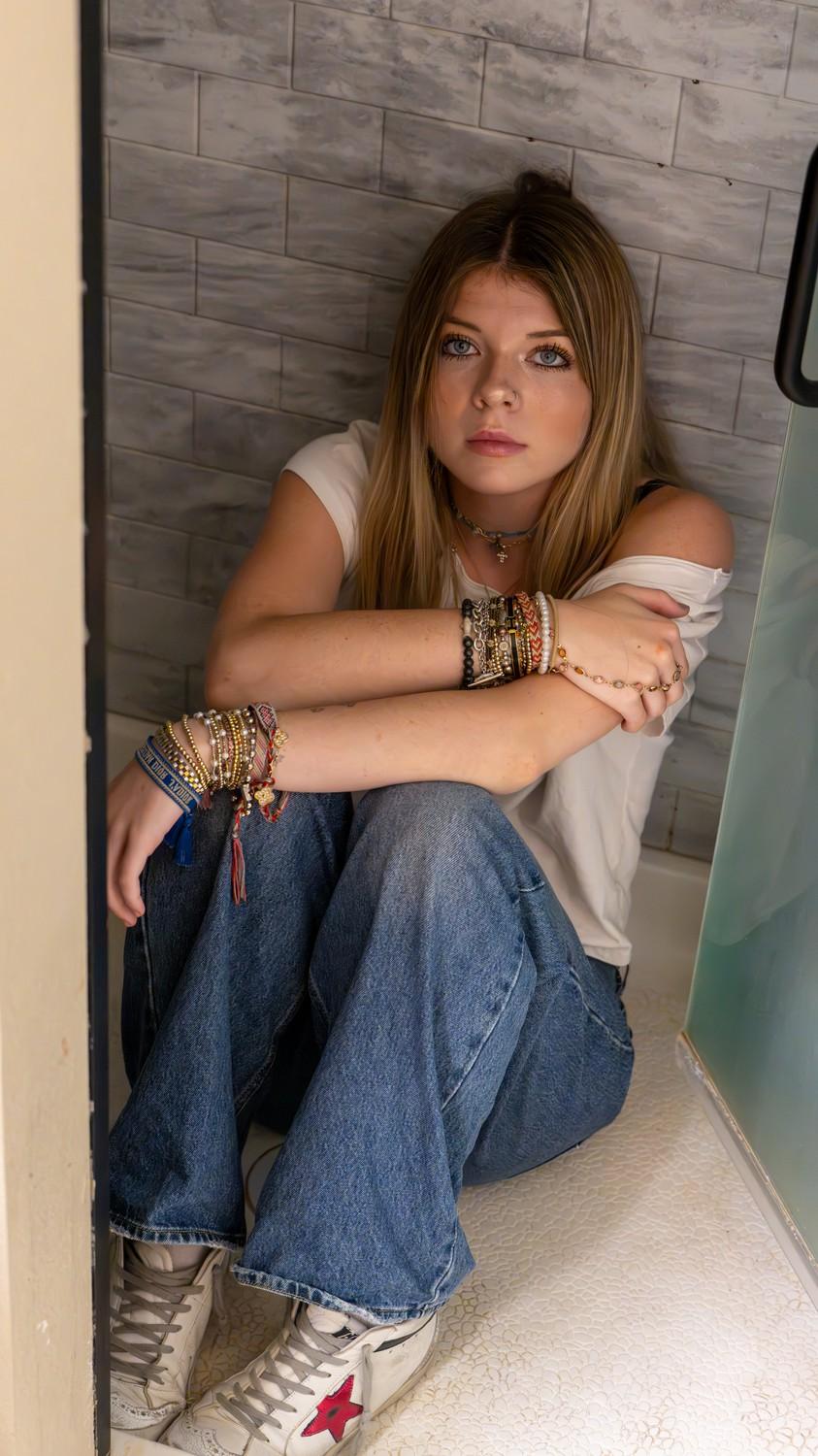
Sophomore Andersen Barger said her search for revival on the road to recovery is an ongoing journey. Each and every day, she is learning to appreciate the simple beauty of life a little more. Photo by Gabriella Anzelc
But for some, the road to recovery is an ongoing process with no straight path forward. Years of fighting and a multitude of treatment plans have created more obstacles for those trying to find their own sense of revival.
Barger’s addictive behavior fueling her eating disorders led to a family decision to send her into professional treatment at a variety of facilities. Barger was able to start taking the first steps toward revival through the Monte Nido Clementine outpatient program.
Over the months she spent participating in the program, Barger said she met one of her best friends — a fellow patient in the program.
“I actually started believing in recovery [when] I met this one girl in the program who I looked up to a lot,” Barger said. “We would talk about recovery, and I started watching her like her life again. I saw her get her spark back every day. She kind of mentored me through recovery.”
It was through this friendship that Barger started discovering her own spark of revival. Barger began to improve her eating habits and get back to a healthy weight for her age.
Barger’s new friend was more than just a role model, she was a voice of reason. Barger’s father’s health was consistently declining, and she realized her time left with him was running out.
“She basically just had a conversation with me of, ‘You’re going to miss out on your dad’s last days on Earth, and you will one day regret choosing your eating disorder over your dad and over the life you could be living right now,’” Barger said. “That conversation and her telling me I’m choosing a slow death over a full, complete life really changed my perspective on the importance of recovery.”
In March 2025, Barger was discharged from treatment in time to finish her senior year of high school. That same month, she went on a trip to Costa Rica with her school.
The trip completely disconnected her from technology and everyday life, allowing her to “start over,” Barger said. She found a new love for adventure, taking in the beauty around her and realizing she had so much more to see in this lifetime.
Barger returned from her trip March 27, 2025. That night was also the last time she spoke to her father.
“One of the biggest things that revived my life was my dad passing because I learned how important life was and how important it is to be around for the people that need you,” Barger said. “A lot of the climbing out of the hole was having such close contact with death. I just learned how beautiful life is.”
Now in her final year as a teenager, Barger said she still remembers what it felt like when she thought there was nothing left to lose. But instead of falling back into her addiction, she chooses recovery — spending her energy on healthy coping mechanisms and commemorating her father every day.
“I can’t live my life and live a life that my dad worked his entire life for me to experience if I’m not here,” Barger said. “I want my dad to live through me, and I want to honor his legacy.”
Shelley joined an Intensive Outpatient Program when she was 18 years old, beginning her recovery journey as she entered adulthood and a crucial period of independence. Through hard work and determination to get sober, Shelley was able to find revival in her life again.
Revival is not always a return to who someone used to be — sometimes, there is no old version worth returning to.
For Shelley, recovery meant meeting herself without drugs or alcohol altering her emotions and without using self-harm as an outlet for her feelings. It meant learning how to experience the feelings she had spent years trying to avoid.
“In my experience, revival from addiction is coming back to who you are post all of those things,” Shelley said. “Since I chose [sobriety], it’s been a complete 180 from what it was like before — my whole life. I talk to everyone in my family now. I finished high school. I got my associate’s degree. I’m in college now, and I do participate in AA, which has been super helpful for me.”
Now, Shelley is focused on something she didn’t think she’d have: a future. From mending relationships to surrounding herself with an entire community of support, Shelley is building a life she no longer feels the need to escape from.
“When things get hard or difficult, I’m able to look back and be like, ‘I made it through all this, so I can do this thing or whatever else,’” Shelley said. “I’m doing all the things that I never really thought were possible for me.”
In 2025, 44.6 million Americans age 12 or older reported suffering from substance abuse, according to the Substance Abuse and Mental Health Services Administration.
Beyond substance use, nearly 30 million Americans struggle with an eating disorder in their lifetime. An estimated 10,200 people die each year as a direct result of eating disorders in the United States — equivalent to roughly one death every 52 minutes, according to the National Eating Disorders Association.
Behind each statistic is a different struggle — the numbers don’t tell the whole story. Of the 30.6 million American adults who said they had ever perceived themselves as having a problem with drugs or alcohol in 2025, 73% considered themselves to be in recovery or recovered.
Just as addiction and addictive behaviors can take different forms, no two paths to recovery look the same. For Shelley, recovery means celebrating another year of sobriety. For Barger, recovery can mean finishing a meal.
And for others, revival may begin with an entirely different first step. No matter what the recovery journey looks like, each story proves there can still be a life on the other side.
“You’re not your addiction, you’re not your desire,” Reynolds said. “You’re something completely different, and try to discover what that is.”
This story was copy edited by Lila Rendel.
_________________________________
Follow the Graphic on X: @PeppGraphic
Contact Nina Fife via X: (@ninafife_) or by email: nina.fife@pepperdine.edu