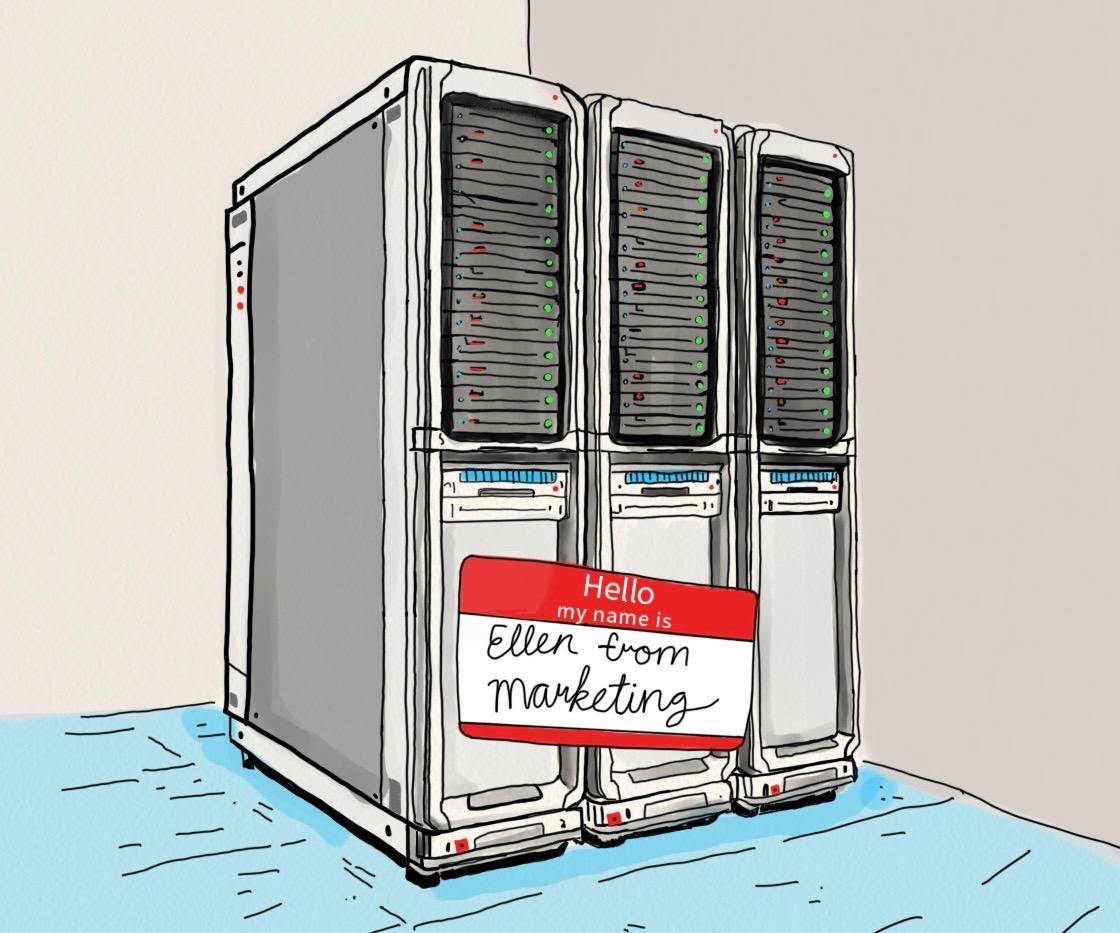
Art by Ava Miller
Transparency Item: The Perspectives section of the Graphic is comprised of articles based on opinion. This is the opinion and perspective of the writer.
Every day, content rapidly circulates through the online life cycle — getting posted, shared and liked before dying at the hands of a harsh algorithm. Increasingly so, AI-generated images and videos have joined this cycle, originally tricking 17% out of 50,000 when AI content first became common in a 2024 study, according to the Institute for Public Relations.
As AI content advances, people are less likely to be sure whether what they’re viewing is AI — but one sentiment remains. Besides the ever-evolving arguments surrounding the ethics of AI content, at its most superficial, people from all sides of the argument have expressed that AI is unattractive for a business to use.
For example, around 73% of Americans agree they would be less inclined to buy from a clothing brand that uses AI to design their clothes, according to Techopedia.
As AI seemingly shows up more in local marketing, Malibu is no exception. Described as a “picture-perfect SoCal experience,” according to California Beaches, it’s not surprising that compared to serene beaches, fine dining and sleek architecture, AI ads stick out even more in Malibu.
This brings about the question: Why do AI advertisements look so tacky?
There are scientific explanations when it comes to explaining AI’s “exquisitely nauseating images,” according to an article by The Verge. One of these is diffusion modeling, often the culprit behind AI’s textural faults.
Diffusion models begin with pure color and static, before being clarified up to millions of times before reaching an actual image resembling the prompt, according to The Atlantic.
“Noodles, strands and tendrils are exactly the kind of geometry that trips this up, so you get spaghetti-like artifacts bleeding into places with no anatomical or culinary logic,” behavioral scientist Giovanbattista Califano said in an article by The Verge. This explains the often overly textured or shiny-looking foods in something like an AI-generated menu.
The second reason AI ads come off uncanny is due to the sheer amount of content we feed to AI. It’s easy to forget, but a computer algorithm cannot experience the world in the way humans can.
“We see a lot of fantasy-style art and stock photography, which then trickles into the models themselves,” said Ziv Epstein, a scientist at the Stanford Institute for Human-Centered AI, in an article by The Atlantic.
This means that often, when trying to generate a specifically-themed advertisement, AI will still pull from every possibility that’s available to it for that “theme,” creating an amalgamation of everything it sees. Although specific prompts can help, they cannot necessarily offset the fact that AI requires an overwhelming amount of varying descriptions from the internet to formulate vaguely human depictions of the world.
These reasons, among other common errors, contribute to tacky color schemes, overcrowded posters, unpleasing fonts and uncanny depictions of food.
On top of AI’s visual insecurities, the fact that very similar algorithms are all pulling from the same sources means all of these ads are prone to looking similar, as AI cannot really conceptualize unique ideas in the same way a graphic designer or artist could.
“It feels to me like a really clever student who has memorized everything for the test but doesn’t have a deep understanding of the concept,” said Terence Tao, a professor at the University of California, Los Angeles, and mathematician in an article by The New York Times.
Statements like these emphasize that, although AI can create ads, none of that process is possible independent of pre-existing art and design.
Even in the scenario in which AI does manage to create original, good-looking ads, human-made work is simply better on the basis that it comes from more than a speedy algorithm; human-made works require time, emotional input and exposure, whereas AI just takes this input and regurgitates it.
With its usage comes an onslaught of backlash, such as the comments found under an Instagram post by LA Times Food commenting on businesses’ usage of AI for posters. Comments overwhelmingly expressed that upon seeing AI-generated menus, ads and posters, customers feel inclined to take their business elsewhere.
Using AI to promote anything is throwing something mediocre and overdone into a sea of similar-looking AI-generated content and doesn’t look as good as any original concepts executed with human effort involved. If businesses or online content creators truly want to stand out in the age of AI, they should lean into humanity, not an uncanny imitation of it.
This story was copy edited by Caitlin Murray.
__________________
Follow the Graphic on X: @PeppGraphic
Contact Karina Guzman via email: karina.guzman@pepperdine.edu or via Instagram: @wdymusernamealreadyexists