
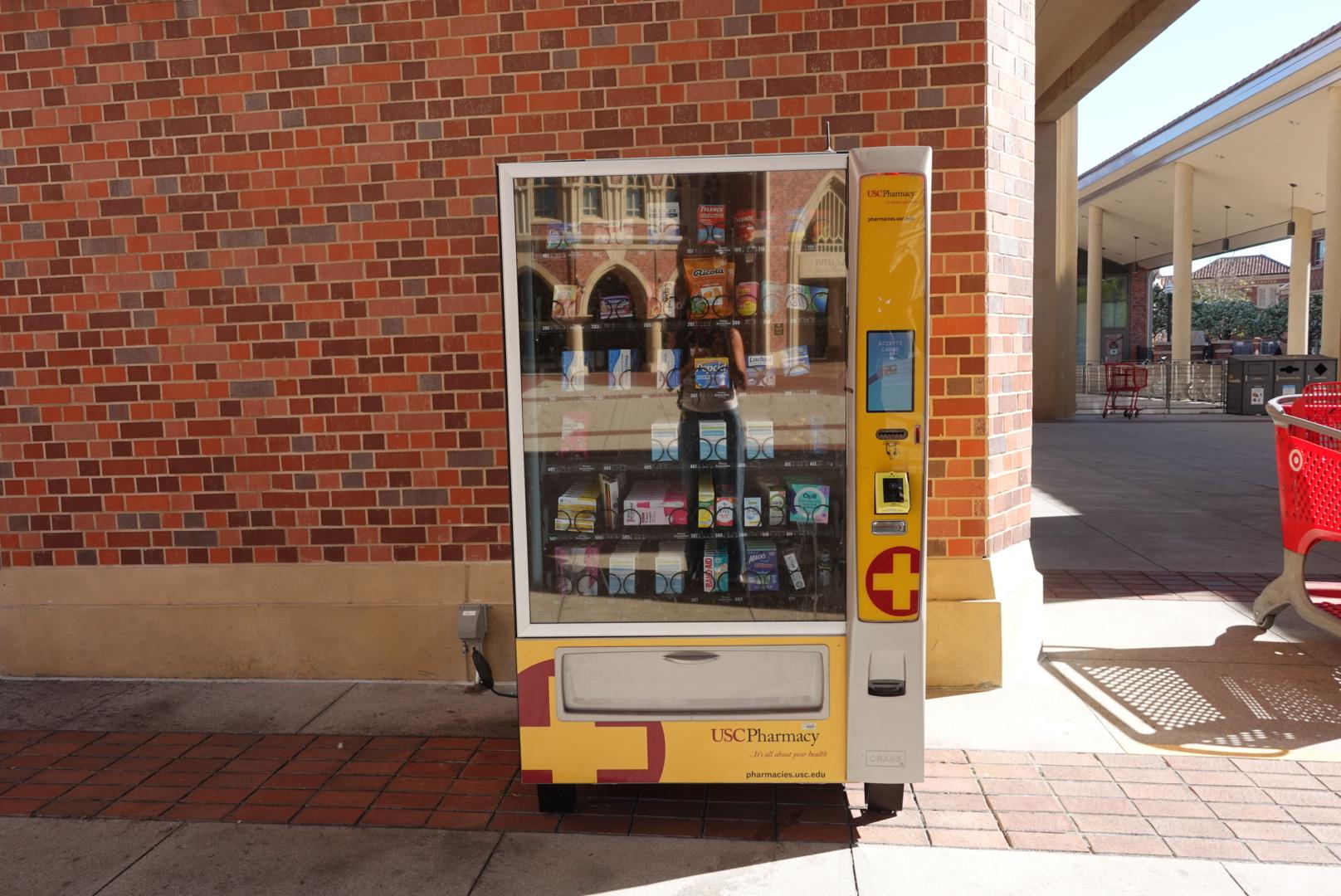
A wellness vending machine stocked with over-the-counter medications and hygiene products stands at The Shops at USC Village on Feb. 8. The machine provides students with access to basic health supplies in the center of the village. Photo by Genevieve Cantu
At Pepperdine, gaps remain in students’ access to basic self-care products during emergencies and late nights after resource centers like the Campus Bookstore and Student Health Center close. To resolve this issue, Pepperdine is following efforts similar to nearby Los Angeles universities by seeking to install wellness vending machines and aiming to implement them before the fall 2026 semester.
The University of Southern California (USC) and the University of California, Los Angeles (UCLA) have wellness vending machines that are always available and stocked with over-the-counter medications, at-home tests and hygiene supplies.
“Being able to get the supplies you need quickly, privately and without feeling judged by someone is really helpful, especially with the vending machines being 24/7,” junior USC student Eris Baker said.
At Pepperdine, demand for similar resources appears significant. A Graphic survey of 50 students found 76% have experienced a situation where they needed health supplies late at night when on-campus resources were not available.
Infographic by Genevieve Cantu
Wellness vending machines have emerged as a beneficial tool for university campuses, especially at geographically isolated institutions like Pepperdine, where students said they have limited access to nearby retail options.
Pepperdine Takes Action
The wellness machines at USC contain affordable access to over-the-counter medications, health supplies and hygiene products, according to a USC Alfred E. Mann School of Pharmacy and Pharmaceutical Sciences news release. UCLA’s machines carry comparable items and also include school supplies, according to the Daily Bruin.
After assessing student needs and attending professional conferences, Sharon Beard, Pepperdine interim vice president for Student Affairs, said her team has been working behind the scenes to move forward with plans to implement similar machines on campus.
“This is something our staff has wanted for years,” Beard said. “As soon as I stepped into the role in July of last year, we started working on it immediately.”
Beard said bringing wellness vending machines to Pepperdine’s campus is going to be a game-changer for students. Her team has been in conversation with the Student Government Association (SGA) about the project, which on March 25 resulted in SGA passing a general fund request to award the Student Health Center $6,000 to move forward with the process, according to previous Graphic reporting.
“We have the resources to spend money this semester,” SGA President H.L. McCullough said. “But it’s more than spending it; it’s finding the most optimal use of the resources. That means having those tough conversations to find ways that we can implement something like wellness vending machines here on campus and continuing that into long-term care.”
Beard said Pepperdine does not plan to profit from the wellness machines. They plan to keep product costs low and are working to improve accessibility by incorporating Apple Pay and enabling students to use Waves Cash through their ID cards.
Pepperdine Student Wellness Needs
Junior Melanie Donnell, who serves as a resident advisor (RA), said the implementation of the machines would be highly beneficial, as late-night requests for health supplies are common.
“As an RA, there have been nights when students need something at midnight,” Donnell said. “Even when you just want to curl up in bed and go to sleep, you still have to be willing and available to help.”
The aforementioned survey found over-the-counter medications such as pain relievers and allergy medication were the most sought-after items during these late-night emergencies.
Infographic by Genevieve Cantu
Wellness machines also allow students to obtain health supplies discreetly, a benefit senior and RA Sam Backus said could be highly valuable.
“These machines could help quiet or introverted people get the resources they need, no matter their background, personality or preferences,” Backus said. “As an RA, a lot of students are scared to ask or come to you for things because they think that they’re bothering you, so these machines are a great way to help all types of people.”
Having wellness vending machines could be helpful as students face higher prices for personal care items in the Campus Bookstore, Backus said. By offering wellness machines, Pepperdine can help ensure students have access to essential items quickly and conveniently during emergencies.
“Sometimes you don’t have time to run up to Drescher before your class,” Backus said. “Or if it’s 3 a.m. and you just bled through your pants but don’t want to wake up your roommates or RA, you can just go and get menstrual products from the vending machine.”
Student Benefits Seen Elsewhere
Expanding access to health resources through wellness vending machines can improve student attendance, academic performance and overall well-being, according to Health Promotion Practice.
UCLA sophomore Noah Ross said these benefits prove the importance of wellness machines on college campuses.
“There are no cons in implementing tools like wellness machines on college campuses,” Ross said. “Only benefits for its students, like their mental, physical and academic well-being.”
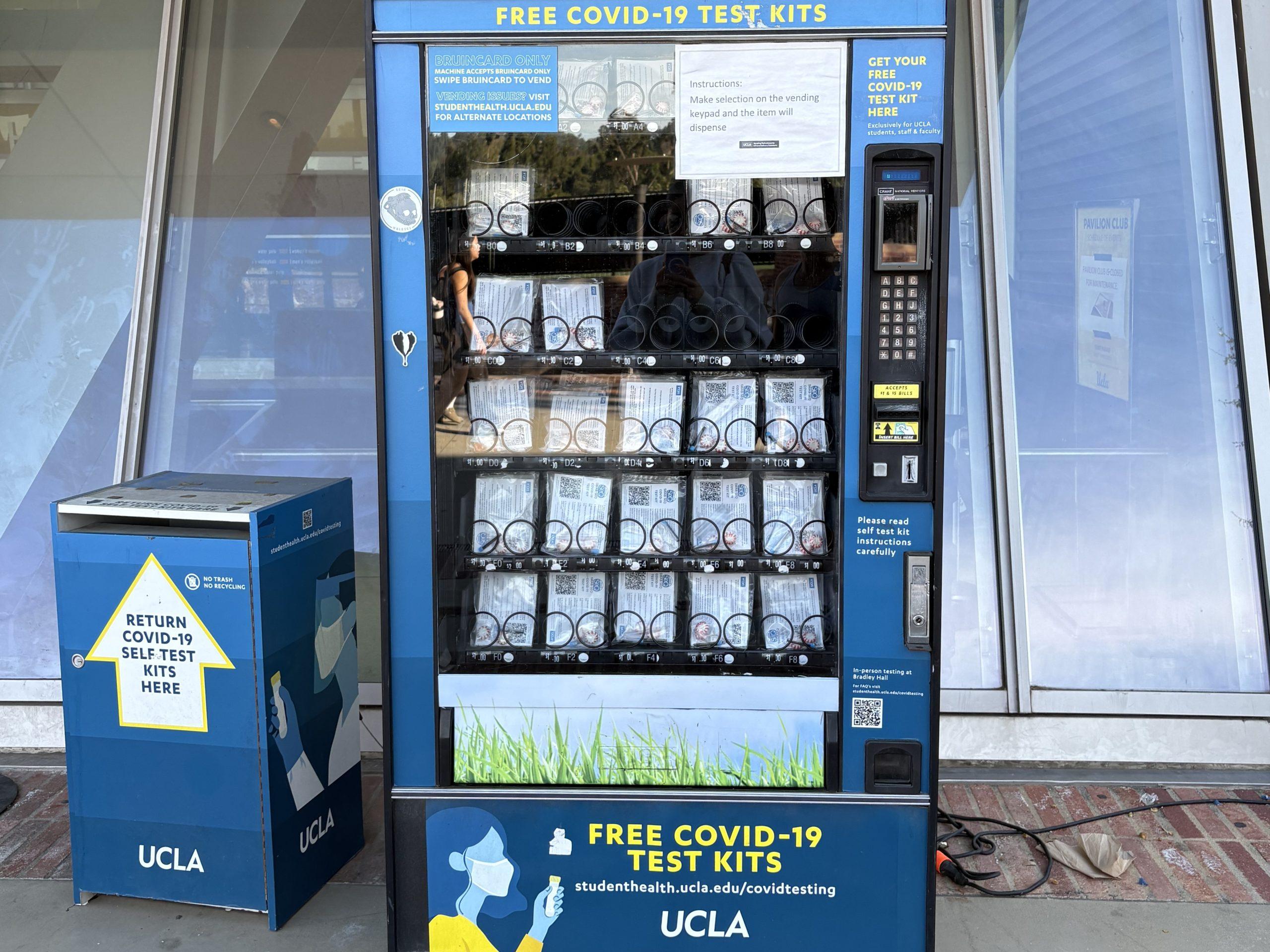
A wellness vending machine stocked with free COVID-19 test kits stands outside UCLA’s Covel Commons Center on Feb. 27. The machine, one of several across campus, provides students with access to basic health supplies. Photo courtesy of Lauren Berumen
Wellness machines provide students with efficient, on-demand access to health resources. USC sophomore Maya Torres said she experienced this convenience firsthand.
“Last semester, me and my roommate were feeling sick and too weak to walk to USC’s health center,” Torres said. “We decided to check out the vending machine, which ended up carrying COVID and flu tests. Because of those tests, we found out we had COVID. During the week we were sick, we would always go back to the vending machine because it was so convenient.”
While improving access to on-campus health resources, Torres said the machines also provide a convenient option for students without reliable transportation.
“Living in LA can be super isolating,” Torres said. “Sometimes you need a car, a bus or the metro to get around to doctors’ appointments and things like that. It’s hard, but with wellness machines, we don’t have to travel far off campus to get resources that we shouldn’t have to be traveling for in the first place.”
Closing Wellness Gaps
Geographically isolated institutions create barriers to accessing health resources and obtaining basic health supplies when students need them most, according to Health Promotion Practice.
Pepperdine students reported similar challenges in Malibu, with 36% reporting difficulty obtaining essential supplies due to limited transportation options and distance to nearby stores, according to the Graphic’s survey.
“It’s hard to live in Malibu and on this campus without a car,” Donnell said. “Without transportation, you can’t really get off campus easily and buy the products you need.”
Backus said she faces the same difficulties, highlighting that wellness machines could provide the needed change to close the isolation gap for Pepperdine students.
“I personally don’t have a car on campus,” Backus said. “So I never know when I’ll be able to go and get the medication I need next.”
Understanding these needs and taking action, University leaders are now discussing potential locations for the machines, Beard said.
“Ideally, we would implement one outside of the TCC or bookstore and one in the HAWC,” Beard said. “Once The Mountain is completed, it would be great to get another one in there too. Then, we would hit all the main student touch points on campus.”
Infographic by Genevieve Cantu
Beard said the initiative represents a simple yet meaningful step toward advancing student wellness.
“I don’t think there’s any real barrier to us getting them,” Beard said. “I am super excited about the conversations being had because it’s an easy solution to something that students desperately need.”
Lauren Berumen contributed to this reporting.
_________________________________
Follow the Graphic on X: @PeppGraphic
Contact Genevieve Cantu via email: genevieve.cantu@pepperdine.edu