
A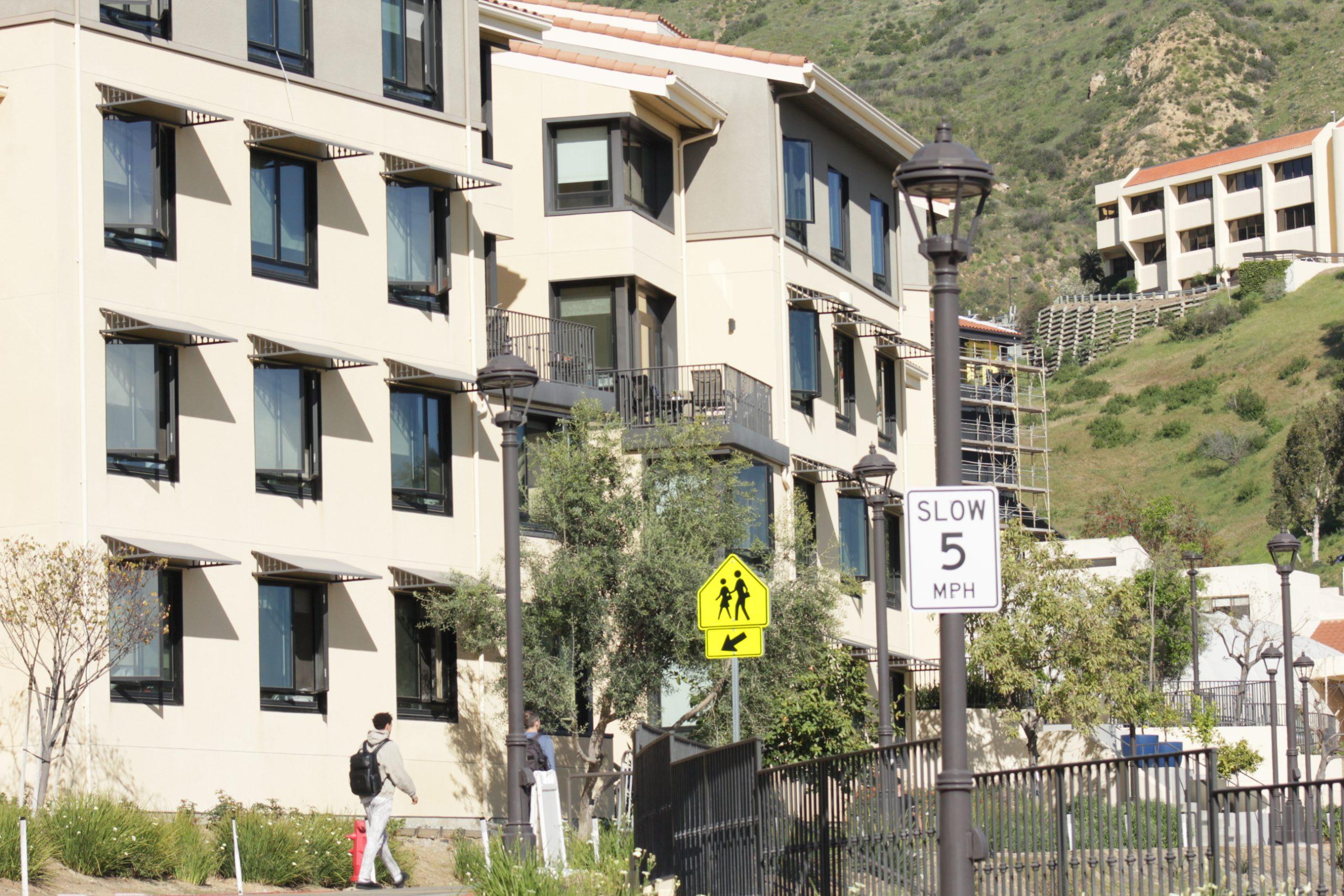
The Mountain’s construction site peeks out from behind Seaside on Jan. 26. Seaside Resident Director Suha Lim said triple-bedrooms existed at Boston College, where she was previously a Resident Advisor, but unlike at Pepperdine, students were not given a choice at a lower price point; rather, they were placed into them. Photo by Oliver Evans
Housing and Residence Life (HRL) converted several Seaside dorms into triple-bedrooms last semester. With the second semester underway, students and HRL staff can reflect on the decision and how it is affecting the first-year experience.
Data on how the triples were used is being looked at, University officials said.
The benefits of living in a triple, such as having more roommates for more diverse perspectives, far outweigh the negatives, triple-bedroom residents in Seaside said. The main downside is that there is less storage space when compared to a traditional double-bedroom.
“It’s a great opportunity just to get multiple people in your room to bond with,” first-year Thomas Wiedensohler said. “Especially if you’re coming from a smaller household.”
The Future of Triples
HRL has a general target number for admissions next fall, but that number can sometimes be a moving target, said Brittany Skinner, associate dean of Student Affairs. The larger first-year class this fall meant the University had to get creative with housing, and with a smaller incoming class next fall, not as many people may need to be placed in Seaside.
“The size of every class impacts our housing in a kind of four-year ripple effect,” Skinner said.
Students who choose the triple option receive a $1,400 discount on their housing, according to previous Graphic reporting.
“One reason for a triple is to have something at maybe a different cost point,” Skinner said. “We don’t want that to be the only reason students choose a triple.”
If a resident leaves a triple and only two people remain, it does not accomplish what HRL wants from both a business and residential perspective, Skinner said. HRL wants residents to experience living with an additional person to build that community.
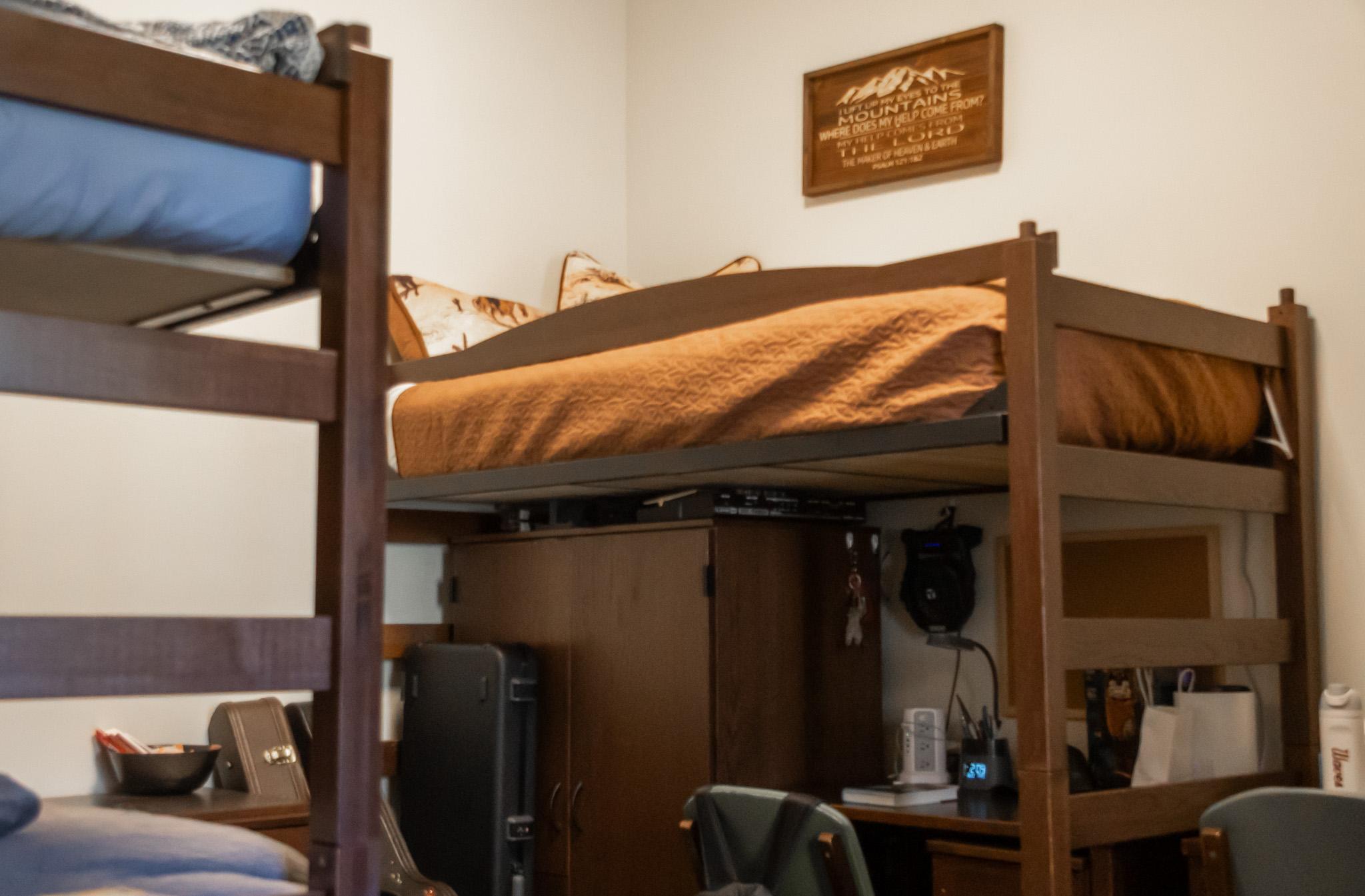
A bunk bed accompanies the loft in a Seaside triple-style room. Feedback from long-time Housing and Residence Life staff members was used in the planning of this arrangement, said Brittany Skinner, associate dean of Student Activities. Photo by Olivia Schneider
HRL has a lot of ideas if the University keeps triples for one more year, Skinner said. For instance, would the University offer them to sophomore students instead of first-year students?
“We’ve done triples on our campus, in different areas and with different students,” Skinner said. “Some of it is both data research and kind of what’s trending, and then trial by error.”
Asking those questions and seeing how it went for students is going to help the University decide, Skinner said.
Perception of Triples Among HRL Personnel
When RAs in Seaside found out at the beginning of the year they would have residents in triples, they were surprised, said Suha Lim, a Seaside resident director who oversees the first-year section. RAs have adopted the idea that they will be seeing three people in these rooms, rather than two.
“Because there aren’t a lot of rooms with triples, RAs are actually able to give them more specialized attention,” Lim said. “Almost because they remember the triples more.”
Junior and Resident Advisor Isaiah Grey said he noticed these rooms felt very stuffy and claustrophobic when he did knock-and-talks. During most of these knock-and-talks, the triple residents would be out of the room because it is hard for all three of them to work on things together.
“I’ve heard complaints, just minor complaints,” Grey said. “People just saying that there wasn’t enough space to keep all of their stuff.”
Skinner said she does not think all of the triples in Seaside are full. HRL has received no feedback that suggests students want to move because of the triple experience.
“These spaces are very manageable for the amount of things students bring,” said Lim. “But definitely, I think minimalist is better.”
There was a situation in which a triple room became a single because two residents had moved out, Lim said. It gave the resident, who still resided in the triple, the opportunity to invite two other friends because they felt it was a safer environment.
Grey said continuing to provide triples to students who cannot afford regular housing is a solid option. However, he would advise against the trend of turning more doubles into triples.
“If anything, it would just be the seven rooms that we did,” Skinner said. “Would we just continue to leave them as triples?”
With a smaller first-year class, there might be an opportunity to try triple-bedrooms with second-year students, Skinner said.
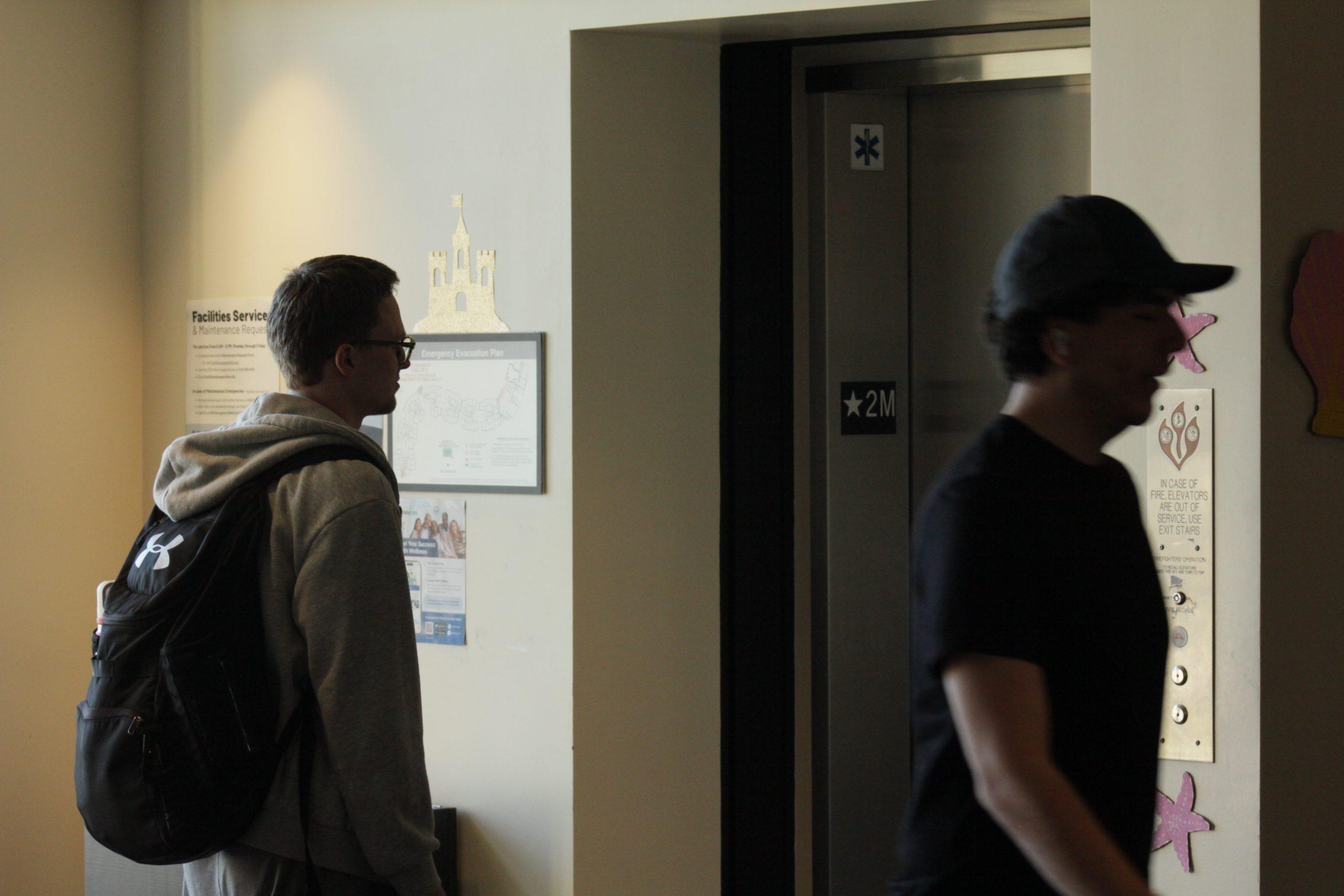
A Seaside resident waits for an elevator in the lobby as another walks past Jan. 27. A goal of Seaside is to host events for the entire building, where residents can interact with one another, Seaside Resident Director Suha Lim said. Photo by Oliver Evans
Student Experience
The biggest issue is the lack of space, because he likes to play instruments, First-year Hayden Chow said. He had an electric drum set that he decided not to bring back after the fall semester because it was taking up too much space.
One roommate was considering moving out but ultimately decided to stay because he liked the other residents, Chow said.
First-year Lauwidson Pangaribuan said he faced challenges in his triple when he woke up for his 8 a.m. classes. He said he was afraid to wake up his roommates when he climbed down from his bunk and would accidentally drop things.
Wiedensohler said he felt his academic life was actually improved because his roommate was also a musician, and because Wiedensohler’s classwork involved a lot of guitar work, they could jam together. Most of his studying was done in the Seaside lobby. When one of his roommates moved out, he could not tell the difference in terms of space.
Pangaribaun said his decision was heavily influenced by the financial soundness of selecting a triple rather than a double. Additionally, he said that he thought having a third roommate would help him connect with others on campus.
“I feel like nothing really changed,” Pangaribuan said. “I feel like I’m just as in the community as I would be if I were in a double.”
Even with the challenges of being in a triple, the good outweighs the bad, Pangaribuan said. He would not have had as much fun if he were in a double.
“One of the benefits of having a triple is having a little triangle relationship,” Wiedensohler said. “I love having multiple people to talk to, getting multiple perspectives.”
_________________________________
Follow the Graphic on X: @PeppGraphic
Contact Oliver Evans via email: oliver.evans@pepperdine.edu