
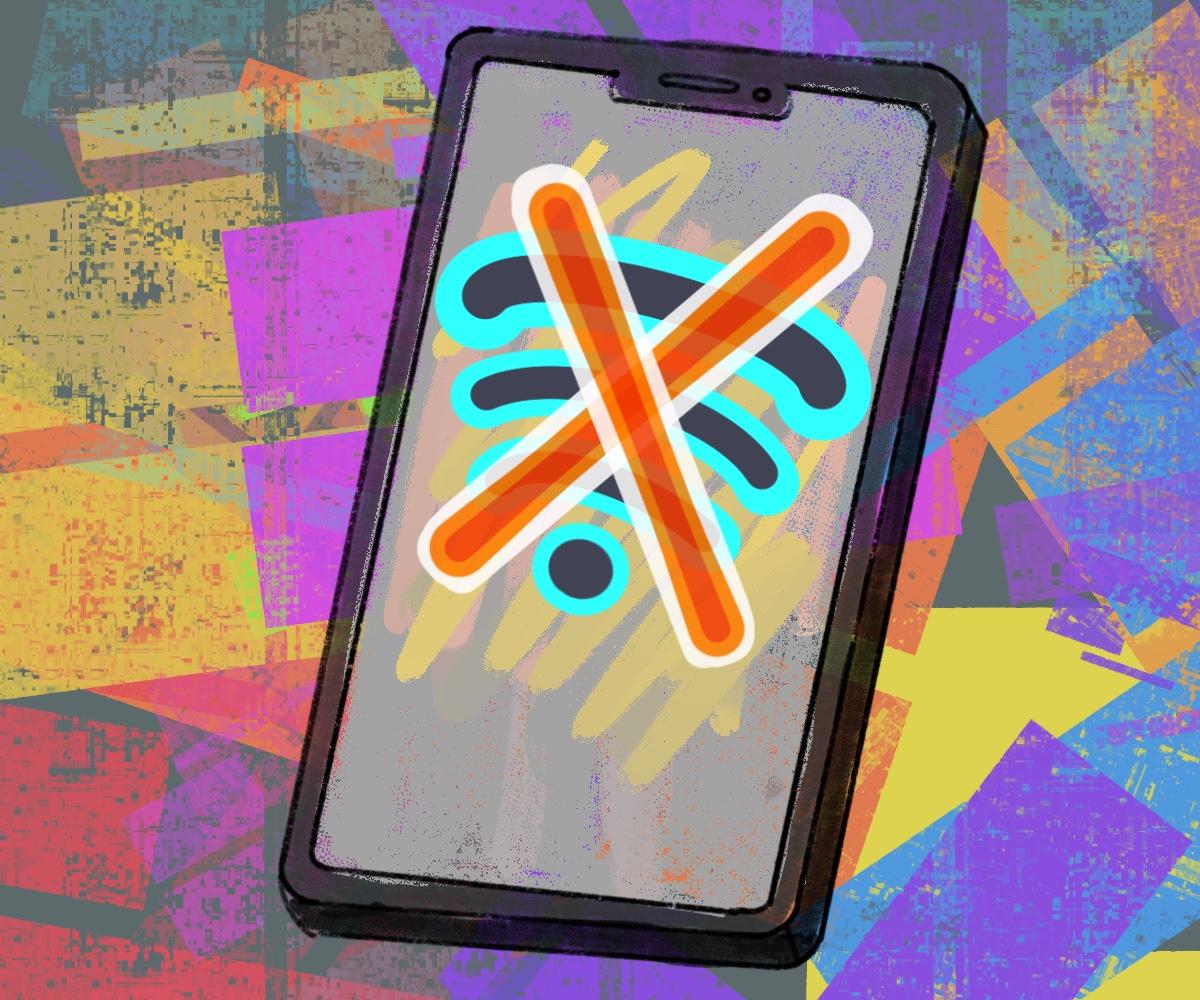
Transparency Item: The Perspectives section of the Graphic is comprised of articles based on opinion. This is the opinion and perspective of the writer.
There are certain things we do to keep us alive. Tasks like eating food, drinking water and getting a decent night of sleep are non-negotiable elements to staying alive. Although eating, drinking and sleeping are the “core” essentials for survival, there is something else that is often overlooked but equally important.
Social connection is a biological necessity.
“Evolution has placed a bet that the best thing for our brain to do in any spare moment is to get ready to see the world socially,” Neuroscientist Matthew Lieberman said.
Humans are neurologically wired to seek relationships, form bonds and establish connections with one another. Connecting with one another is vital to our species and imperative for our survival, according to Psychology Today.
This world has entered a digital age where screen times average nearly seven hours a day, according to Brown University Health. Having the ability to communicate and get into contact with an infinite amount of people at any given second makes it pretty inevitable we are “connected.”
Yet the way we define “connection” has dramatically shifted. The question is no longer whether we are connected — it is more about how we are connected.
Social media platforms present themselves as tools for our innate social drive. Apps like Snapchat, Instagram and TikTok are purely based on interaction and social engagement with strangers and friends.
The issue is because phones and social media allow people to feel so “connected,” they begin to serve as a substitute for deep and genuine connections. A psychology research study showed face-to-face communication can provide enhanced quality of life, while internet communication cannot, according to PsychMinds.
Snapchat, in particular, has severely reshaped the standard for what connection looks like. Friendships and relationships are often maintained through sending selfies or “snaps” back and forth without any depth, conversation or emotional substance.
Snapchat has created an illusion that a relationship is being sustained through meaningless photos while avoiding genuine interaction. It is easy to believe sending snaps back and forth is enough to maintain a connection with someone, when in truth it is actually normalizing daily interaction without real engagement or investment.
There is so much more to maintaining a relationship than frequency of contact through Snapchat. Research on interpersonal communication has proven countless times deep connections need meaningful exchange of self-disclosure, something that can only be achieved in person, according to a study in the Journal for Research in Applied Sciences and Biotechnology.
Unfortunately for Gen Z, this mode of communication has become the default, slowly allowing an entire generation to be constantly in touch without ever truly connecting.
Similarly, Instagram can often function as a shortcut for forming opinions about others. It is easy to scroll through a precisely curated profile and make an assumption about who they are without ever speaking to them.
This creates a false sense of familiarity without real connection and allows people to feel socially “informed” without needing to make any true social effort. In doing so, social media erodes human experience of first impressions and getting to know people, replacing them with false senses of judgment.
TikTok, especially, has become an easy escape from uncomfortable social moments. In awkward or intimidating social situations, it is easier to get on TikTok and scroll than to stay present and engage with the people around us.
As a student, I often walk into a classroom and nearly everyone’s head is down with their eyes locked on their phone. I am guilty of this as well, but when I look at it from an outside perspective, the zombie-like scene is pretty frightening.
Phones have become a method to escape the real world, especially when the world involves physically socializing with one another. While having the ability to escape reality through a phone feels easy and comforting, it becomes problematic when we start choosing our screens over the people physically around us and forfeiting the use of social skills that are crucial for our beings.
In a 2012 presentation, MIT professor Sherry Turkle warns that technology and online personas are redefining human connection and communication, according to Turkle’s TED Talk “Connected but Alone.”
Turkle said people often view physical conversation as “dangerous” because it lacks control. Digital communication allows people to carefully calculate their words and precisely construct how they are perceived.
Social media contributes to a world where meaningful connection is replaced by shortcuts. Social media and digital communication are substitutes for the effort, vulnerability and true engagement that is required to build real relationships.
In the long run, social media has not eliminated our need for connection, but rather it has given us the illusion we are fulfilling it.
“We are all hiding from each other even as we are all constantly connected to each other,” Turkle said.
It is time we stop hiding.
Pepperdine, thankfully, is a school built on community. There are so many opportunities to connect with one another on a real, genuine level.
Put down that phone, talk to someone new and go use the social skills that make us all human.
___________________
Follow the Graphic on X: @PeppGraphic
Contact Eva Shauriki via email: eva.shauriki@pepperdine.edu