
LISA YAMADA
Staff Writer
There were two more days until spring break was officially over at Santa Monica High School, affectionately known as SAMOHI. With no computer at home, Kimberly P., a 15-year-old freshman at SAMOHI, is spending her last few days of school-free bliss browsing the internet at the Pico Youth and Family Center. Kimberly’s mother, a housekeeper, has left Kimberly’s little brother in her care for the day. He fidgets in the chair next to her as she clicks from page to page.
 Santa Monica Postal Code Map
Kimberly is from the Pico Neighborhood. Predominantly black and Latino, the 90404 area known as the Pico Neighborhood is home to the highest concentration of residents in Santa Monica who live in poverty, according to a RAND report in 2000. It also contains the largest percentage of female-headed households in Santa Monica, and residents barely scrape by on about $39,800 a year.
Kimberly said her mother is trying her hardest to look out for her and Kimberly’s four other siblings, but like many other families in the neighborhood, it can be tough for these single mothers to provide the necessary resources for the entire family.
“Students from this area might be on free or reduced lunch and maybe are wearing the same pair of tennis shoes that their brother wore because that’s all they could afford,” said Al Trundle, a counselor at SAMOHI.
Meanwhile, less than two miles north of the Pico neighborhood, the contrast is striking. North of Montana, in the 90402 district, million dollar homes line the streets, shiny cars with paper tags await newly-turned 16-year-olds, and few are on free or reduced lunch. Ranked as the 8th most expensive zip code by Forbes, residents here bring home over $118, 000 annually.
It’s a clash of cultures and classes that essentially divides the city of Santa Monica into two.
The Two-School Phenomenon
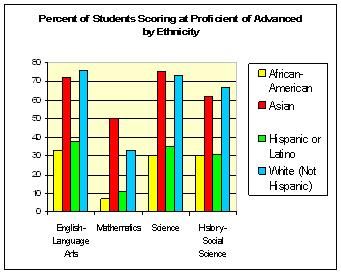 Fig. 1 (Data taken from SAMOHI’s SARC report)
What has emerged out of this two-city community is an educational disparity at Santa Monica High School between working-class students of color and more affluent white students. Aptly dubbed the “two-school phenomenon,” many of the social and economic problems that students like Kimberly face in the Pico neighborhood spill over into life at SAMOHI.
As a result, testing scores of black and Latino students are considerably lower than that of white and Asian students (See Fig. 1).
In the low-income Pico neighborhood, students do not have access to resources that many in the 90402 area are privileged with.
According to Trundle, students in the Pico neighborhood don’t have the extra money to attend SAT prep courses or the opportunity to gain an international worldview by, for example, traveling to Europe. Sometimes the students are forced to get jobs to support their family. Without access to these resources, Trundle said, the student from Pico may feel inferior to students who do have access to these resources asking themselves: “‘What could I possibly say or contribute compared to that?”
T w o C i t i e s : C o m p a r i n g C o m m u n i t i e s
|
90402 Median Income (1999): $118,553Average Household Size: 2.25Median Sales Price (2006): $2,375,000Percent Using Public Assistance: 1.2Percent of Whites Living Here: 85Percent of Blacks Living Here: 1Percent of Hispanics Living Here: 5Percent of People Living in Poverty: 6.6Percent of Female-Headed Households: 8.7 |
90404 Median Income (1999): $39,821Average Household Size: 2.2Median Sales Price (2006): $625,000Percent Using Public Assistance: 11.8According to the United Way, of the 5,415 people on public assistance in SM, the majority (45%) are concentrated in the 90404 area.Percent of Whites Who Live Here: 52Percent of Blacks Who Live Here: 9Percent of Hispanics Who Live Here: 29Percent of People Living in Poverty: 22.0In 1998, a family of four with two children under 18 must have earned $16,530 to be living in poverty. The 90404 rate exceeds the national poverty rate.Percent of Female-Headed Households: 29.3 |
Source: 2000 RAND analysis of Santa Monica, Median Sale Price from, Trulia Real Estate Online
Often times, students in the Pico neighborhood do not have access to a computer, making it harder for them to quickly access necessary information. Because the school posts students’ grades online, parents with no access to a computer also have a harder time accessing the necessary information to keep their child accountable.
“If you don’t have a computer,” Trundle said, “you have to either come to school, or go to the library—which parents do—but it’s just so much more convenient…when you have the resources [at home]. Parents can’t as easily say, ‘I’m going to call their teacher to see what’s up with my kid.”
For Kimberly, who doesn’t have a computer at home, turning work in on time is the most challenging thing about school. “It’s hard because… if I need to turn something in, I have to go to school to use their computers, but I usually just don’t do it.
“[The teachers] should reach out more to kids,” Kimberly continued. “[Students] are probably not going to like it, but they should have forced after school studies if they’re not doing good.”
Student representatives from each house also expressed this sentiment. During a student-teacher advisory meeting, the student representatives suggested ways in which teachers could help students improve. According to Trundle, the bottom line, the student group concluded was: “Get to know your kids.” The more teachers develop a relationship with students, the more a student will prepare for the class, and the more a teacher will understand where students are coming from.
In an effort to keep students accountable and build relationships between students and teachers, the school reorganized into six smaller learning communities, or “Houses” in September 2003. The 3,500 student body was divided into six equally diverse groups based on factors like ethnicity, socioeconomic status and grades. According to the school’s website, the house system aimed to close the achievement gap by enhancing personalization and promoting relationships between students, teachers and advisors.
The house system was a way to anticipate and identify students who might potentially have problems, Trundle said, and the small houses of 600 allowed for personalizing intervention programs according to a student’s needs.
In an effort to reach out more to students and enhance personalization, the school has kept the student-counselor ratio low. With two counselors in each house, each counselor has only 300 students on their caseload—unheard of for such a large school. This has allowed the counselors to build relationships with the students, because anything that involves the student—whether absenteeism or discipline—the counselor is in the mix.
“Anytime the student needs anything, they have to come see me,” Trundle said. “My door opens up into the hall…so students stop by and see me or wave when they pass by. There’s just a little bit more interconnectedness with the students.”
Kimberly said it has been helpful having counselors in house. “If I ever have a problem,” she said, “it’s easy to just go and talk to them.”
For students who may be struggling in classes, SAMOHI offers many opportunities for students to get extra help, including after-school tutoring services, a program called algebra-bio-block—which gives students struggling with math and science extra time to get caught up—and tutorials to help students pass the California High School Exit Exam. In addition, the school offers an Advancement Via Individual Determination program or AVID, which supports students who are the first in their family to attend college.
The school also has an open-door AP policy, which allows students to waiver into any one of the 18 advanced placement classes. While challenging students who are excelling, this open-door policy gives all students the opportunity to experience courses that they may not normally be exposed to.
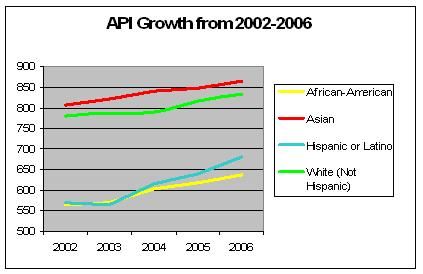 Fig. 2 (Data taken from SAMOHI’s SARC report)
“We want as much as possible for students to have the option to take AP exams,” Trundle said. “They get an investment into their education that might be slightly different…which could have an echoing effect as they go on to college.”
Whether it’s a result of the growing relationships that help keep students accountable or the intervention programs, test scores at SAMOHI are increasing all across the board, including for blacks and Hispanics. In 2006, SAMOHI’s academic performance index, an annual measure of the academic performance and progress of schools in California, jumped 25 points. Though there is still a large disparity between the two schools, scores of blacks and Hispanics are slowly, but surely, increasing (See Fig. 2).
Breaking Down Ethnic Boundaries and Creating Cohesion
The house system also creates an environment that encourages learning by giving students an identity said English teacher, Tisha Reichle. “It’s so overwhelming to be with so many kids,” she said, “but now they have an identity that’s not 3,500, it’s 600.”
Because the students want to be able to relate to and find identity with their peers, “[the house system] helps pull everyone up,” she said, and a student is more likely to participate in class. “Even though [a student] doesn’t like to read, they’ll at least skim because they want to be a part of the class.”
Reichle recently saw how the house system creates cohesive bonds between students during a “house-building” field trip. She recalled one student who found solidarity among his peers.
“Usually this student is a pain…and he’s really good at avoiding my stares” she said of her technique to quiet students (with just one hardened stare, students instantly stop their giggling).
But on this particular occasion, on the way back in the bus, he was singing so loudly with the other students, “I couldn’t help but laugh along,” she recalled. “It was like bad karaoke…but he was having such a good time. It’s like a camaraderie,” she said.
With each house functioning as one cohesive unit, the school not only works to close the achievement gap, but it also works to decrease racial tensions by promoting relationships between blacks and Hispanics. Tensions between the two groups have continually plagued the school, further differentiating blacks and Hispanics from their more affluent white peers.
Tensions peaked on April 15, 2005, when a series of racially-charged fights broke out during lunch time, and a mob of 200 students rushed through the campus. Police swarmed the campus, and though tensions were momentarily quelled, friction between blacks and Latinos constantly bubbled just below the surface. Then, tensions worsened when a slew of racial slurs appeared, spray painted on classroom buildings in February 2006.
“It was really bad,” said Jackson, 18. “Someone graffitied ‘f—–g n—–s’ on one of the walls.”
A teacher who wished to remain anonymous said of the ethnic divisions: The whites, blacks, Asians and Hispanics all hang out in different areas during lunch, and “they don’t mix.”
“During lunch it does get super segregated,” said Davis, a 17-year-old black student. “The Mexicans usually hang out in that area,” he said pointing over his shoulder, “and the black students…just go where the loud music is, where the bass is coming from.” Behind him, black students are in small circles, dipping and rocking on each downbeat of rap artist MIMS’ new single, “This is Why I’m Hot.”
According to Trundle, the house system was an effort to bring the two schools together, to allow students to bond with each other and bridge racial boundaries.
And boundaries seem to be coming down. Through house-building activities, like field trips and other outings, students learn to look past ethnicity.
Trundle took the students out bowling for one such house-building event. With pins knocked over and pizza passed around, the students forgot about ethnic boundaries and were simply enjoying each other’s company.
“It’s easy to say something when it’s ‘that Latino kid’ or ‘that African American kid,’ but when you actually know them by their first name and actually spend time with them…” he trailed off. “It’s trying to get them to see not just the color of their skin, but that there’s a person behind it.”
“I don’t see it as that much of a problem,” Kimberly said, regarding tensions. “Students make those little jokes about it, but other than that, not really.”
Davis also said that the tensions have gotten better from last year, noting that many of the students who were causing problems either left the school or graduated.
One student, who declined to give his name, said that tensions have calmed down a lot, especially with the new administration. “Mr. Pedroza (the newly-appointed principle), he gets to know the students more,” he said.
Still Not Enough?
Despite the increasing test scores and the decreasing tensions, PTA member and parent Irma Carranza feels that more needs to be done. Students are continuing to fall through the cracks, she said, and students are continuing to fail. “Parents are supposed to take care of their children…clothe and feed them, put a roof over their head. The school is supposed to educate them,” she said, “and according to the stats, they’re not doing that.”
She recalls attending a PTSA meeting following a shooting on Dec. 27, 2006, of one of the youth in the Pico neighborhood.
“I remember a parent wanting to talk about soda—why we sell sodas in the soda machine and about how unhealthy that is,” she recalled, her voice unable to hide her emotion. “There’s an achievement gap, there’s youth violence, and that’s…the best thing they could talk about?
“I want to talk about that, but I don’t have the luxury or privilege…to talk about something light, because I’m worried about my kids’ lives,” she said, wiping tears from her eyes. “I’m worried about the kids who are failing and being shipped off to a holding place—Olympic High—and you want to talk about sodas?”
“We are aware of the concerns that the neighborhood has,” said a sympathetic Trundle, “and [we] try as much as possible to reach them.” A student is moved to Olympic High School, a continuation school for struggling teens, when he or she is failing enough classes to put them one semester behind.
“But we send them over in hopes of getting them back,” Trundle reasoned. According to him about 70 percent of students who are sent to Olympic eventually come back to SAMOHI, and most of the 30 percent who don’t come back go on to graduate from Olympic.
“It’s a choice,” said Reichle, her English class now mostly quiet and reading silently. “When I was younger, I had to shovel manure, pick weeds and even after that I still did my homework,” said half-white-half-Latina teacher. “Again, it’s a choice.”
Trundle said he knows how concerned parents are about their children, but believes the school, through the house system, creates an environment where each student feels valued.
“It’s about getting to know who and what that student is…and consequently making the environment where everybody feels valuable and feels like they have something to offer.”
In a study by the Commission on Children at Risk in 2003, researchers examined the growing numbers of children and adolescents who are failing to flourish, and sought to determine why more and more youth are suffering from mental illness, emotional distress and behavioral problems. Their research concluded that the human person is biologically primed, or “hardwired” to connect.
At SAMOHI, parents, teachers and students recognize this importance of making connections, of building peer-to-peer and teacher-to-student relationships, and the effects of these connections are beginning to show. Though progress is slow, it is steadily moving in the right direction, continually building relationships and encouraging growth.
05-23-2007