
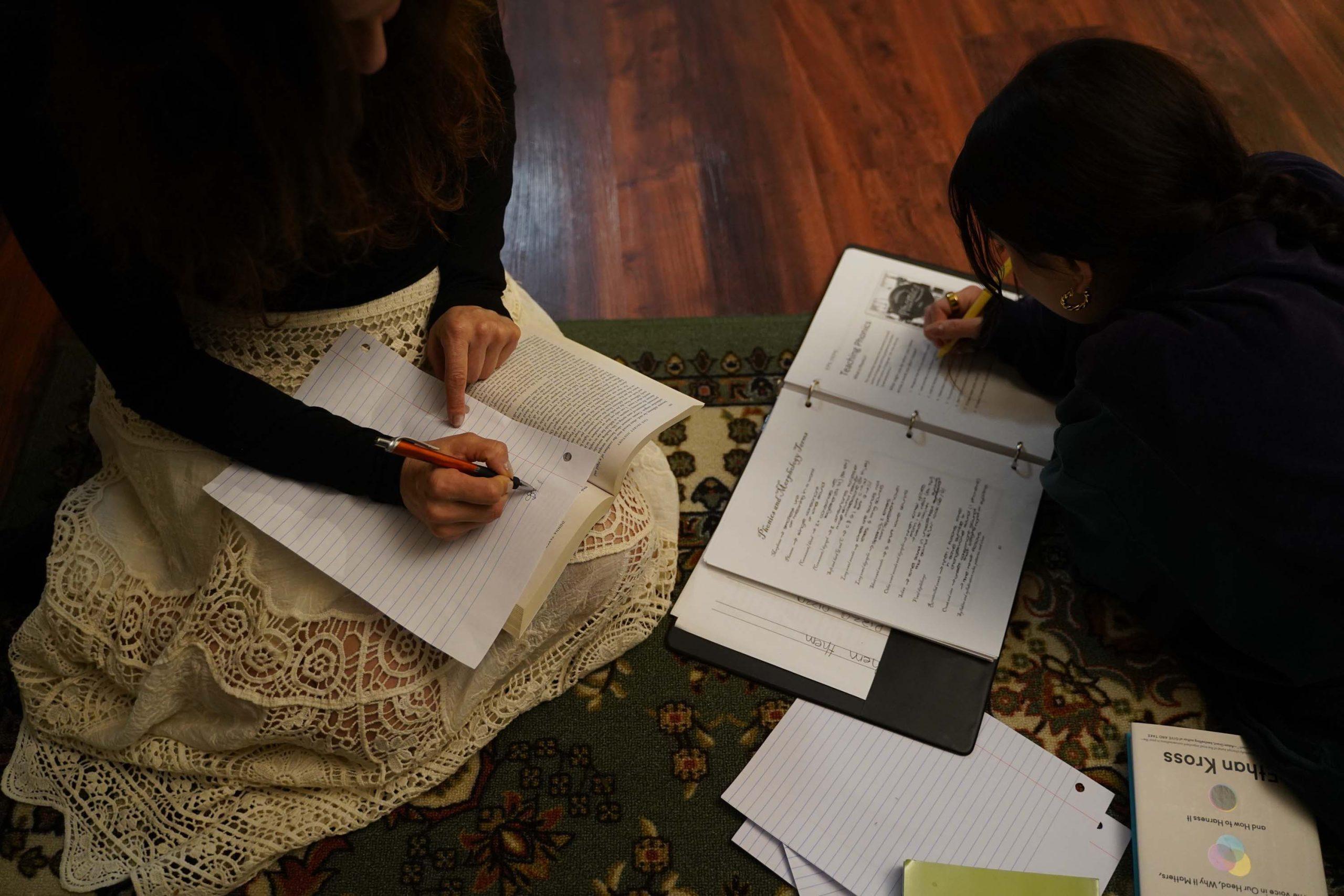
Photo by Melissa Houston
Pepperdine alumna Anika De Long’s (‘21) bamboo-trimmed loft bed held her entire routine.
Her fluffy pillows and a comforter with a tropical Hawaiian print rested on the top half. Below the lifted bed was her school desk and books. A wooden staircase led from the mattress above to the workspace below, blending rest and work into a single piece of furniture enclosed within the teal walls of her bedroom.
As a homeschooled student, she climbed down the steps each morning and joined her online classes without ever leaving her bedroom. More often than not, she stayed in her pajamas, drifting first to the comfortable chair in the corner before turning to assignments waiting on her desk.
“There are many different ways to homeschool, and there are different family dynamics,” De Long said. “But so much of who I am as an adult is because of the way I was educated.”
Three Pepperdine students — all homeschooled for middle and high school — detailed contrasting experiences and routines. Their parents chose homeschooling for religious reasons or to give them more freedom.
While merging home and school requires discipline and personal boundaries, this academic preference invites enables students to experience hands-on learning and form deep bonds within their own families — with the potential for lasting impact on their educational and relationship skills.
Stereotypes and Misconceptions
“Antisocial.” “Easy classes.” These are just some of the labels often associated with homeschooled students.
Junior Jack Sulewski was homeschooled from preschool until college. He said those assumptions didn’t match his experience — that many of the stereotypes placed on homeschoolers are unjust.
“People see homeschooling as a form of otherness,” Sulewski said. “It is a different experience than public school, but it’s more similar than people think. You still take math, reading, English — you still do school and hang out with people.”
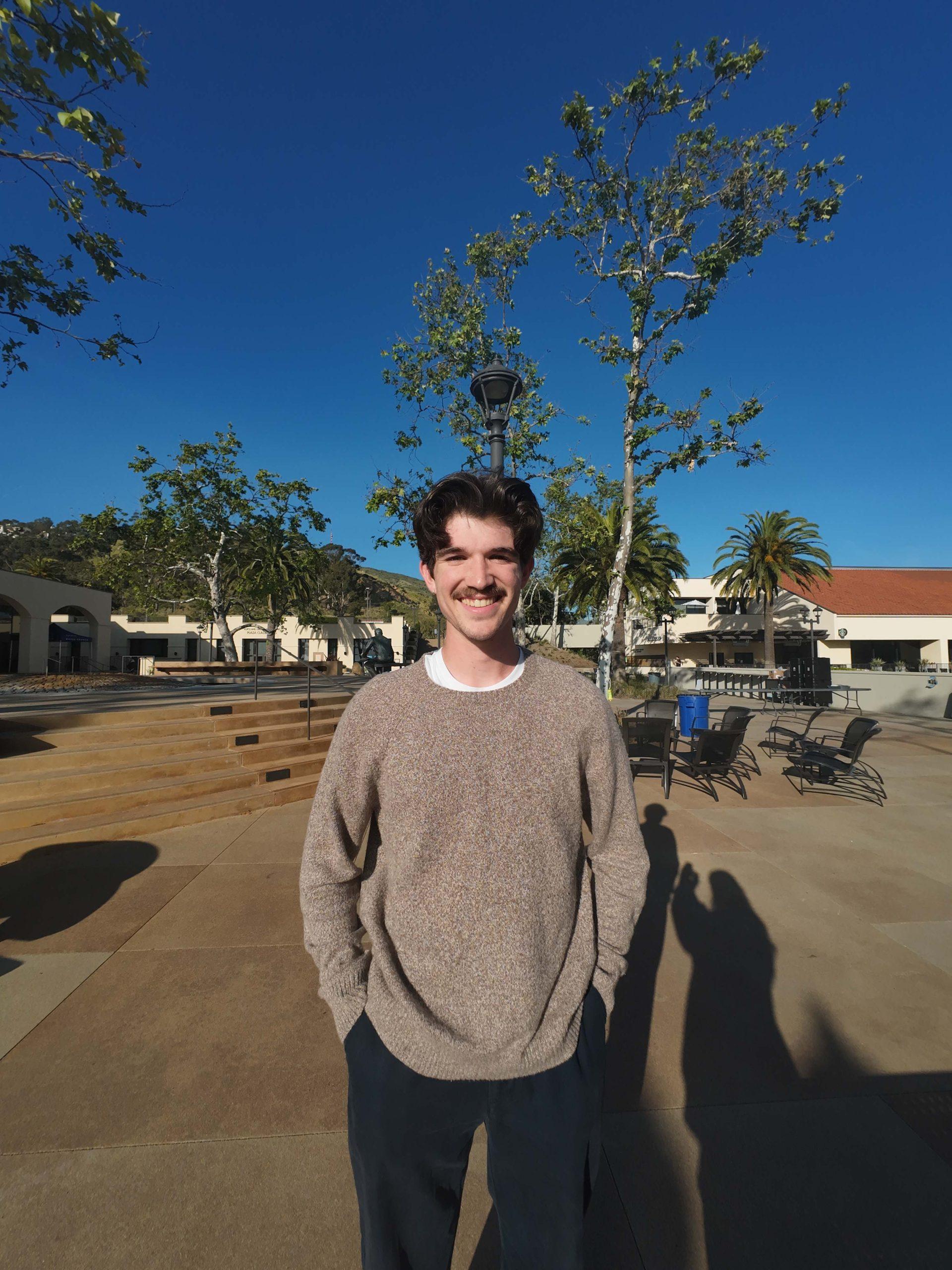
Junior Jack Sulewski said being homeschooled fostered his love of learning. Photo by Katherine Lytle
De Long said that although she is aware of the generalization that homeschooled students don’t have friends, she felt like she was surrounded by people every day. Her education held a different structure, but it still contained friendships and community.
Junior Grace Kepes defied the traditional misconceptions about homeschooled students by forming deep friendships through church activities. Her friends would come over to her house and spend time with her whole family.
“There were few moments where I was alone,” Kepes said. “I was almost always with my siblings, my parents, my tutor or my friends.”
De Long said homeschooling gave her an advantage in college because of the intensity of her online curriculum, even though moving from being home all day to spending most of her time away from family was not easy.
She was surprised by the difference between having friends and living life with friends — since she didn’t learn with friends in high school or have a cafeteria to talk to peers about classes. De Long said since she missed out on those experiences in high school, she deeply cherished them in college.
Sulewski said the learning skills his mom taught him while being homeschooled set him up for success in college. He did not find his classes in college challenging because he felt that working with a professor was similar to working with his mom.
“I was taught how to love learning,” Sulewski said. “I found in my experience that when you focus on the process and you enjoy learning, the grades will follow.”
A Closer Bond
For many students who grew up homeschooled, “school” was not defined by lockers or lunch periods, but by working over math problems at kitchen tables or spending their “recess” in their backyard.
When Kepes reflects on what “home” looked like throughout her personal homeschool experience that began in fifth grade, she said she pictures the fireplace lit and her family gathered around a game of Catan — with her dogs, Disney, a goldendoodle, and Lacey, a Bernese mountain dog, running around the living room.
Every day, as she spent her morning hours working with an online tutor on assignments, her dad made Eggo pancakes with lots of syrup for breakfast, which he would bring up to her bedroom while she studied.
“Being in such close proximity made us [her family] know each other really well,” Kepes said. “That closeness established the foundations of my identity.”

Junior Grace Kepes said as a result of being homeschooled she was able to grow closer to her family. Photo by Katherine Lytle
Sulewski said homeschooling is a more individual experience than people often realize, and his own experience was defined by the intentionality of his mother’s teaching.
Sulewski’s mom wrote the curriculum for his education herself. Even though she did not get her B.A., she spent 10 years educating him. Every morning, his mom wrote five to eight subjects on the chalkboard for him to focus on, and Sulewski would spend three to four hours working in the morning and four to five in the afternoon.
“When I was homeschooled, the grade was never the focal point,” Sulewski said. “It was always mastery-based learning. From a young age, it was about learning for the sake of learning — and this mentality changed how I read and how I pursue different hobbies, and it definitely shaped who I am today.”
Sulewski said field trips were an important part of his education, reflecting his mother’s emphasis on experiential learning. She took her children to various sites and landmarks — such as the Getty Villa and Olvera Street in Los Angeles — teaching them about California’s diverse history and cultures, often assigning additional reading afterward.
Sulewski’s mother would also regularly read aloud to him and his sister. He recalled sitting on the living room carpet while his mother read “A Tale of Two Cities” to him when he was in middle school. When he started high school, he found himself reading for enjoyment on his own.
Sulewski said this focus on reading granted him a unique perspective on life.
“When you read a lot of stories, you begin to see life more as a process than just as results,” Sulewski said.
Kepes said her family supported her as well, especially by offering love and comfort after a long day of rigorous academics. If she had a rough day, she could put on pajamas, walk downstairs and play a game or watch a show with her parents.
De Long said the aspect she valued most about homeschooling was the flexible schedule, which allowed her to dedicate plenty of time to extracurricular activities — particularly gymnastics.
“I tried a lot of different sports growing up — soccer, ballet, karate, softball, you name it,” De Long said. “I probably tried each for a season before I landed on gymnastics.”
A Lack of Clear Divide
Despite its benefits, students said that homeschooling sometimes made it difficult to separate academic responsibilities from everyday life.
When Kepes transitioned from an intensive homeschooling routine to an online school system in high school, the change altered how she experienced life at home. She said her house merged into a space that balanced relaxation and community with long hours of studying — her friends would frequently visit her in the evenings.
For De Long, spending too much of her day at home felt isolating, especially after her brother went to college and both of her parents were working full time.
“It was less the time at home that was the issue than it was the time by myself that became really hard,” De Long said.
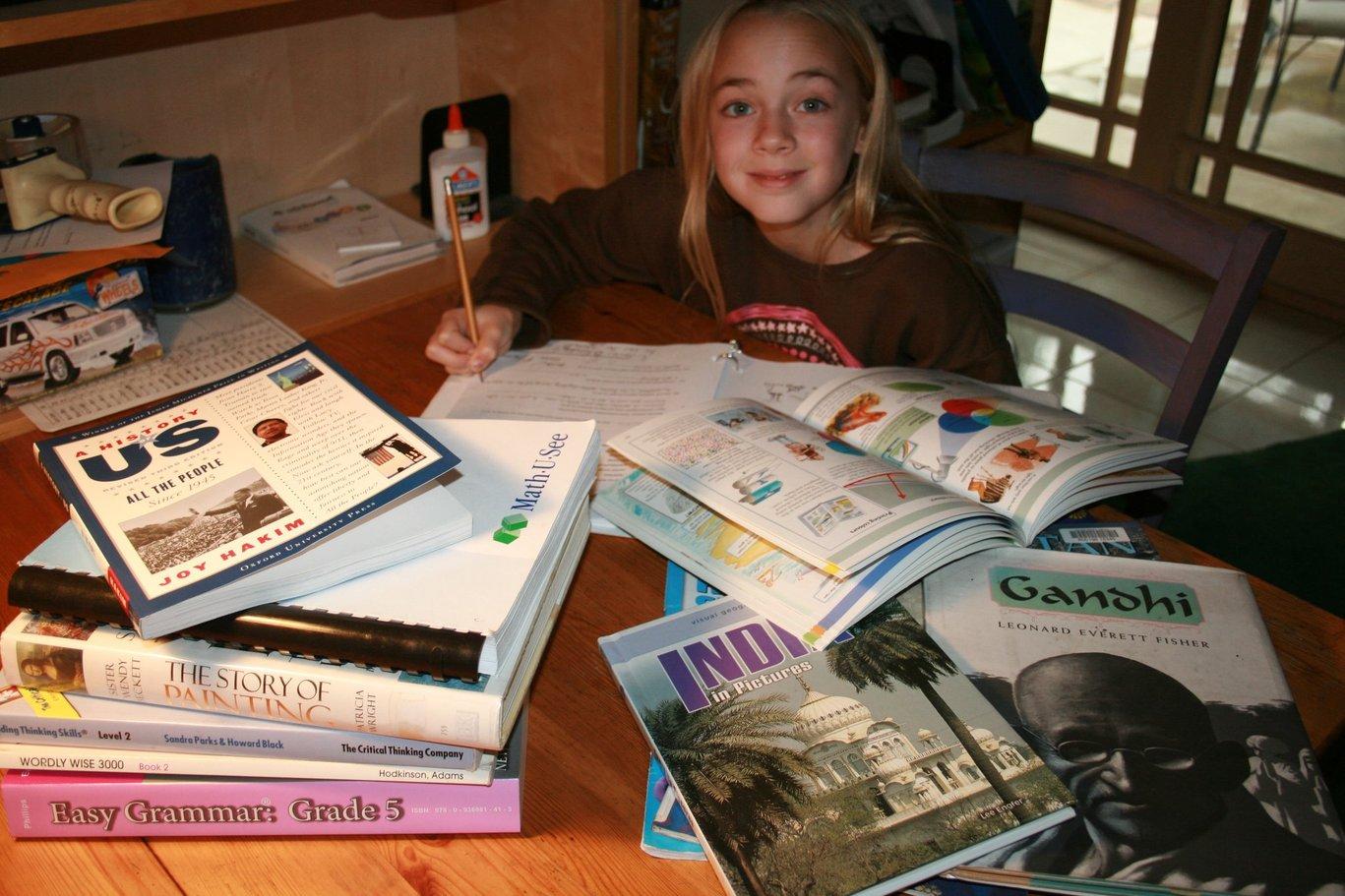
Anika De Long, a Pepperdine alumna, grew up as a homeschooled student. Photo courtesy of De Long
Complete separation between home and school is impossible when learning from home, but De Long said students can create boundaries with intention.
Later in high school, De Long tried creating separate spaces to distinguish school from personal life by dismantling the routine that took place entirely in her bedroom. She made the desk in her room just for personal things — such as journals and makeup — and in her office and library room, she set up a desk for school.
Most people focus on the “school” side of homeschooling — whether it’s rigorous or easy or how it impacts a child’s social skills — but Sulewski said he believes it’s the “home” environment that makes the largest difference.
“It’s volatile because it’s your home — the quality of your home matters, and your parents and family matter,” Sulewski said. “If you feel supported by them, which is a privilege, it can make all the difference.”
Sulewski was also able to maintain a balance between rest and work. He said he did his homework in the living room rather than his bedroom in order to focus better and that he was intentional about spending time outside of his house as well.
Kepes said her homeschooling experience affected the person she has become. The closeness that homeschooling allowed her to have with her family provided her a foundation of support and love that she now associates with her education.
“Homeschooling fostered a closeness with my family that established my identity in a really profound way,” Kepes said. “Having that sense of identity has allowed me to thrive in every new place I live and through every new experience.”
____________
Follow Currents Magazine on X: @PeppCurrents and Instagram: @currentsmagazine
Contact Annslee Mitchell via email: annslee.mitchell@pepperdine.edu