
By James Riswick
News Editor
As the dust begins to settle from California’s whirlwind gubernatorial recall election, political analysts are predicting Gov.-elect Arnold Schwarzenegger’s victory over Gray Davis could send shock waves throughout the California Republican Party and even all the way to the White House.
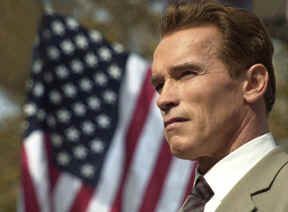 The Republican actor-turned-politician won a convincing victory over Davis and the 134 other candidates who opposed him on Oct. 7, returning the GOP to power after a five-year absence. But Schwarzenegger’s liberal stance on key issues such as abortion, gay rights and gun control make him a moderate in a state where Republicans usually select conservative candidates to run.
“Two things could happen here,” Pepperdine political science professor Dr. Jeanne Heffernan said. “The first thing is disgruntled Democrats who are liberal on issues like abortion and gay rights might be drawn into a moderate Republican Party. On the other hand, however, the fact that the Republican leadership did support Schwarzenegger leaves open the possibility … that there might be disaffection within the ranks (between moderates and conservatives).”
If Schwarzenegger’s resounding defeat of conservative Republican state Sen. Tom McClintock in the recall indicates a shift to the center by Republicans, it could help accomplish three main goals in the coming months and years. The first is the attempt to unseat U.S. Sen. Barbara Boxer and the second is President Bush’s re-election campaign, both of which will take place next November. The more long-term goal is to expand the Republican minority in the state legislature currently dominated by conservatives.
But Democrats and Republicans disagree on how much Schwarzenegger’s victory will affect two most immediate races.
Much of the discussion about Boxer surrounds whether Davis’ unpopularity and the anger directed at him by California voters will rub off on the liberal 12-year senator. Boxer supported Davis in his attempt to block the recall, but many Democrats think the voter discontent was mostly directed toward the governor and his administration and not other state Democrats.
Republicans argue that as a liberal Democrat, Boxer does not appeal to the majority of Californians and that Schwarzenegger’s election has rejuvenated California’s GOP faithful. That’s why a shift to the middle by Republicans could mean trouble for Boxer if voters connected with Schwarzenegger’s politics more than simply his star power.
It was that star power, however, that vaulted him to the top of the recall candidate list and had Republicans and Democrats alike voting for him, including Democrat Atty. Gen. Bill Lockyer.
“Schwarzenegger was a success with crossover voters,” said Fran Pavley, Assemblywoman for the 41st District which includes Malibu. “I was in the supermarket (before the recall) and people were saying they were going to vote just because they had heard of the candidate.”
Because of the recall election format, Schwarzenegger was also able to bypass state primaries, traditionally a stumbling block for moderate Republicans whose liberal stances on social issues usually hurt them in primaries.
“Because of the fact that there was not a primary,” Heffernan said, “the Republicans didn’t select the candidates in the way that they would have in a primary. Had they done that, it might have been the case that Schwarzenegger would have faced more serious challenges from other Republican contenders.”
Whether the GOP shifts to the middle under Schwarzenegger will largely depend on moderate candidates being able to clear conservative primary hurdles. Advisors and strategists for Schwarzenegger have said that the governor-elect is unlikely to endorse candidates in Republican primaries because of the collection of both moderates and conservatives who supported him during the election
In the end, though, Boxer’s trump card might very well be her overwhelmingly superior money supply. Her campaign has reported raising more than $7.35 million, while possible opponent and Silicon Valley business woman Toni Casey has accumulated the most out of the GOP candidates with only $540,000. Elections in California are usually the most expensive to run out of all states.
For the 2004 presidential election Republicans and Democrats are torn between what Schwarzenegger’s victory means for President Bush’s re-election campaign. With 1.3 million more registered Democrats than Republicans, California has historically been a slam-dunk for Democratic candidates. But with a Republican governor now in power, the GOP is hoping Schwarzenegger’s election will pay dividends come Election Day.
Democrats, however, see the recall differently. Like in California, they see a struggling economy and growing dissatisfaction with the Bush administration. The president’s approval ratings have fallen dramatically to about 50 percent since the Iraq war was declared over in April.
Democratic presidential candidate and former Vermont governor Howard Dean is playing on that growing dissatisfaction just as California Republicans did to gain support for the Davis recall. Throughout his campaign, he has attacked President Bush’s economic record and fervently opposed the war. Dean and the other presidential hopefuls are often described as being angry at the administration, just as California voters showed their anger with Davis.
“The voters in California directed their frustration with the country’s direction on their incumbent governor,” Dean said in a statement after the recall. “Come next November, that anger might be directed at a different incumbent … in the White House.”
But the GOP has a hard time believing that a Republican governor winning the most populous state in the union can harm a Republican president. Voters in California rejected both Davis and the negative politics of the Democrats, Republicans have said, and that dissatisfaction will carry into the 2004 campaign benefiting the president.
“(Schwarzenegger’s victory) would help Bush in that it would energize the Republican Party sparking new members to the party and greater voter turn out,” Heffernan said.
She also said, though, that Schwarzenegger’s election and a more moderate GOP could spark split-ticket voting in the state where voters would vote Republican on a state level, but Democrat nationally.
“It would not surprise me at all for people to vote for different parties for different offices,” Heffernan said.
Only time will tell how much of this partisan disagreement and wagering will mean in a year from now. Most would agree, though, that it would depend on whether the economies of California and the country as a whole improve. Also, until the Democratic presidential and California senatorial primaries are decided, the election picture will remain a strict guessing game.
One thing is for sure, after Schwarzenegger’s victory, those across the country now know that anything’s possible in today’s political world.
October 30, 2003