

Photo by Melissa Houston (’26)
There are 8.32 billion human beings living on Earth. That is 8.32 billion individuals experiencing life for the first time — each with a unique story to be told.
Instead of constantly uplifting the preciousness behind every distinct identity, society tends to overgeneralize groups of people, using labels to quickly sort individuals based on specific traits.
Labels are assigned to a person before they have the opportunity to speak — shaping how others perceive them and, sometimes, how that individual begins to perceive themselves.
Gender becomes a measurement of strength. Skin color becomes a stereotype. Identity is broken down and shoved into a box of limitations.
“You can’t stop. You can’t quit. You have to put your head down and work on turning something from being oppressed or suffering into strength and change,” said Jessica Barger, an award-winning attorney in Texas.
The discrepancy between truth and assumption is the place where injustice is born. Overgeneralizations threaten the power of human individuality, and labels begin to speak louder than the human beings themselves.
But, the fighting power of the human spirit prevails. A person is more than the expectations placed upon them, more than the stereotypes used to define them and more than the prejudices that attempt to hold them back.

Photo by Gabriella Anzelc
Difference to Division
For Pepperdine alumna Cady Moore (’26), her multiracial identity was something she never thought twice about growing up. Being born in Houston to her African American father and mother of Mexican and white descent, Moore said she grew up surrounded by diverse communities and backgrounds, thinking racial injustice was a thing of the past.
“I had this really odd, almost fantasy land in terms of race,” Moore said. “I lived in a multiracial household, and race was mentioned but it was never an issue. It was just like, some people are tall and some people are short, some people are Black and some people are white — that type of thing.”
When Moore was entering middle school, her family moved from the urban city of Houston to the suburbs outside of Fort Worth, Texas. At 11 years old, Moore was forced to learn what racial injustice was firsthand.
“It was really interesting to be more critically faced with the idea that my race has something to do with the way that I am able to operate in the world,” Moore said.
Racism was shockingly easy to find in her new home, Moore said. She recalled a first day of high school when a group of white students she already knew and had spoken to chose to sit on the opposite side of the classroom from her, leaving her completely isolated and confused.
“No, not men — it was white boys,” Moore said. “I was like, ‘No f–king way.’ It’s just that they didn’t care to continue a friendship with me, which was really, really odd. Also, it was just really really strange to see segregation happen in real life to me.”
This experience stuck with Moore as a prominent example of how her race could affect her relationships, others’ perceptions of her and her personal sense of belonging.

Photo by Gabriella Anzelc.
At Seaver College, 44% of undergraduate students are white, making up the University’s largest racial demographic, while African American students only make up 3% of the undergraduate student body, according to Pepperdine University. When it came time to choose a college, Moore said she was aware that Pepperdine, being a predominantly white institution, could stir up some of the same isolation and confusion she experienced as a teenager.
“If I choose this option for myself, I will be putting myself back in a predominantly white area, and I know the heartache and pain that comes with it,” Moore said. “When I came here, pretty much all my concerns were confirmed. But the fact that I kind of knew that going into it, I was able to emotionally prep and put up safety nets for myself.”
Moore immediately dove in to finding her community. She said she joined Pepperdine’s Black Student Association (BSA) in search of people who understood how she was feeling and the challenges she faced.
BSA became especially important during Moore’s time at Pepperdine, serving as a constant support system for belonging, even in the quiet moments. Moore said simple, ordinary experiences could remind her how her race set her apart from her peers, bringing up those feelings of isolation all over again.
“It’s such a normal college thing to be like, ‘Oh yeah, we’re all a bunch of girlfriends getting ready to go out,’ and then we’re all using each other’s makeup and hair stuff and everything,” Moore said. “But, I knew it was going to be me who supplies for myself. I won’t have that community in that same way.”
For Barger and fellow firm partner Marie Jamison, injustice presented itself in thoughtless comments from male counterparts, such as the idea that “it’s cute” for women to have law degrees or their work was “surprisingly” well done. Barger said she can recall times when men put her down, even when she was in the courtroom.
“[The judge] kept calling me a ‘little lady,’ and he kept asking me when I was going to wear skirt suits instead of pantsuits,” Barger said.

(From left to right) Jessica Barger, award-winning attorney in Texas; Cady Moore, Pepperdine Seaver College alumna ’26; and Marie Jamison, another award-winning attorney in Texas. All three of these women have experienced forms on injustice throughout their lives with their experiences shared within this article.
In Jamison’s experience, she has experienced both sexism and racism throughout her career as a Black female attorney in Texas. A lot of the injustice she faced was communicated via ‘mansplaining’ — when men would speak down to her on the assumption that she lacks knowledge or understanding — immediately disregarding her years of experience and qualifications.
Jamison said sometimes, she was doubted before court was even called to order. People would assume she was a legal secretary, and a judge’s body language immediately revealed their assumptions of her.
“There’s always a sort of preconceived notions or prejudice about someone’s abilities,” Jamison said. “It’s important for them to see and hear from someone who looks like me to break those preconceptions.”

Photo by Gabriella Anzelc
The Effects of Injustice
Barger used the injustices she experienced as inspiration to work harder and earn the respect she knew she deserved. She said she views prejudice as a reason to prove others wrong.
“That’s how I put my head down. I did my job to show [my daughters] that you don’t give up. You don’t give up just because it’s hard or because there’s injustice or because you’re a female and he’s a male and he doesn’t think you’re as smart as him,” Barger said.
The challenges she faced as a female lawyer pushed Barger to do more and be better, she said.
The same was true for Jamison, she said. Jamison learned to let the crude comments roll off her back and have her work speak for itself.
Jamison said she learned this approach before she even applied to law school. When she was entering her senior year of undergraduate schooling at Texas Wesleyan University, the head of the law department and her academic counselor were quick to deter her aspirations for a legal career.
“They said, ‘Miss Jamison, you are such a beautiful woman and you’re smart. You should just get your degree and marry someone,’” Jamison said. “All that did was motivate me even more. It’s motivating to prove people wrong.”
While Jamison found motivation in exceeding the expectations, Moore experienced another side of injustice, one in which the opinions of others began to threaten her self-image.
The effects of injustice extended beyond Moore’s sense of belonging. Racism didn’t just strip Moore of her identity — it left her questioning her own reality of understanding who she was.
“When someone is so confident and antagonistic toward your being, it shakes your confidence, not in an insecurity way, but in an, ‘Am I going crazy right now?’ way,” Moore said. “When someone is constantly underestimating you or seeing you as less than due to your race, and they’re so confident in it, it makes you go, ‘Well, am I wrong?’”
But where injustice creates division, resilience can create change. For Barger, the battle against prejudice meant rebuilding herself.
“Revival can mean a lot of things, and it has changed, it means you can speak freely, you can create your own narrative and no one’s going to put you down,” Barger said
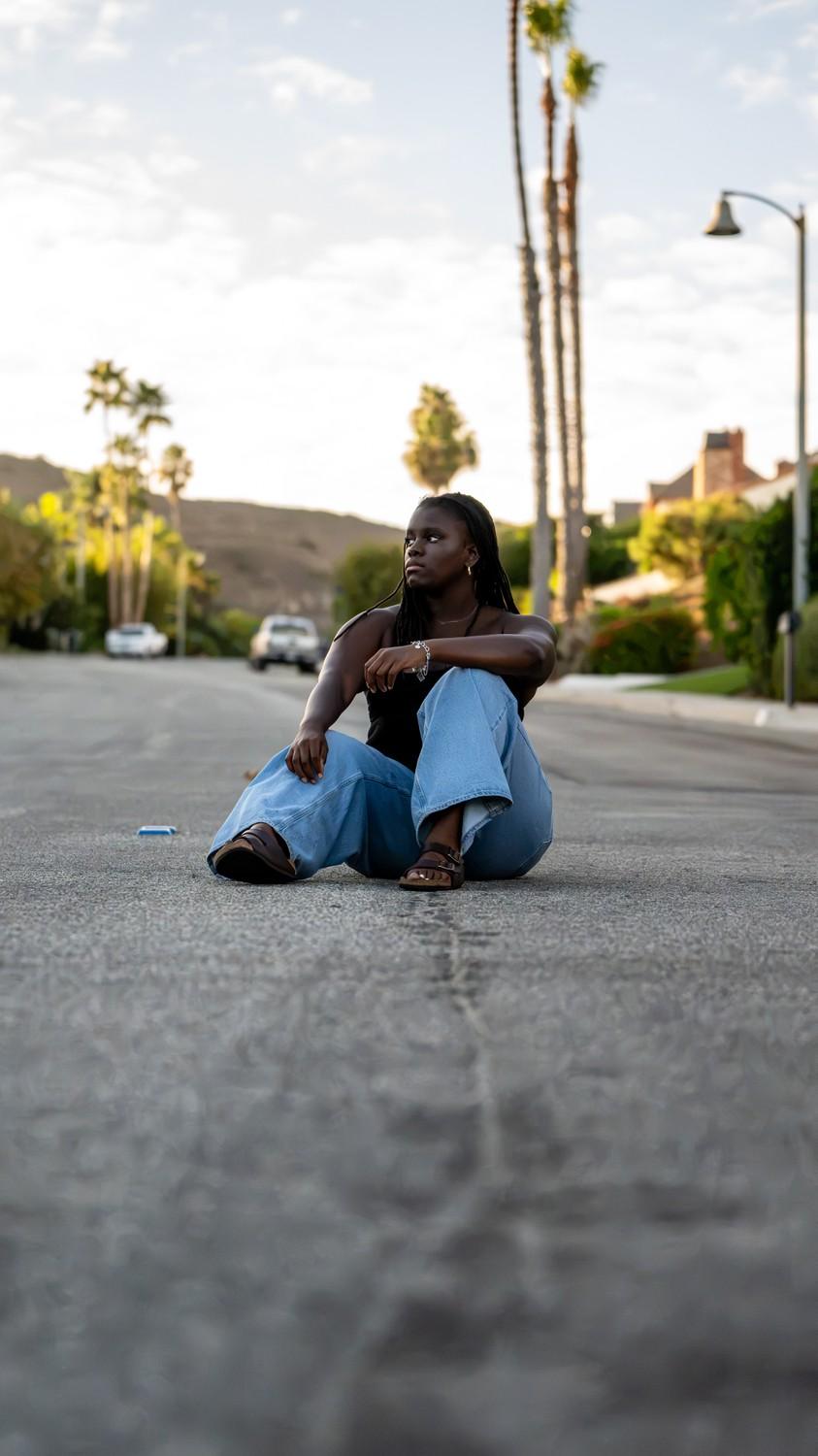
Photo by Gabriella Anzelc
Rewriting the Narrative
Barger said her path for revival was paved by those who came before her. Immediately after law school, Barger began working with former Chief Justice Kem Frost at the Texas Fourteenth District Court of Appeals.
Frost became a strong mentor to Barger who continuously led by example. Although Frost never explicitly discussed any personal injustices she experienced, Barger said she learned a lot from working closely with the former Chief Justice.
“She taught me that it was never going to be easy being a female,” Barger said. “She gave me a lot of guidance and pushed me and taught me that you had to fight for your place as a woman in such a professional, amazing way.”
With the support of other powerful women, including Frost, Barger was able to rebuild her life from the injustice she faced as a female lawyer in Texas while navigating a painful divorce. Two years after her divorce, Barger began working at Wright Brown & Close Law Firm in Houston.
As she continued building her career and learning from the strong women around her, she was also inspired by the many male attorneys she was surrounded and mentored by. This firm gave Barger a space to grow and work hard in a supportive environment.
A decade of hard work later and Barger had beaten all odds. She became an equity partner of the firm, and in 2018, Barger’s name was put on the front door, now dubbed Wright Close Barger & Guzman.
“That was the defining moment for me,” Barger said. “I just want to keep growing it and making it better, and I keep wanting to grow and teach other females on how to do the same.”
Now, Barger’s mission is to continue the legacy of female empowerment passed onto her. In expanding her firm, Barger said she wants to teach female lawyers how to be leaders in a “polite but strong way” — exactly how Frost taught her.
“Those female equity partners of mine with me are the only way that we can pave the way and be the best mentors for the next generation of female associates or non-equity partners that we have,” Barger said.
Barger and Jamison endured the hardships of being the sole female voice in the room. Both women acknowledged that gender ratios in law school seem to be evening out, but that equality is not necessarily represented in court.
Jamison said the discrepancy is even worse amongst women of color. Rather than letting the lack of representation discourage her, Jamison uses it as determination to make herself known.
“It doesn’t necessarily mean you don’t belong there. It just means that you’re going to have to have confidence in yourself,” Jamison said. “It means that you’re going to have to outwork everyone because as a woman — white, Black, Hispanic, whatever, just a woman in this field — men tend to see that first as opposed to the talent and skills.”
As she continues to practice law, Jamison also continues to use her voice to evoke change. In February 2021, Jamison reflected on her career as a Black, female lawyer in an article titled “I’m An Example of Why Diversity Matters” published in The Texas Lawbook.
“I don’t believe in sacrificing excellence for diversity. And there are certainly plenty of excellent minority lawyers,” Jamison wrote in her article. “Again, diversity yields a larger pool of talent. I am an example of that.”
She finished her article by arguing that visibility and representation were crucial parts of diversity. Jamison described the presence of different voices as a powerful tool in challenging stereotypes, broadening perspectives and inspiring future generations to chase the impossible.
“Our communities need to see minority lawyers in the courtroom, too. We represent our communities in so many different ways, and they need to see a variety of voices and perspectives in the bar. It may be a cliche, but diversity truly matters,” Jamison wrote in her article.
Representation has the power to challenge the narratives society has already written. Barger and Jamison both wield this power themselves, as they’ve stepped up and represented their clients in bigger courtrooms. Barger has argued in the Texas Supreme Court a handful of times in her career, and Jamison will make her debut appearance in the Texas Supreme Court in November.
For Moore, the power she holds comes from refusing to let others write her story for her.
Rather than letting the prejudices of others tell her story, Moore said she finds inspiration in rising above the noise — just like Barger and Jamison. Instead of letting isolation consume her, she uses it as fuel for challenging racial assumptions that once defined her.
“If I’m in this white space — white people are forced to interact with me in some way, shape or form — if I’m able to be incredible or at least respectable, then they won’t really have a choice but to see me and go, ‘Yes, she is Black, and yes, she is all of these positive attributes that I didn’t previously give to Black people,’” Moore said.
Moore recognizes the opportunity to confront injustice through her own actions and accomplishments, but she said she is fighting for something bigger than herself. By showing others the qualities they may have previously overlooked or refused to acknowledge, Moore hopes to challenge the stereotypical perception of Black individuals.
“I do think I have been kind of primed and prepped to be able to be a disruptor for racist ideologies,” Moore said. “I think Black people do that every day because Black people succeed every day, and I just think I’m one of them.”
Moore’s experience reflects a larger theme of revival — one that acknowledges the pain of injustice while celebrating the strength it takes to reclaim the story.
For Moore, revival is about recognizing the strength of rising above those injustices and finding pride in the person she has always been.
“The ‘re’ part of it just implies that there was life before and that it was taken away at some point, which is obviously painful and hard,” Moore said. “But, like a phoenix from the ashes type of thing, the fact that you came back is astounding and incredible, and something to have reverence for and to be proud of.”
This story was copy edited by Lila Rendel.
_________________________________
Follow the Graphic on X: @PeppGraphic
Contact Nina Fife via X: (@ninafife_) or via email: nina.fife@pepperdine.edu