
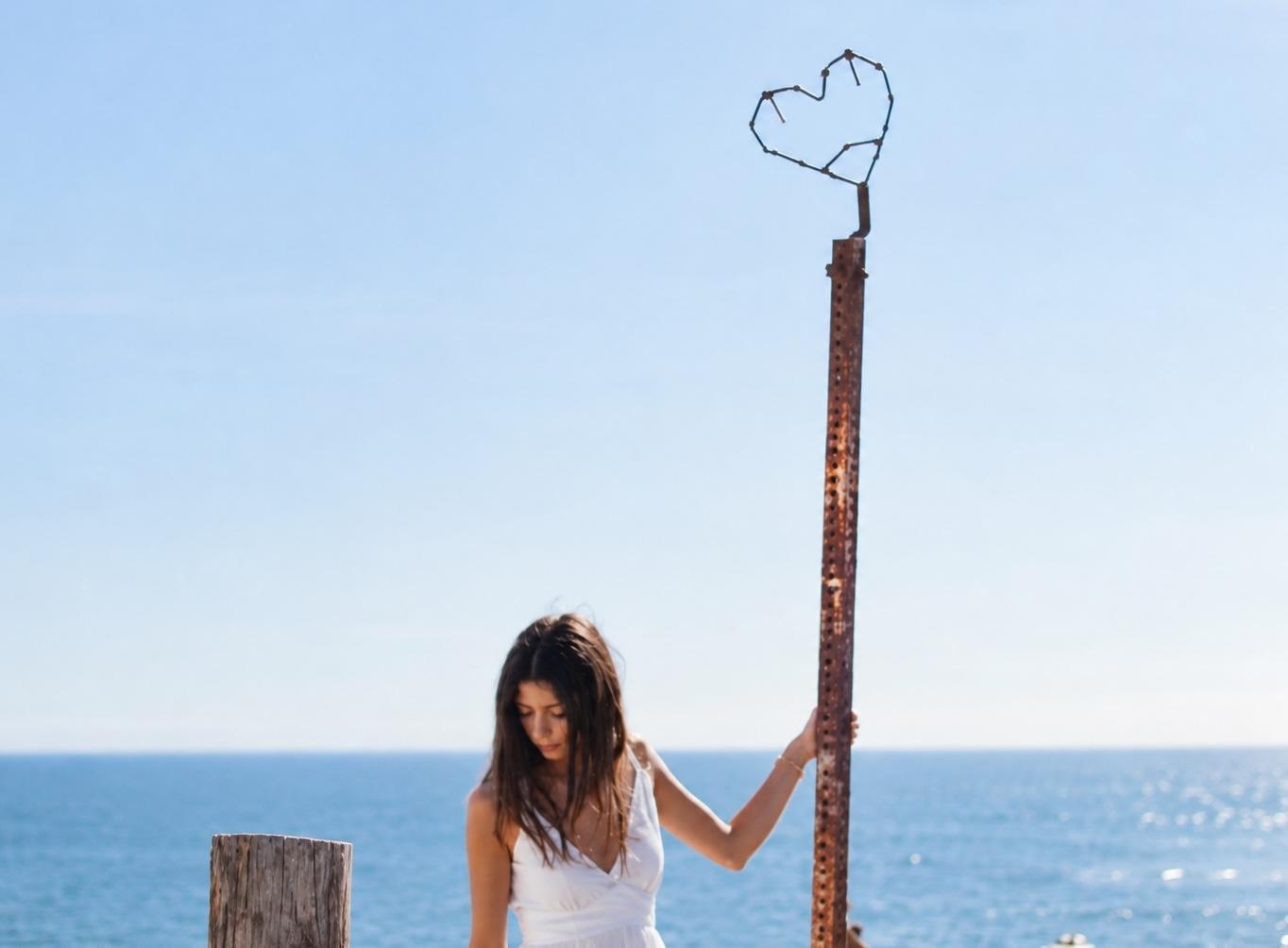
Photos by Knox Vestal
Editor’s note: *The source’s name has been changed to ‘Jane Doe’ to protect the individual’s privacy.
Love isn’t supposed to hurt. Love is the comfort of being seen, valued, accepted and uplifted for who you are — all without having to sacrifice pieces of yourself in the process.
For survivors of domestic abuse, their experience with love has sometimes left them questioning their worth, quieting their voice and losing parts of themselves in an attempt to keep their partner happy — becoming broken and beaten as the lines between love and pain become blurred.
Domestic abuse can also be referred to as Intimate Partner Violence (IPV). IPV is any form of physical, sexual, psychological or economic abuse and aggressions, including stalking and controlling behaviors, between current or former romantic partners, according to the U.S. Centers for Disease Control and Prevention.
Revival from abuse is not merely about escaping a harmful relationship. It can be about reclaiming the confidence, independence and identity that may have been taken along the way.
My own experience with emotional and psychological abuse taught me how difficult it can be to recognize harm within a relationship, especially when love and trust are involved.
For me, the hardest part wasn’t just walking away. It was accepting that a relationship I had fought so hard to preserve was also one that had caused me so much pain.
Seeking revival meant confronting the reality that someone I loved could also be someone who caused me pain — and finding the strength to separate the two.
For Jane Doe*, whose name has been changed to protect her identity as a survivor of domestic abuse, revival from abuse meant rebuilding the life and person she was before her relationship.
“Unless you’ve experienced something similar before, you are not in a position to necessarily understand what’s happening to you in the moment,” Doe said. “Abusers will harness onto anything in order to keep you suppressed and maintain control, and it touched every part of my life.”
A Heart Divided
Doe said she experienced IPV through severe emotional, psychological and financial abuse — all of which she is still recovering from four years later — along with physical and sexual abuse. She said she also experienced assault, torture and disarmament during her marriage.
“When it’s the subtle undercurrent and eroding your self-esteem and making you think that something is mentally wrong with you, that was a lot harder for me to recover from,” Doe said. “Abuse can be very disarming, especially when it’s psychological or emotional.”
Doe was 39 when she got married, living a content life in New York with her own business and support system but longing to start a family. The abuse from her husband started with manipulation and gaslighting, she said, which chipped away at her self-confidence.
“It erodes the sense of self, and it creates a lot of doubt in your own mind,” Doe said. “Is something really wrong with me? Am I losing it somehow?”
Over the course of nine months, the abuse spread into all aspects of Doe’s life and she started experiencing abuse related to her own mental health, fertility and medication — a form of abuse that isn’t necessarily thought of often, Doe said. Near the end of her relationship, Doe’s husband would hide her medication and cell phone, deactivating her device from the family plan so Doe couldn’t use it at all.
A combination of individual and couples therapy led Doe to realize the extent of the abuse she was enduring — and she knew she needed to get out. Doe said she met with therapists, police officers and lawyers to create a plan, but she was met with a variety of obstacles that left her alone in the fight.
“The systems that are put in place to help people didn’t help me,” Doe said.

Similarly, my fight was a lonely road that I didn’t process I was on until after my relationship had ended.
Conversations with my therapist and officials at a Title IX Office led to the realization that I had endured verbal, mental, emotional and psychological abuse throughout my relationship.
It was hard to swallow that fact. I realized it had been easier for me to tolerate the abuse and maltreatment than to stand up and walk away — a thought I couldn’t quite wrap my head around.
The love and trust between the two of us fostered an unhealthy reliance on each other. At one point, mounting personal health problems combined with this back-and-forth relationship proved to be too much, and I had no other choice but to leave and take space to focus on my own health.
My health problems progressed to severe levels — leading to an emergency surgery which left me bedridden for weeks. As part of my recovery process, I was prohibited from looking at any screens or overexerting myself, which could be done by the simplest actions like walking uphill.
I was left with nothing to do but think. I was forced to face the uncomfortable and confront the emotions I had buried over time.
This made the process even more painful. I was needing to heal, both physically and emotionally, without being able to reach out to the only person I wanted to talk to — the person I loved the most who had been my best friend, even beyond all the bad.
Through extensive therapy, I was able to begin the process of separating myself from my experience. I still remember the moments I felt the first waves of pain hit my chest — the realization that processing these emotions was going to be one of the hardest roads I would walk.
Doe said the fight for revival involved some of the darkest days of her life. She lost her apartment and her business began crumbling as a result of the domestic abuse she endured.
“My abuser said, ‘I’m going to destroy your business and your life,’ and in some ways, he tried,” Doe said. “But I’m alive, and I’m honestly better than ever.”
Despite his attempts to tear her life down, Doe found the strength to start again. Through psychiatry appointments, group trauma therapy and a support system around her, Doe began to rebuild her life.
“In recovery, I couldn’t get past the idea that I let this happen to myself and I should have known,” Doe said. “I kept thinking, ‘I’m f–king smart. Why did this happen to me?’ and I had to learn to let go of the idea that I somehow was responsible. It took a lot of strength to say, ‘I need some serious help,’ and to put aside everything in my life in order to get that help.”
To Stand Again
Recovery is never linear.
“It doesn’t look anything like what you think it will, and it doesn’t,” Doe said. “Each person’s recovery journey is entirely different — there are no parallels in that sense.”
For me, some days felt easier than others. One day I would think I was making progress in healing, and the next day I would feel like I was back at square one.
I felt like I was losing the battle. Everyone told me it would get better, but I couldn’t see the light at the end of the tunnel. I felt like I was fighting in the dark with no sense of direction and no way out.
At times, what I thought was weakness consumed me. I was in denial of my experience, and I wanted everyone around me to believe I was doing OK.
Doe said she had a similar experience, saving face for everyone around her in an attempt to hide the pain.
“Most people had no idea I held it together,” Doe said. “I masked it really well, but behind the scenes, I was completely shut down. I had PTSD.”
Experiencing abuse in any relationship can cause lasting psychological trauma, even after the relationship has ended. A study published in the Journal of Interpersonal Violence found that 24% of female survivors and 20% of male survivors experienced moderate-to-severe symptoms of post-traumatic stress disorder (PTSD).
The lasting trauma from IPV can create a fog that makes recovery feel impossible. For months, I felt like I was living in a dark storm cloud – and sometimes that cloud comes rolling back in.
But, there is one moment I used as my spark in recovery. One memory that reminded me I needed to rise from the darkness and find the light again.
It seemed like another ordinary day filled with the most mundane of routines. I got home in the evening and went to take a deep breath, but my exhale was blocked by the weight of my emotions, and I was left gasping for air.
The pain had broken me down, and I felt too weak to stand again. I was on all fours, shaking without being able to catch my breath, when I thought I could physically feel my heart being torn apart. The stitches that held me together through the course of my relationship were ripping as I was forced to face everything I had been suppressing.
I had spent so long holding myself together and fighting for something that was breaking me down, I had forgotten my own strength. In that moment, I realized I had a choice: a choice to stay on the ground and be defeated or a choice to stand up and rise again.
I stood up and, without knowing, took my first step toward revival. The pain didn’t magically go away and the weight didn’t suddenly get lighter, but I knew that I now had the strength to get up again and move forward.
“Revival is not a moment in time and it’s not a condition — it’s a constant in a lot of ways,” Doe said. “I was able to reach in and revive parts of me that I didn’t know existed, parts that were extremely strong, parts that were completely traumatized from this experience.”
For Doe, she said those steps meant relearning how to shop in grocery stores and write emails while also trying to understand how to live with her trauma reactions of flight and freeze. Simple, everyday actions helped her rebuild a life that she felt had been stolen from her.
“I’m in such a different place,” Doe said. “I can joyfully interact with the world. I can have somebody stand behind me. I can work. It’s taken a lot — it’s taken almost four years, [but] I’ve never had a more fulfilling relationship with myself.”

Recovery was a hard process — and it still is. But there is a light at the end of the tunnel, even when you can’t see it.
“Each day presents a different challenge, but the further I get in my own therapeutic process, the better each day is,” Doe said. “I would not wish this experience on anyone, but at the same time, I wouldn’t take this experience away from my life journey. I hope it makes me a better parent one day, a better partner, a better sibling, a better human in the world — more patient and understanding of what others are going through.”
Ground yourself in who you are. There was a you before and there will always be a you after. There is always hope for revival, even in the darkest of moments. Sometimes, the fight is a matter of finding the strength to rise again and stand on your own two feet.
“It’s the very mundane moments where the world is so beautiful that it reminds me of why I want to be alive,” Doe said. “People ask, ‘Would you take away that part of your life that was so traumatizing?’ Truthfully, the answer is no because I wouldn’t be who I am today — so resilient and able to understand myself better than I ever have.”
If you or someone you know is experiencing intimate partner violence, domestic abuse or sexual assault, confidential support is available.
The National Domestic Violence Hotline provides 24/7 assistance at 800-799-7233, by texting ‘START’ to 88788 or through online chat at thehotline.org.
This story was copy edited by Lila Rendel.
_________________________________
Follow the Graphic on X: @PeppGraphic
Contact Nina Fife via X: (@ninafife_) or via email: nina.fife@pepperdine.edu