
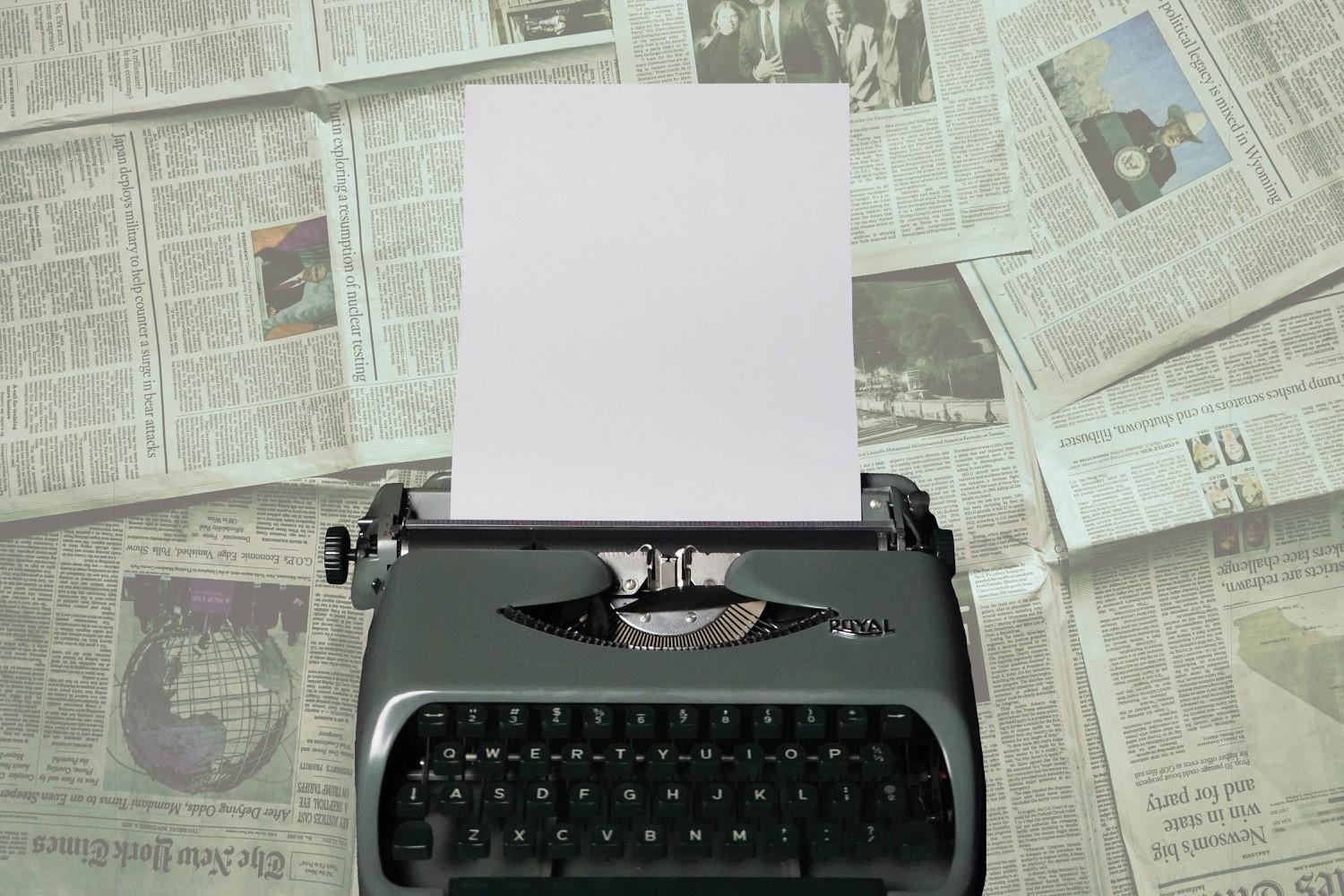
Photo by Betsy Burrow
A mailbox flooded, a ringer turned on, a phone glued to the body — society has grafted these “necessities” onto this generation, the “givens” of living today. Communication has become close to constant in a culture built predominantly on speed and efficiency, fulfilling a deep human craving for easier and more frequent connection.
And yet, in the wake of this miracle of communication inundation, traces of emptiness and loneliness and staleness undeniably remain.
“With social media and everything with phones nowadays, I think it just takes a lot of the joy out of life,” sophomore Grace Kepes said.
Students echoed how a buzz on the hip can become more of a burden than a blessing and how this might call for a change in their habitual communication.
“Our generation, specifically, I think a lot of people are starting to prefer the older practices of life — it’s less stimulating, less addictive,” Kepes said. “A lot of people in our generation are moving toward the written things because we’re all starting to realize how there’s so much more enjoyment and beauty when life is more simple.”
Students Savor Notes
Some students are taking up writing letters, creating cards and sending postcards in pursuit of slower, more intentional communication. First-year Grant Folkerts said these written forms provide a meaningful contrast to digital communication.
“Honestly, the more I’m in college, the more I’m on my phone and the more I see a text message, I just click it up and not really respond to it,” Folkerts said. “So with a letter, it’s like, ‘Oh, it’s right here’ — I get intrigued because it’s covered in an envelope, so it’s more of a mystery.”
Folkerts said he keeps a box full of the written notes he’s received over the years as they feel more genuine than a simple call or text.
Kepes said the amount of time she spends on her phone can start to desensitize her to the messages received, making a simple text no longer stand out.
“When you get a text of someone saying, ‘I love you,’ it just doesn’t feel real because I feel like you’re just on fake things all day,” Kepes said. “But when you get a letter, it feels so much more real because someone had to think, ‘I feel this about someone, I want her to know how I feel so strongly that I’m gonna do the extra 20 minutes that it might take to prove that to her.’”
A Bridge Between Time and Age
Along with increased intentionality and substance, physical communication can act as a more permanent tie to loved ones, English Professor Heather Thomson-Bunn said.
“After my father passed away a year ago, I still had all these letters — I had his handwriting,” Thomson-Bunn said. “And I don’t know, there is something about being able to hold something that they were on.”
Thomson-Bunn said these letters were one of the very first things she saved in the chaos of the Franklin Fire last year.
It may seem disheartening, then, that society has moved away from relying on pen and paper, and letter-writing has slowly gone out of style. Students suggest this rarity might actually allow for a new way to connect with loved ones as older methods become more sacred.
“For the older generations, [physical communication is] more of a big deal, so I’ve noticed that it means a lot when I send my grandparents letters and that kind of thing,” junior Abby Rader said. “It’s just a fun way to connect intergenerationally.”
Slower Process, Better Processing
Similar to note-taking on paper versus on a laptop, handwriting requires the author to make choices that are not required when typing or synthesizing information digitally, Thomson-Bunn said.
The process of letter-writing can benefit the writer as much as the receiver, as it often requires a gradual and meaningful sorting through of thoughts and feelings, Rader said.
“Sometimes I give people an actual letter, sometimes I just read what I wrote,” Rader said. “But I’ve done that many times when there’s just something really hard but I can’t really bring myself to say it out loud.”
Rader said her parents would encourage her to write letters to people she was annoyed with growing up, especially her sister, allowing her to slow down and process her emotions.
Whether writer or receiver, old or young, students and faculty alike note the vital nature of keeping these forms alive — preserving humanity, bridging intergenerational gaps and reinstilling reality and intentionality into a desensitized, modern world.
“When I open a letter from someone, it makes me feel close to them because it’s their handwriting and their hand was on the paper and their pen,” Kepes said. “Knowing that they were on the paper and writing it out, it just makes me feel so much closer to them.”
__________________________________________________
Follow Currents Magazine on X: @PeppCurrents and Instagram: @currentsmagazine
Contact Lila Rendel via email: lila.rendel@pepperdine.edu