
Transparency Item: The Perspectives section of the Graphic is comprised of articles based on opinion. This is the opinion and perspective of the writer.
Many viewers struggle to recall who won a given Super Bowl.
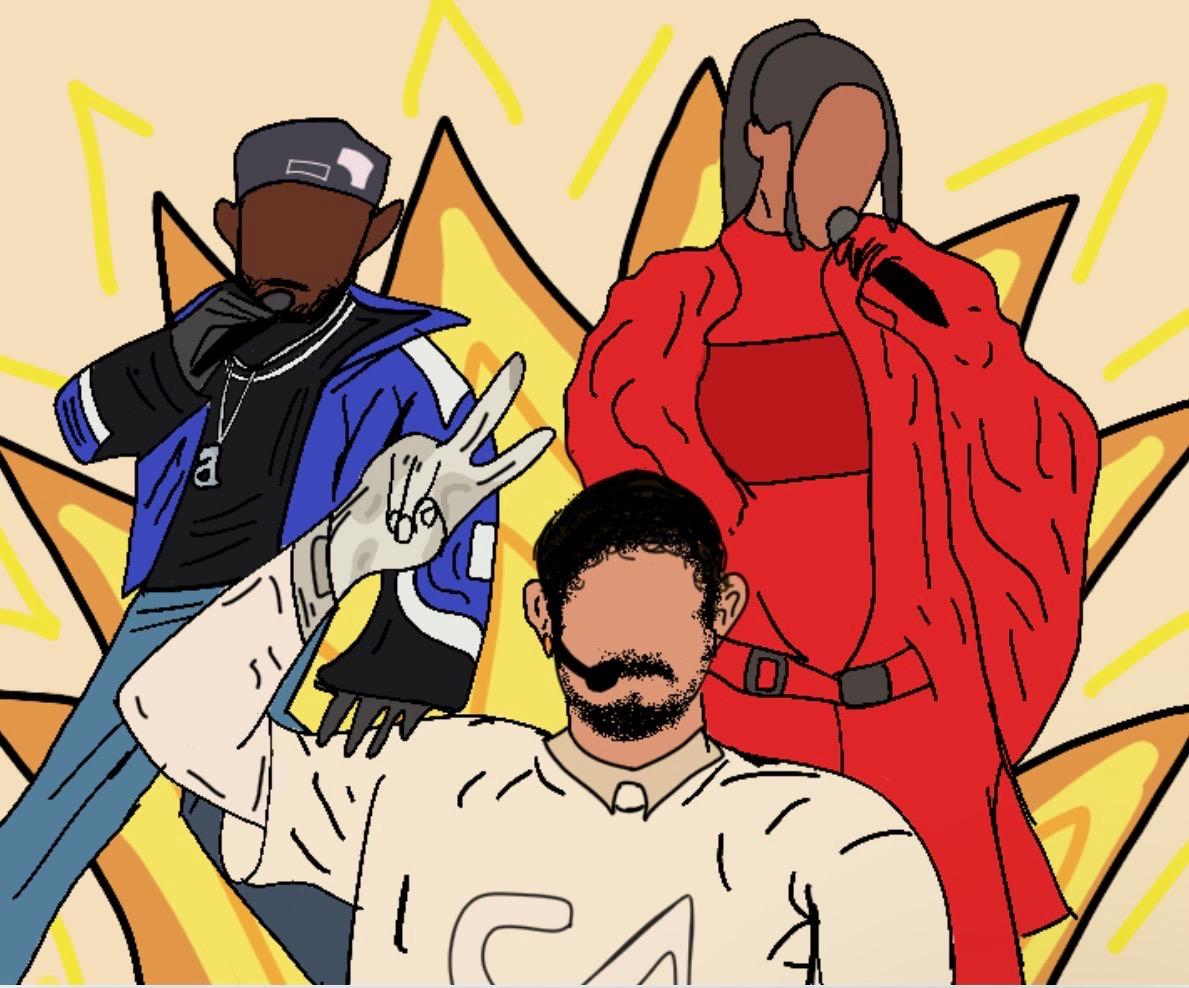
Images tend to endure instead: Rihanna suspended high above the stadium in red, revealing her pregnancy without interrupting a note.
Kendrick Lamar structured his set with deliberate symbolism and tightly controlled narrative pacing, and Bad Bunny commanded the stage largely in Spanish before one of the largest television audiences in the United States.
The halftime show has long been part of the Super Bowl’s spectacle. Recent performances reveal something more significant: The stage now carries enough cultural weight that artistic choices are interpreted as political statements.
Rihanna’s performance in 2023 demonstrated the power of restraint on a stage known for excess. Without any guest appearances or elaborate theatrics, the focus remained on presence and catalog.
Suspended above the field, she turned simplicity into spectacle. The conversation that followed centered on autonomy, control and visibility — proof even minimalism on this platform becomes culturally amplified.
Kendrick Lamar’s 2025 show emphasized intentionality in the halftime shows. Through choreography and layered song selection, the performance reflected narrative coherence rather than a medley of hits.
Critics noted the political and cultural undertones embedded within the visuals according to the New York Times. The halftime stage functioned less as background entertainment and more as a statement of art. Interpretation became part of the experience.
Bad Bunny’s appearance further clarified the stage’s influence.
His halftime show made Super Bowl history by performing primarily in Spanish and centering Latin culture on one of the world’s most-watched stages.
Rather than defaulting to English or purely celebratory spectacle, he concluded his set with a deliberate message of hemispheric inclusivity: after saying “God bless America” in English, he proceeded to name countries across North, Central and South America — including Mexico, Colombia, Venezuela, Chile, Cuba, Uruguay, Canada and more — as dancers carried their flags across the field.
That moment transformed a language choice into cultural symbolism.
The performance didn’t just present a playlist — it reframed “America” as the entire Western Hemisphere, articulating a vision of unity that extended beyond U.S. borders.
The stage design was widely interpreted as more than a neutral artistic decision, according to the Wallpaper. Given recent political rhetoric surrounding U.S. dominance in the Western Hemisphere — most notably comments Donald Trump made reaffirming an “America First” foreign policy framework and asserting U.S. primacy in the region — many commentators viewed the imagery as politically loaded.
The phrase “Western Hemisphere” carries historical weight, most prominently tied to the 1823 Monroe Doctrine, which positioned the Americas as within the United States’ sphere of influence, according to the U.S Naval Institute.
In light of this context, the staging did not read as accidental symbolism but as a visual echo of contemporary political discourse.
The performance’s imagery appeared to reinforce ideas of territorial dominance and hemispheric authority, transforming what might have been an aesthetic spectacle into an implicit political statement.
Backlash emerged from figures who criticized the use of Spanish and questioned its place at a “national” event, while others celebrated the visibility and pride it offered to Latin audiences, according to The Conversation.
The criticism was not rooted in production quality or stage design — it focused on linguistic and cultural representation.
This response reveals the halftime show’s magnitude. If the platform were merely a musical interlude, language choice wouldn’t provoke debate about national identity.
The backlash underscored the reality the Super Bowl halftime show functions as a symbolism within American culture.
The performance operates as a national broadcast of visibility, with viewership reaching tens of millions domestically and globally, according to ESPN. Decisions about language, imagery and narrative are amplified beyond artistic preference.
They are statements about who belongs at the center of the spectacle.
The halftime show has always attracted attention. What distinguishes recent years is not scale, but sensitivity.
The stage has become so culturally significant representation alone can ignite conversation. Artistic expression does not remain confined to entertainment — it enters public discourse.
On college campuses like Pepperdine University, where artistic expression and institutional identity often exist in tension, that dynamic feels familiar.
Last semester, there was controversy surrounding censorship of content displayed in the Weisman, according to previous Graphic reporting. This and other events have demonstrated the idea that what appears on a stage or gallery wall rarely remains just aesthetic. Instead, it becomes a conversation about values, community standards and the boundaries of representation.
___________________
Follow the Graphic on X: @PeppGraphic
Contact Hana Wadlow via email: hana.wadlow@pepperdine.edu or by Instagram: @hana.wadlow