
Art by Mariah Mapa
Transparency Item: The Perspectives section of the Graphic is comprised of articles based on opinion. This is the opinion and perspective of the writer.
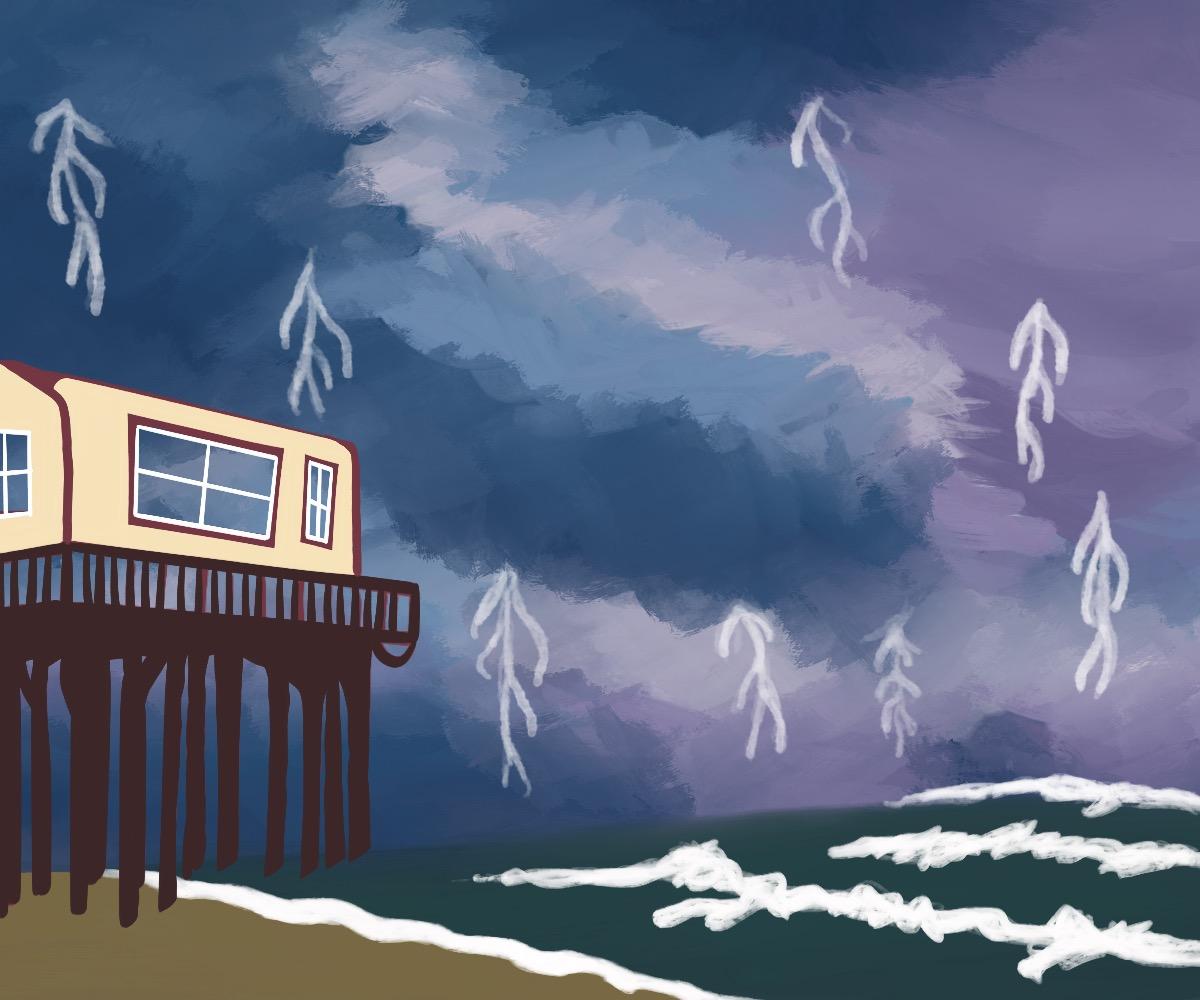
Relentless rain, stuffy dark cumulonimbus clouds barricading the sun, a pervasive chill following electric shortages, the ruins of centuries-old homes, overwhelming loss — all hallmarks of the weather catastrophes that have ravaged the Southwest Pacific Coast over the past year.
During former President Joe Biden‘s administration, the federal government took initiative to combat climate catastrophes, including a commitment to reduce total greenhouse gas emissions by 52% under the Paris Agreement, according to the World Resources Institute.
In July 2025, Congress passed President Donald Trump‘s Big Beautiful Bill, which essentially repealed most of the environmental provisions that dealt with energy and electricity, restrictions on types of fuels and vehicles and manufacturing restrictions put in place to reduce emissions, according to Carbon Brief.
This wasn’t the first time Trump withdrew the United States from climate policies either. During Trump’s first term in July 2017, he withdrew from the Paris Agreement, claiming that it would be detrimental to the country’s economic growth, according to Time Magazine. As a result, the United States is now one out of only four U.N. member countries not part of the agreement, according to Time Magazine.
Interestingly enough, there is a predicted increase in U.S. greenhouse gas emissions by around 190 million metric tons per year in 2030 and 190 million more tons by 2035, according to Princeton University’s Zero Lab. That’s a 2% increase in the amount of emissions in 2030 and 7% in 2035, leading to severe heat waves, floods and droughts.
Intense weather fluctuations have been occurring in the past year at an alarming rate, with experts predicting an upcoming Super El Niño, which is potentially projected to be the most intense Super El Niño ever seen before, according to the World Resources Institute. This month, intense monsoons have ensued all over the Pacific coast, leading to some flash flooding that has resulted in the death of three people, according to MSN.
Two hurricanes terrorized the coasts of Southern California’s coastal cities. Hurricane Marie contributed to intense recent flash flooding and large waves in Southern California’s coastal cities, according to MSN. Orange County went so far as to declare Marie a county-wide emergency on Sept. 17 in light of all the damage the hurricane has inflicted.
While impossible to prove direct causation in the short span of 12 months, the correlation of these dangerous weather patterns to recent policy changes is alarming and points to a treacherous future ahead.
The United Nations Climate Change Panel clearly warns of the dangers of not meeting climate goals, highlighting how passing the 1.5°C (2.7°F) increase in global temperature threshold could be catastrophic, potentially leading to severe droughts, heatwaves and overwhelming rainfall, according to the United Nations. All of these forewarned weather consequences are increasingly becoming a reality.
Retreating from climate responsibilities is certainly not the best course of action during a time stricken by dangerous, extreme weather. Especially today, when it is virtually impossible to ignore its effects, as well as costing the United States over $100 billion from natural disasters just last year, according to ABC.
A 10-year study conducted from 2017 to 2026 reported a loss of $1.5 trillion and 6,550 deaths due to climate-related natural disasters, according to Climate Central. On the flip side, Donald Trump’s Big Beautiful Bill has only saved $488 billion in the past 10 years, according to Economic Insider.
Extreme rainfall and flooding expose the country’s vulnerability to climate change and the possible dangers this trajectory might pose; the decision to retract from international climate cooperation warrants reevaluation. It is imperative to push back against policies that oppose climate action.
Vote in upcoming elections, contact representatives, join advocacy groups, work with environmental nonprofits, engage in virtuous conversations with peers and advocate for climate measures that protect our communities, our homes, our livelihoods and our environment. Our future depends on it.
This story was copy edited by Caitlin Murray.
__________________
Follow the Graphic on X: @PeppGraphic
Contact Abby Samuel via email: abby.samuel@pepperdine.edu or via Instagram: @abbyishereee