
In a day and age where violations of civil liberties and inequalities still exist, it’s important to recognize those diverse Americans who build our nation and make our country great.
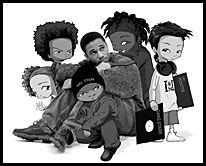 In honor of Black History Month, the Black Student Union would like to recognize the following innovators and pioneers in American history, not just Black history.
The following are just some of the many faces who’ve made names for themselves and for our country. Perhaps less well known than figures like Dr. Martin Luther King Jr. or Malcolm X, these are the next generation of Black men and women paving the way toward greatness.
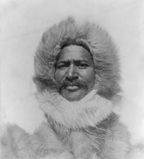 MATTHEW HENSON
Co-discoverer of the North Pole
1866-1955
On April 6, 1909, two Americans and four Eskimos became the first human beings to set foot on the North Pole. On that historic day, it was Henson who first reached the Pole and planted the American flag.
Henson, an able and intelligent seaman, was hired by Robert Peary in the late 1880s and accompanied him on his 1891 Greenland expedition. An expert with sleds and dogs and fluent in the Inuit language, Henson joined Peary off and on for nearly two decades trekking across the Arctic continent in the quest to reach the North Pole.
Although Peary was given all the credit, he praised Henson for his contributions. Despite his effort, Henson was not given the proper recognition he deserved until after his death.
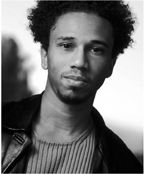 AARON MCGRUDER
Creator of “The Boondocks”
A few years ago, Aaron McGruder, a young college student dissatisfied with both college and the comic-book world, decided to create a comic strip inspired by his love of hip-hop culture that reflected the true racial diversity and complexity of the world in which he lived. The result was “The Boondocks,” the story of a group of African-American city kids adjusting to life in white suburbia.
Through his work, Aaron seeks to provoke thought, help improve the state of racial discourse and expand the types of humor found on comics pages. More than 250 newspapers carry “The Boondocks” comic strip through the Universal Press Syndicate.
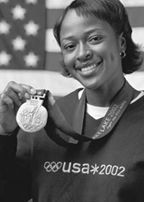 VONETTA FLOWERS
Gold medal winner
Vonetta Flowers became the first African-American to win a gold medal at the Winter Olympics. On Feb. 19, 2002, Flowers and her partner, Jill Bakken, became the first American women to win a gold medal in the bobsled competition with a two-run combined time of one minute, 37.76 seconds.
Never in her wildest dreams did Flowers believe she would become one of the most highly recognized athletes in bobsledding. This was not only a great accomplishment for the United States, but for the world.
Flowers paved the way for many young athletes to follow their dreams, despite the odds that are stacked against them.
JOANN ROBINSON
Civil rights activist
In 1949, after being yelled at by a white bus driver for accidentally sitting in an all white section of the bus, Joanna Robinson vowed to improve racial mistreatment on the buses, but could not find the support she needed for a boycott. Later, she co-founded the Women are Political Committee and joined the MIA executive board. When she heard that Rosa Parks was arrested for refusing to give up her seat, she organized the first Montgomery Bus Boycott by organizing the mass meeting and disseminating more than 15,000 leaflets. Dubbed as one of the most active people during the boycott by a young Dr. Martin Luther King Jr., she drove carpools and edited the National Association for the Advancement of Colored People newspaper, all while being an English teacher at Alabama State College.
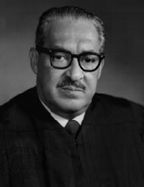 THURGOOD MARSHALL
First African American Supreme Court justice
1908- 1993
Thurgood Marshall is one of the most well-known figures in the history of civil rights in America, and being the first Black Supreme Court justice. Before serving on the Supreme Court, Marshall served as legal director of the NAACP. His tenure, from 1940 to 1961, was a pivotal time for the organization, as overturning racial segregation was one of its prime directives.
Marshall, along with his mentor Charles Hamilton (who was the first Black lawyer to win a case before the Supreme Court), developed a long-term strategy for eradicating segregation in schools. This culminated in the landmark 1954 decision Brown v. The Board of Education, which declared segregation of public schools unconstitutional. By this time, Marshall was an experienced Supreme Court advocate, already having presented many cases before the high court, including challenges against white-only primary elections.
President John F. Kennedy appointed Marshall to the United States Court of Appeals for the Second Circuit in 1961. It was not an easy confirmation: a group of Southern senators held up his confirmation for months, and he served initially under a special appointment made during a Congressional recess. Despite the controversy, President Lyndon Johnson said that appointing Marshall on the Supreme Court was “the right thing to do, the right time to do it, the right man and the right place.”
February 13, 2003