
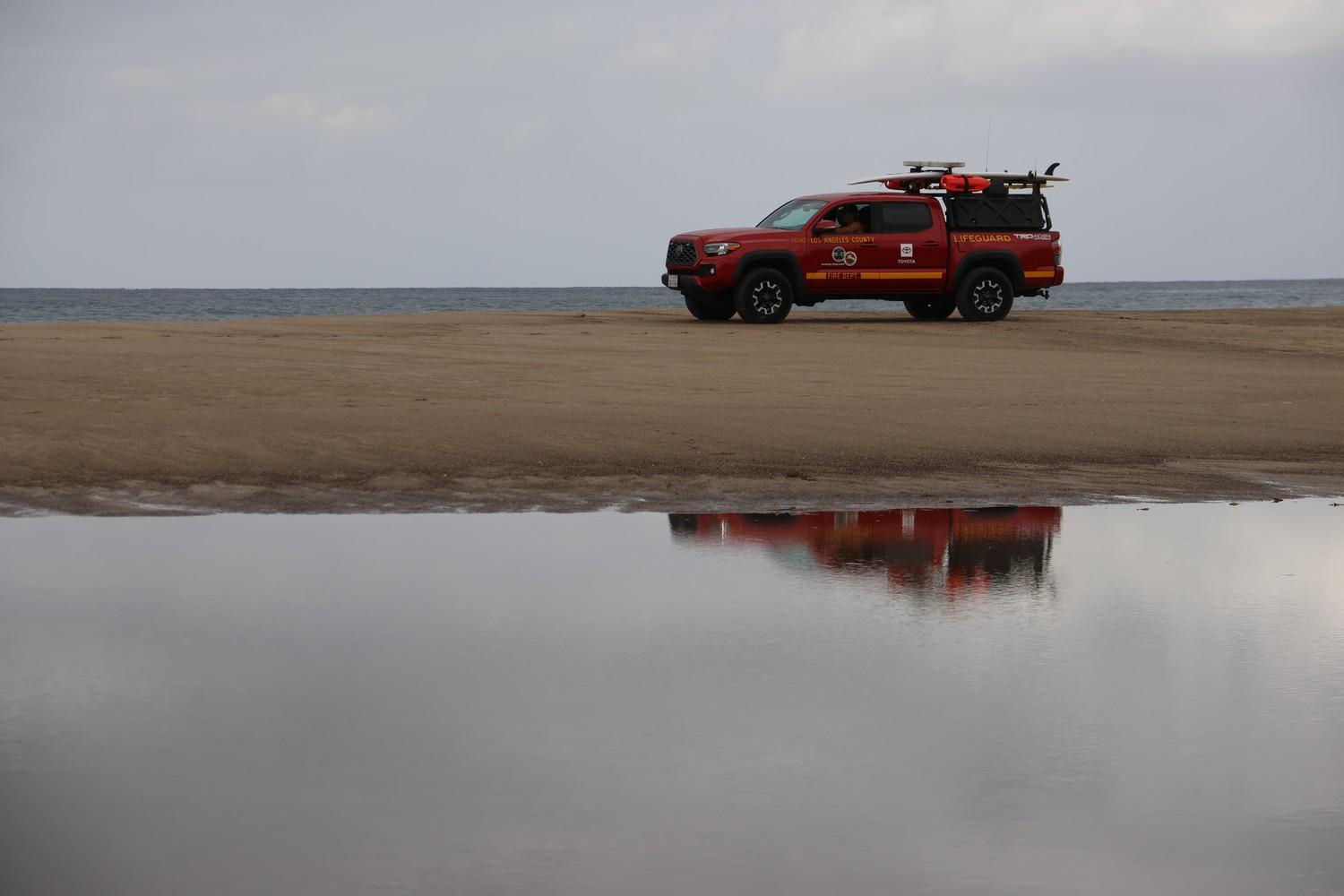
Malibu is constantly changing under the effects of natural disasters and harsh weather. A recent swell caused by El Niño and a Kelvin wave caused flooding at Zuma Beach on Oct. 12. Photos by Amanda Monahan
Griffin Barrett has spent his entire life in Malibu waters.
Living in nearby Studio City until he was 10, Barrett spent every weekend surfing in Malibu. After moving to Malibu, spending his time as a junior lifeguard at Zuma Beach and competing on Malibu High School’s swim team, he was enlightened by a new relationship with the natural world around him.
Little did Barrett know, this would change the trajectory of his life.
“Growing up in Malibu definitely shaped what I want to do later on in life,” Barrett said. “Wanting to do something relating to the ocean and the environment, wanting to pursue a career in that.”
21 Miles of Change
Devoting every spare moment of time to the water, Barrett traces his relationship with the ocean and environment back to surfing sessions and swimming practices. Spending his entire life around Malibu, Barrett has witnessed changes along the coast — changes that aren’t visible to just anyone.
“From doing those things every day throughout over a decade of my life, I’ve noticed so many crazy changes that you would only see over time,” Barrett said.
Barrett has spent many afternoons climbing on rocks along the coast of Malibu’s beaches. During his climbing adventures as a kid, he remembers there being at least 5 foot tall walls of rocks protecting the houses along Broad Beach.
Now, a majority of these rocks have eroded.
“That’s been one of the craziest changes that I’ve seen,” Barrett said. “Now, there’s some areas where there’s no rocks or one or two feet of them.”
Shifting his gaze below the rocks, Barrett has also noticed the beaches he spent his childhood surfing and lifeguarding at are shrinking. When he returns home from Hawaiʻi now, he especially notices the shift.
“There’s so many beloved areas kind of either disappearing or being damaged,” Barrett said.
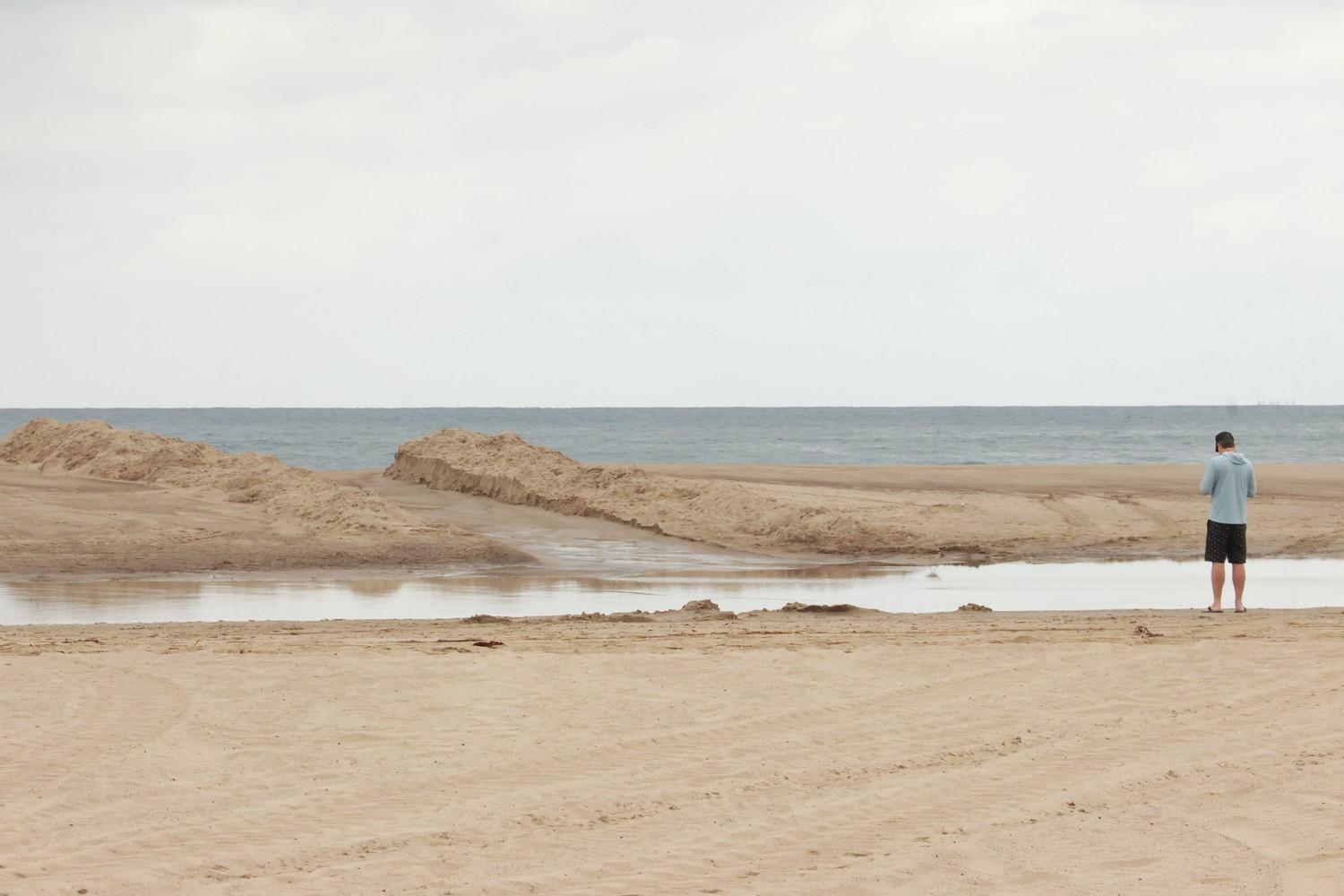
Sand pileups sit above the shore, creating a river flowing onto Zuma Beach on Oct. 12. Griffin Barrett said every time he returns to Malibu, he notices more has changed in the environment.
Each summer he returns home, Barrett said he feels like the sea levels are rising and the beaches look drastically different than his childhood.
“It’s definitely sad going back and just seeing how many things have changed, and not necessarily in a good way,” Barrett said. “It definitely does worry me for the future too — like if all this can change in just one summer, all this happened so recently, how much is gonna change in the next year?”
It’s this negative change that worries Barrett the most.
“I feel like that’s the biggest concern for me,” Barrett said. “What else is gonna happen, and what else is gonna change? Change is good, but not in this way.”
21 Miles of Scenic Beauty — and Care for It
Barrett is not alone in his deep care for the environment in Malibu. He said he has felt camaraderie in his community’s directed attention on the issue through his whole life.
“They [Malibu residents] have to care,” Barrett said. “We’re so close to the ocean and we’re so close to nature — we’re basically in the mountains, on the sea. Any kind of environmental issue that affects us is going to affect us really strongly.”
But these environmental issues extend beyond the shore. Malibu is unique in its fight against both coastal and fire-related issues, Barrett said.
Nestled within the mountains and along the coast, Malibu gets the best of both worlds throughout most of the year. But in certain months, this can also mean facing the worst.
“Malibu is very integrated and built around the environment,” Barrett said. “Anything that happens, any natural processes that happen to the environment, are going to affect us very prominently.”
Leaving the 21 Miles and Adding 2,500 More
Throughout high school, Barrett said he didn’t have the “most amazing” grades. He loved learning, but his passions outside of school and in the water drew most of his time and focus. As his high school years came to a close, he decided to apply to colleges all over the country.
He loved Malibu so deeply throughout his childhood, and he knew leaving would prove difficult. But at the same time, he could experience something new while still having a slice of home nearby: the ocean.
After reviewing his options, Barrett ended up at the University of Hawaiʻi. The school across the Pacific would keep him connected with the same water from his childhood while broadening his cultural and environmental perspectives.
“I wanted to just experience what life was like away from everything that I’ve known,” Barrett said.
As he ventured across the sea to begin his college journey, Barrett switched his major a few times, feeling out of place across different academic disciplines. One day, it all clicked.
After realizing Malibu and Hawaiʻi shared something in common, Barrett settled on a new path: Sustainability.
After spending almost two years living in Hawaiʻi, Barrett grew to recognize the strong focus on environmental movements both among Hawaiian natives and the university.
“As I was going through my college experience, I was like, ‘Wow, it’s really cool how many people are focused on a green future,’” Barrett said.
While many factors contributed to Barrett’s decision to commit to the Sustainability major, there was something unique he found in the approach his university took.
“The main thing that clicked in my head that made me want to switch was the studies here on sustainability are really focused through a Hawaiian perspective,” Barrett said. “They go back to historical farming practices and natural resource management, and I think embracing that type of learning here made me want to switch.”
Though Barrett spent his entire life caring about the environment, this new perception of environmental care intrigued him.
“I wanted to learn a different perspective that wasn’t necessarily a Western perspective,” Barrett said.
This perspective affected Barrett beyond the bounds of the classroom.
“It kind of gave me a new perspective on how to live my life and how to live more sustainably through these old Hawaiian teachings that are being taught again in a modern day sense,” Barrett said.
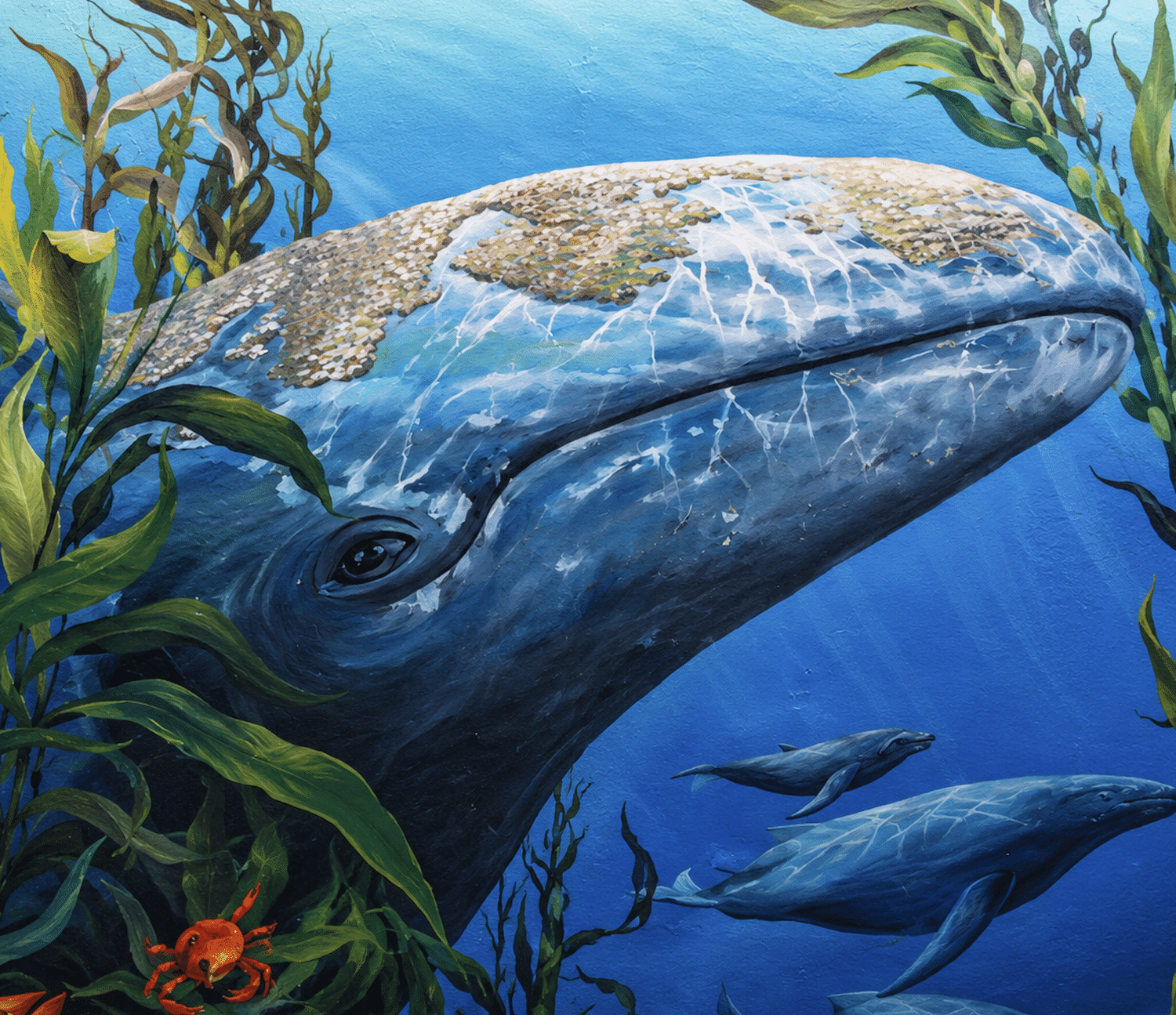
A mural characterizes Malibu Elementary School, emphasizing the local care for the environment. Griffin Barrett said growing up in Malibu influenced his care for the natural world as an adult. Photo by Griffin Pilcher
From Point Dume to “Doom and Gloom”
In the early stages of his Sustainability curriculum, Barrett said he sometimes struggled with the overwhelming feeling of “doom and gloom.”
“It was just a lot of classes centering around all the issues that our world is facing from a broader perspective,” Barrett said. “They went over food insecurity and global warming and all these other issues happening around the globe. That was obviously important to learn about, but it was very doom and gloom, so it started out a little difficult.”
Barrett often found it hard to dismiss this negativity — he could not help but think back to his home, too.
“Learning about these issues, it definitely is scary,” Barrett said. “I know the world is definitely gonna be changing, and all these places that I care about are gonna be changing too.”
But as Barrett expanded his studies, his learning also expanded into the environment.
“I found a lot of great learning opportunities outside of school too,” Barrett said. “Learning opportunities where I’m actually helping issues instead of just learning about them.”
Barrett has now spent two years interning for nonprofits in Hawaiʻi. His first internship, with Hawaiʻi Food + Policy, helped educate him on the legislative process in Hawaiʻi, how farming practices operate and connected him with nonprofits in Hawaiʻi trying to mitigate food insecurity issues.
“I’ve helped draft testimonies for bills regarding farming and incentives for cleaner farming,” Barrett said. “That was a great learning opportunity for me to just go into the world of sustainability and learn about food systems and how we can better them and fix issues of hunger and unhealthy or unnutritional food.”
Barrett’s second internship, which he currently works on, hits especially close to home. In working with Sustainable Coastlines Hawaiʻi, Barrett helps assist in spreading awareness about coastal learning programs in Hawaiʻi.
Barrett said he now creates informational marketing for the public which helps educate residents about plastic pollution, waste management, beach cleanups, marine life, beach etiquette, ocean safety and reusable materials.
“It was a full-circle moment,” Barrett said. “Everything kind of connected, and I was like, ‘OK, this is definitely what I wanna do.’”
However, Barrett also recognizes the irony in ending up where he started after moving across the sea to experience something new.
“I was actually like, ‘Oh, I should go try something new,’ and then I’m right back where I started basically,” Barrett said. “I’m back to my roots.”
Barrett’s work with these organizations has affected his personal life as well.
“They really implemented in me that if everyone makes a bunch of little changes, it can lead to bigger changes in the big picture,” Barrett said.
Living on an island, grocery shopping can grow pretty pricey — even mundane items need to be imported from the mainland. Since his purchases will cost him more than average anyway, Barrett said he tries to be conscious about who his money supports.
“I try to go shopping for my produce at farmers markets and also supporting local brands out here,” Barrett said. “There’s so many great people and companies and organizations who make things sustainably out here, are growing their food sustainably. Just trying to support those types of farmers and businesses has been a big thing for me, leaning away from all this imported, expensive food.”
Keeping up From a Different Coast
Through his education and internship work in Hawaiʻi, Barrett has still kept up with environmental updates back home in Malibu.
“That’s a big thing that my education has taught me to do,” Barrett said. “It’s just like, ‘OK, there’s all this policy being thrown around, how can I look into this and how can I support certain policies that I feel passionate about?’”
Spending the second half of his life growing up in Malibu, Barrett has seen the way the environment has not only changed, but also destroyed, the place he calls home.
But there are two things that Barrett said he can always count on in Malibu: care for the environment and the tight-knit community.
“I don’t know what Malibu would do if they didn’t have such a tight-knit community during those times,” Barrett said. “Everyone just comes together and is there for each other.”
When fires do occur, Barrett said it can be easy to fall back into “doom and gloom” mode.
“I know fires are so hard to prevent, but I just feel like everyone after a fire gets so heated talking about, ‘Oh, this could have been prevented, this company did this or this politician did this,’” Barrett said. “It just makes me so sad to see so many people argue about it. I understand it because people are losing their homes, but I just hope one day in the future people can come together and figure out some kind of preventative solution for fires — even though they are natural disasters — because they happen so frequently.”
The most difficult thing to grapple with, Barrett said, has been people who deny climate change and its effects on the Earth — especially living in two environments that frequently face the effects of climate change.
“Seeing people kind of deny it when there are so many physical changes is just really frustrating,” Barrett said. “There’s proof right there, but there’s people who are still denying it.”
Barrett said he finds it particularly difficult to be a climate change ignorer in the 21st century. Being a part of the first generation to grow up so familiar with the concept is a regular point of reflection for him.
“Growing up in it has also just opened my eyes to how many people are suffering from this,” Barrett said. “There’s so many issues of inequality that goes with it too, and seeing how many people are struggling, it’s definitely been difficult.”
However, in seeing through these difficulties, Barrett has never taken his education for granted — rather, he has used it for good.
“I definitely feel grateful for my education and learning about these issues even though it can be hard,” Barrett said. “Now I have the skills and knowledge to help people and help the future.”
As his work with nonprofits focuses on helping educate others about these issues, it also serves as a point of reflection for Barrett’s own education.
“It’s also made me realize that I’m at a place of privilege to be educated on this,” Barrett said. “I feel like because I’m being educated on these things, I have a moral obligation to strive towards a career that’s gonna help people that are facing issues from climate change.”
Passing on to the “Little Dumes”
On top of his role as a lifeguard, Barrett also serves as a junior lifeguard program instructor every summer, working with kids between the ages of 9 to 16.
As he looks toward the future, Barrett said he hopes he can leave an impression on the kids who may step into the same roles he did.
“A big goal of mine is to inspire those kids that I’m working with,” Barrett said.
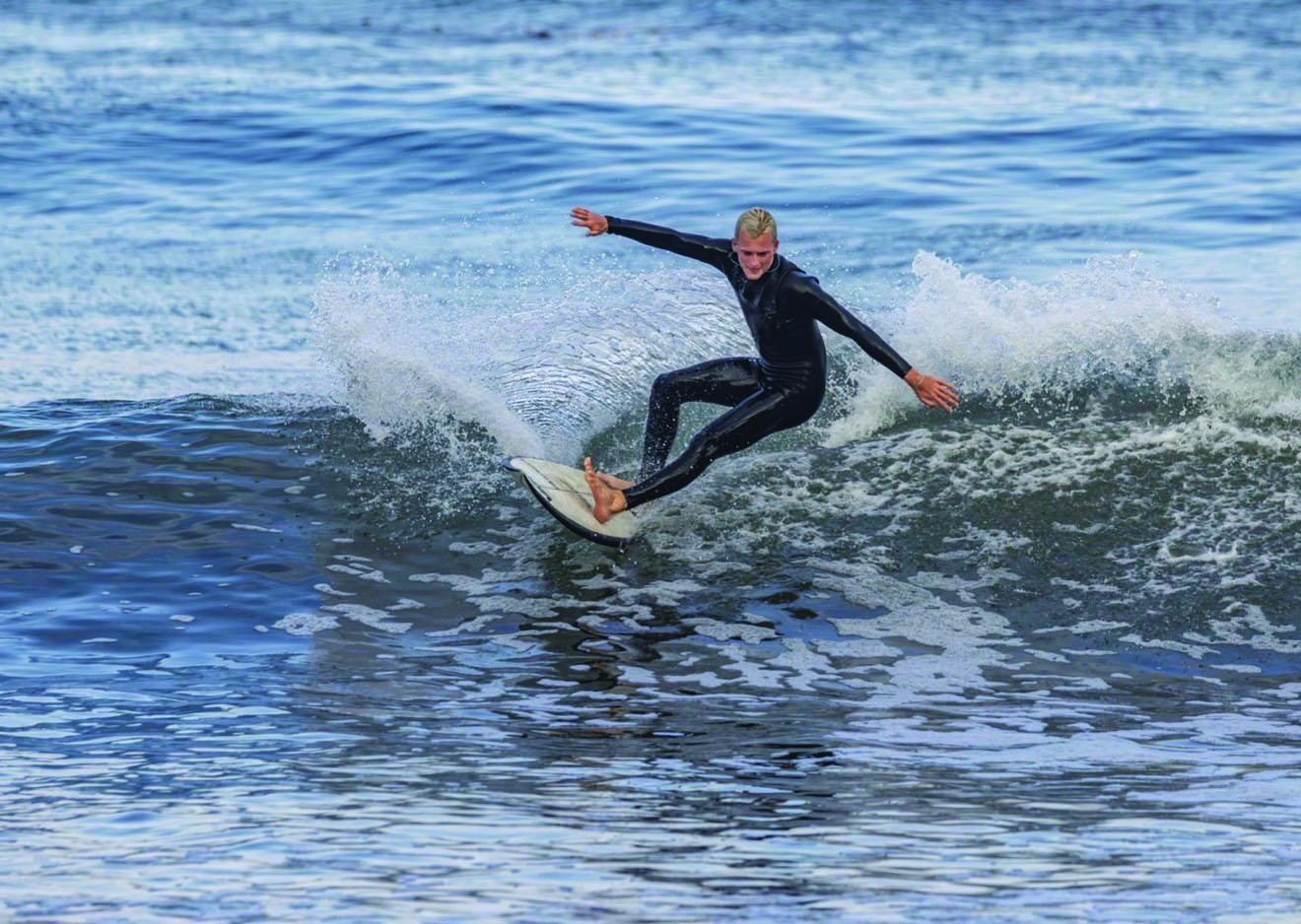
Griffin Barrett fell in love with the coastal city of Malibu at a young age. He followed his love for the beach and used it to shape his future as a junior lifeguard instructor who studied Sustainability at the University of Hawaiʻi. Photo courtesy of Griffin Barrett
Barrett views the kids he works with as more than the next lifeguards — they are the future stewards who will continue the work he has poured his life into.
“I just feel like the youth is the most important investment for our future,” Barrett said. “They’re the ones who are gonna be living on this Earth once we’re gone and they’re gonna be the ones experiencing it next — I just feel like it’s really important to inspire the next generation to also care for their communities and care for the places they’re growing up in.”
Barrett incorporates more than just water safety into his teaching as a junior lifeguard instructor, teaching kids that the place they’re living and working in is just as important, Barrett said.
“I go through the history of the beach and the environment that we’re in,” Barrett said. “Basically how the ocean is the way it is, why we get storms and swells and then how to learn in those environments.”
Although the next generation is young, Barrett has hope for a future generation that can agree on one thing: climate change is real, and it’s affecting our home.
“Our generation is so divided on these topics, and I’m like, ‘OK, maybe there’s hope for the next one,’” Barrett said. “Maybe they can just put their brains together. I feel like with the issue of climate change, people could be brought together on it and not divided on it — people just need to look at the facts and work together around it instead of being so divided on it.”
While Barrett acknowledges that he’s devoted significantly more of his life to this issue than the average person, he believes it’s an issue that everyone should care about — and one that everyone can make a difference in.
“We’re all in it together. We’re all on the same planet,” Barrett said. “People can avoid some of the issues of climate change, but we’re all going through it together. So continue to come together, see that we all have this in common.”
This story was copy edited by Lila Rendel.
_________________________________
Follow the Graphic on X: @PeppGraphic
Contact Amanda Monahan via email: amanda.monahan@pepperdine.edu or via Instagram: @amandamonahanjournalism