
Author
AuthorTitle
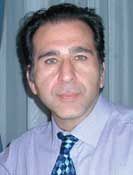 Dr. Mehidi Moslem
Courtesy Jennifer Mohan
The Pepperdine community learned last week about the loss of a professor whose students considered him to be among the most remarkable, fascinating and provocative faculty members.
Dr. Mehdi Moslem, an adjunct professor at the London program for nearly six years, died Dec. 7 from pancreatic cancer. He was 47.
According to his family, Moslem was diagnosed with cancer in August 2004. He left London in September for treatment and surgery in Germany. While not in Germany, Moslem spent his remaining months, from October to December, in Iran with family and friends.
“Dr. Moslem was one of the most influential professors I have ever had,” said junior Katie Vaughan He changed many of my views on the present conflicts in the Middle East.”
Moslem was born in Iraq to an Iranian family. He eventually moved to Iran at the age of 13. When he turned 18, Moslem moved to the United States to further his education.
Moslem’s academic and professional achievements were numerous.
“Mehdi took life very seriously –— he dedicated his life to research and teaching. No matter where he taught, he always had a special relationship with his students,” said Jahan Nikoopour, Moslem’s ex-wife who took care of Moslem in his last months of life.
Moslem received his doctorate in Politics from Oxford University in 1998 — his dissertation was titled, “Factional Politics in the Islamic Republic of Iran.” Previously, he garnered degrees at the University of Washington and Portland State University in International Studies and Political Science respectively.
Soon after receiving his master degree, Moslem was hired as an assistant professor of Politics and International Relations by Eastern Mediterranean University in Northern Cyprus. Upon his return to London in 1999, Moslem served as an analyst and country report author of contemporary Iranian affairs for The Economist in London.
Simultaneously, he was a lecturer and academic director for the European School of Economics.
Up until his death, Moslem was a part-time lecturer at the University of London, Pepperdine University (London) and Temple University (London). At these universities, Moslem taught undergraduate and post-graduate courses in Islamic politics, political development and comparative and international relations of the Middle East. He also wrote Factional Politics in Post-Khomeini Iran, a book about Iran’s modern political history.
Moslem left both an academic and personal impression on most students he taught at the Pepperdine London Program.
“His genius could make you feel foolish in class, but his gentle heart and generous nature always made you feel welcome,” said junior Greg Kopacz. “One could only respect and admire a man like Dr. Moslem.”
Moslem also had a book in progress, “From Restrictive Theocracy to Islamic Democracy: Religion and Politics in Iran under Khatami.” This book was under review for publication by Cambridge University Press; however, it will not be published posthumously.
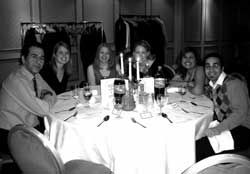
A memorial was held in Stauffer Chapel yesterday. D’Esta Love, the University Chaplain, led the service organized by senior Rebecca Lawson. At the service, students were afforded the opportunity to share their thoughts and memories about Moslem with a small candlelight vigil.
“I am so grateful to all of his students who gave him fulfillment in life and appreciated him the way he was supposed to be appreciated,” Nikoopour said.
02-17-2005