
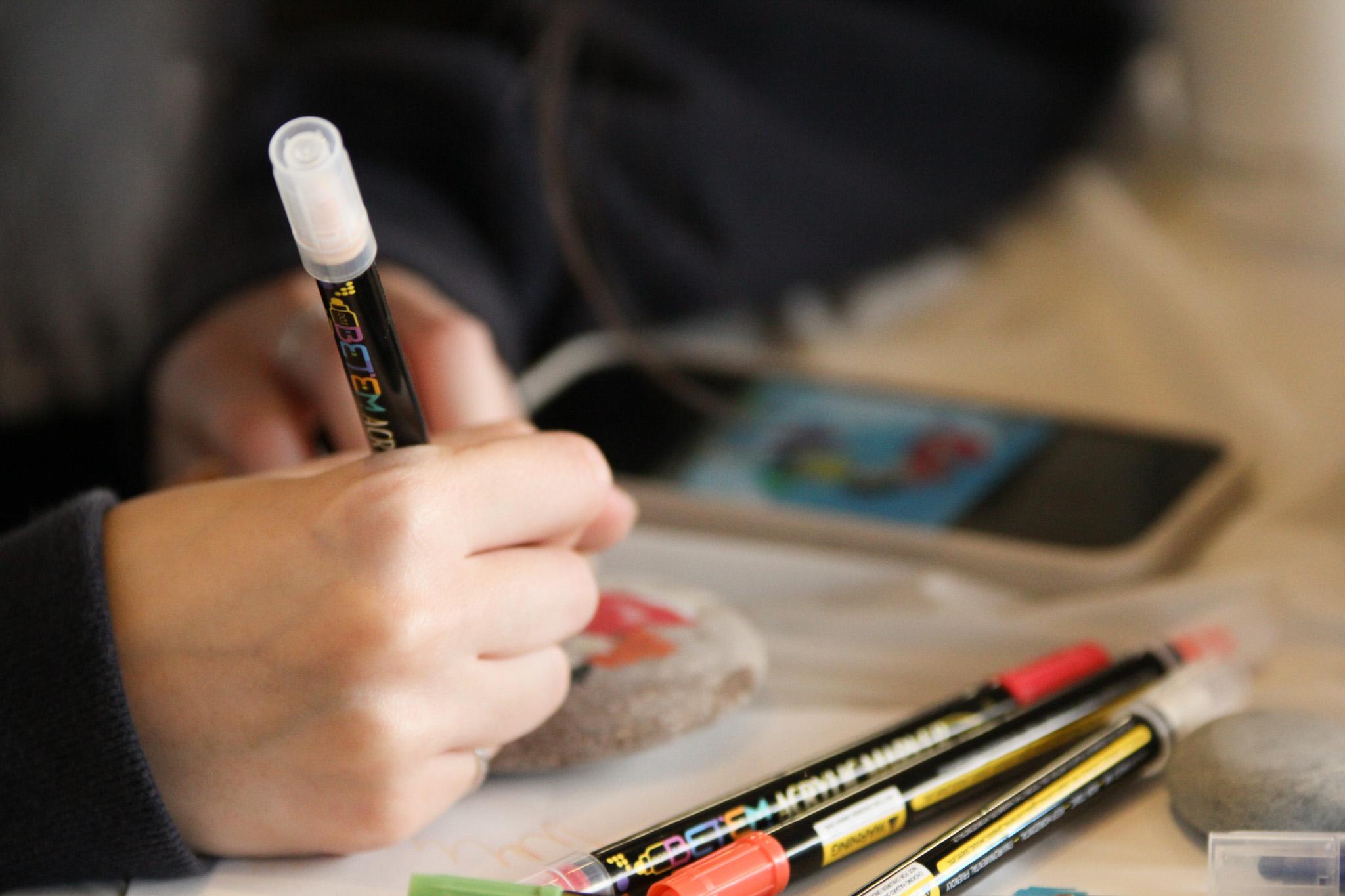
A Pepperdine student paints a rock during a RISE Creative Cafe event on March 22. Through artistic expression, painting offers individuals an opportunity to unwind and explore their creativity. Photo by Olivia Schneider
Creativity is woven within the simplest childhood moments. From coloring outside the lines, dancing to the rhythm of a song or playing make-believe with neighborhood friends, these moments of imagination and self-expression shape people’s interests, habits and sense of identity long before they realize it.
Everyone grows up with their own habits as a child because of the different activities they are exposed to from an early age, sophomore Taylor Wooton said.
“As a kid, I had a lot of hobbies because I was thrown into sports, dancing and activities like that,” Wooton said. “But because of church, I’d continuously gravitate toward crafting because it allowed me to express my creativity and engage with my community.”
As practices formed through childhood hobbies often evolve, they can grow into lifelong passions or stable forms of creative outlets. These can become especially useful through unexpected experiences during adolescence and even adulthood, senior Bella Alfonso said.
Alfonso said she had always loved dancing and playing dress-up with her sister as a child using those outlets to express her creativity. But after undergoing major hip surgery, she began channeling that creativity into arts and crafts.
“It was the summer of my freshman year when I was bedridden from surgery and I needed something to keep myself occupied,” Alfonso said. “I’ve always loved coloring, and when I was scrolling on TikTok, I saw Bobbie Goods’ coloring books and markers and said, ‘You know what, I’m gonna try this,’ and it instantly brought me so much joy.”
Crafting’s Impact Within College
Exploring different creative activities during childhood helps people discover their passions and develop healthy ways to process their emotions. These are skills that can become valuable outlets when navigating major life transitions, such as adjusting to a college setting, Alfonso said.
“As a college student, you’re very busy, and as a freshman, you want to say ‘yes’ to everything, so it’s hard to take time for yourself,” Alfonso said. “So crafting is a great way to balance your time and give back to yourself.”
Crafting and other forms of artistic expression provide students with a chance to step away from the pressures and stress of college life, especially for incoming first-years adjusting to homework, exams and new responsibilities, Alfonso said.
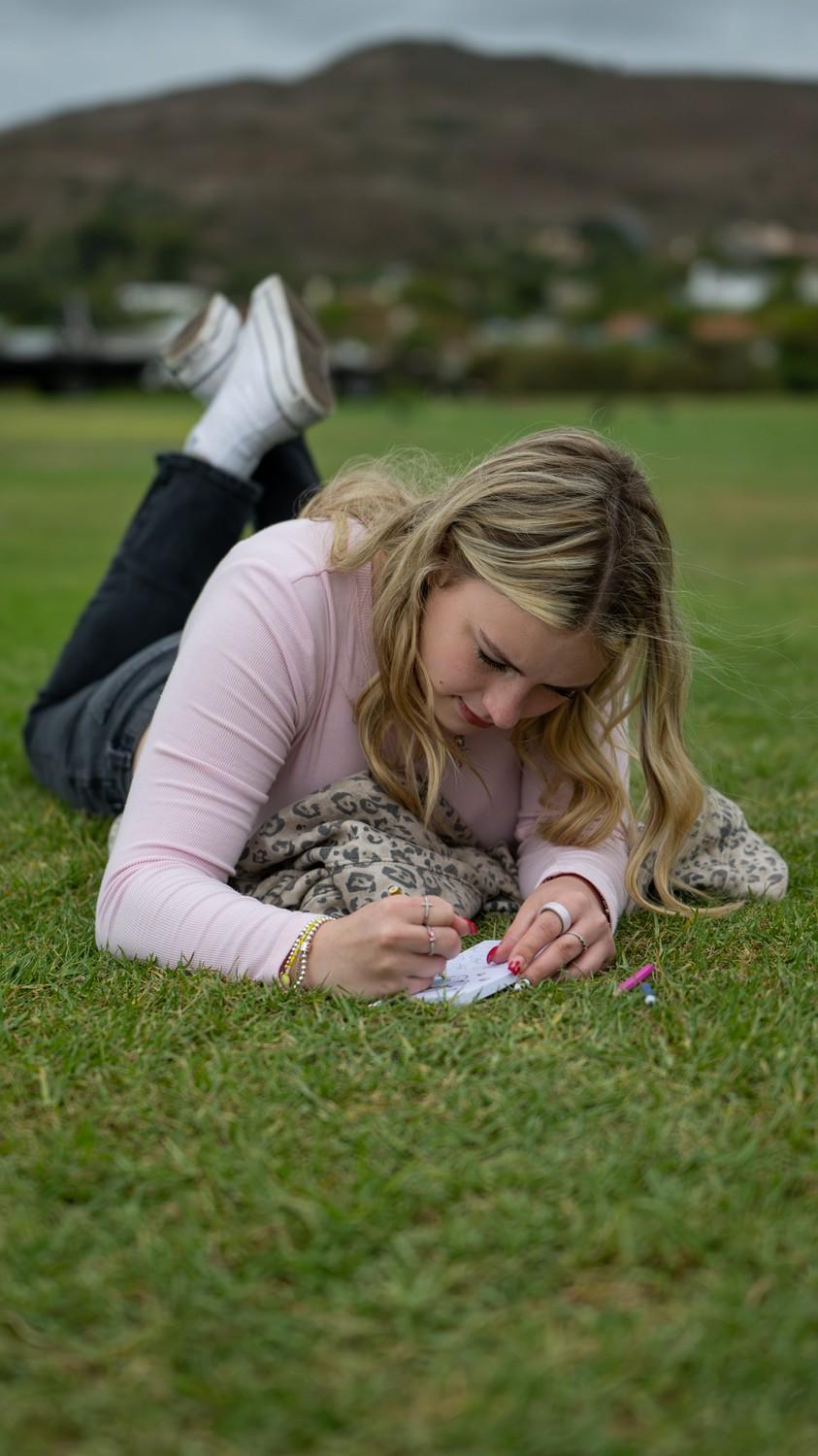
Senior Bella Alfonso colors while lying in the grass at Alumni Park. For Alfonso, coloring served as a creative outlet during a challenging time in her life. Photo by Gabriella Anzelc
Wooton said the benefits of crafting and engaging in artistic mediums extend well beyond the first year of college. As students encounter new academic and personal challenges throughout their college years, creative activities can serve as a consistent outlet for managing stress.
“In college, there’s different levels of stress,” Wooton said. “But crafting gives you a second to pause and take a break from that and allows you to accomplish something just for yourself.”
Pepperdine Taking Action Through RISE
Artistic hobbies do not always have to be discovered or done alone, Wooton said. As a student worker for Pepperdine’s Resilience-Informed Skills Education (RISE) program, she helps host ‘Crafternoons‘ every other Monday in the Student Center on the third floor of The Mountain at Mullin Park.
Wooton said each ‘Crafternoon’ event is designed around the RISE Roadmap to Resilience. By incorporating the program’s core dimensions, ‘Crafternoons’ allow students to engage with the Pepperdine community through various crafts, creating a positive space where students gather to unwind and connect.
“It was so fun to see different people bring out their own personalities and interests into each individual craft we were doing,” Wooton said.
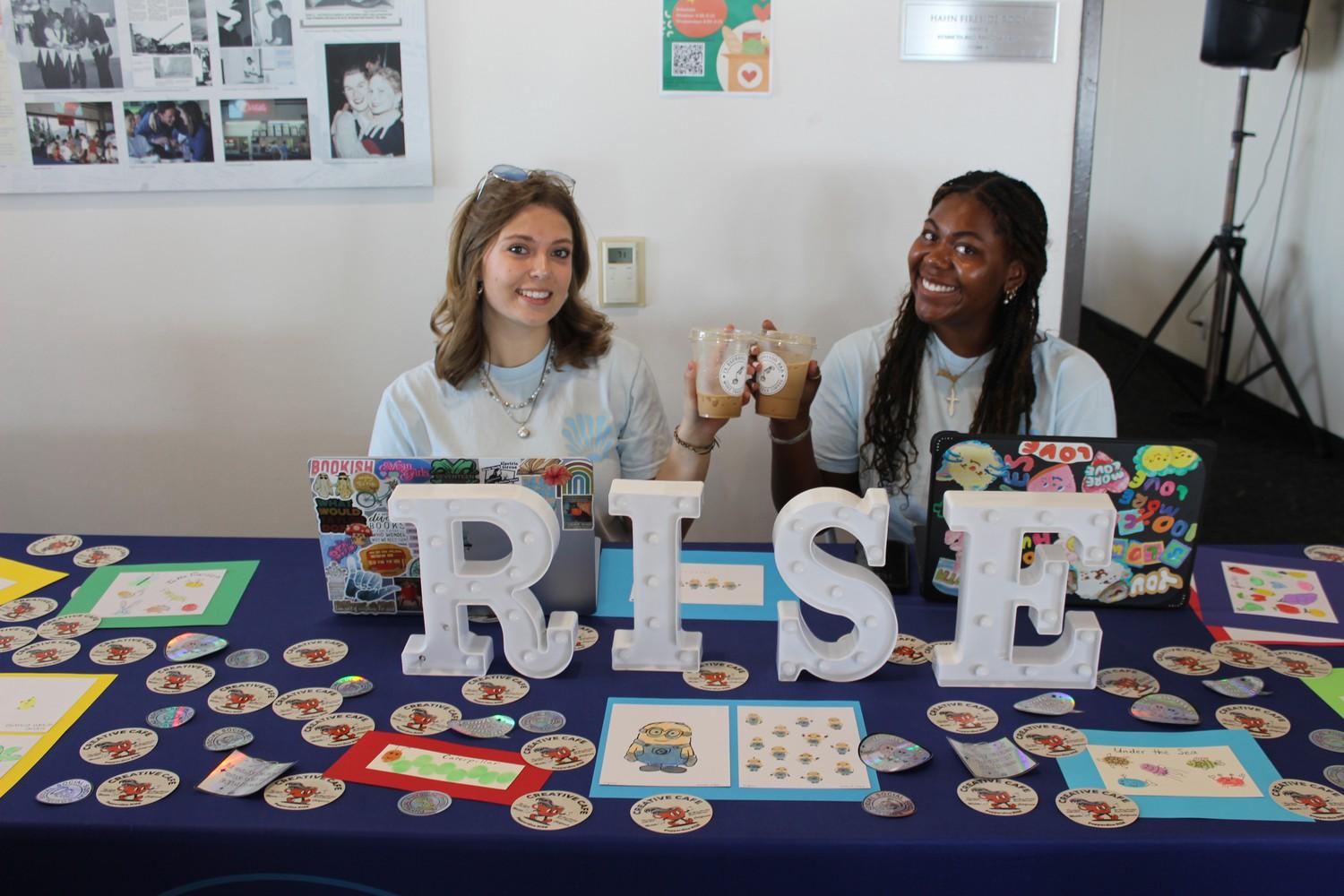
Sophomore Taylor Wooton poses with a RISE coworker at the Creative Cafe event on March 22. Wooton expressed her passion for creativity through her work with RISE, helping coordinate and lead its ‘Crafternoons’ events. Photo courtesy of Taylor Wooton
From coloring and origami to canvas painting and decorating picture frames, Wooton said students are encouraged to explore their creativity within a judgment-free environment with RISE.
“No one’s having any expectation of you,” Wooton said. “It’s something you’re purely doing for yourself, and that’s why we did ‘Crafternoons’ so often, because students simply enjoyed the break and being able to take a moment for themselves and with their friends to do something they had complete control over and genuinely enjoyed.”
Creativity Within Careers
The value of creative hobbies extends beyond college, Wooton and Alfonso said. The skills and emotional outlets students develop through activities like crafting can also shape how they approach their future careers.
Alfonso, a Psychology major with a Sociology minor, hopes to join the FBI’s Behavioral Analysis Unit. She said crafting and coloring could become valuable tools for helping children feel comfortable during difficult conversations within the line of work.
“Crafting would be a big mechanism when talking to victims and especially kids,” Alfonso said. “If I had to talk to children, I would give them a place to be calm because I know they love to color and draw, so these outlets will be able to keep their mind at peace while I have to ask them difficult questions.”
Similarly, Wooton said she hopes to incorporate her passion for scrapbooking into a career working with children in the foster care system. Through her crafting, she said she wants to create a therapeutic environment where children can explore different forms of their own creative expression and discover new ways to communicate and process their emotions.
“I’d love to create an atmosphere to help give children supplies and offer them the opportunity to have their own space with a crafting moment,” Wooton said. “Being able to do this and help them have an outlet is so important because they don’t always have an opportunity to just sit in a space for themselves or even with their friends.”

Art supplies rest in the grass, representing the many mediums through which individuals can explore their creativity. Art can be handmade by all, offering opportunities to express imaginativeness and self-discovery at every stage of life. Photo by Gabriella Anzelc
Creativity Across a Lifetime
The importance of these creative outlets has no limit as they continue to provide purpose, connection and joy later in life, especially for older adults living with dementia, said Katherine Giron, director of Resident Engagement at the Silverado Calabasas Memory Care Community.
“Here at Silverado Calabasas, dementia affects many residents and patients,” Giron said. “But the whole purpose of our living program, Nexus, is to ensure that when they are in their early stages, we can create and foster activities such as Flower Club, Art Club, Helping Hand Club and basically giving our residents that purpose of doing something they enjoy.”
Giron said these creative activities allow residents to reconnect with meaningful moments from earlier in their lives. Whether through painting, crafting or themed discussions during the community’s Travel Club, those experiences often spark memories that may have otherwise remained dormant.
“In March, we talked about Ireland during Travel Club that we hold on Tuesdays where we discuss different areas in different countries,” Giron said. “That sparked a lot of memories with our residents, and one resident in particular had remembered a funny memory of her husband getting lost on the train.”
Giron said moments like these encourage residents to revisit cherished memories and emotions while providing cognitive stimulation that helps delay the onset of dementia.
“We give them purpose when we provide the canvas and the paints and sometimes even a template,” Giron said. “But they always do their own thing. There is no wrong or right answer. We just allow them to flourish however they want.”
From childhood imagination to college stress relief mechanisms, and eventually to preserving memories later in life, creativity becomes more than a hobby. It adapts and evolves into a lifelong outlet that offers the world a chance to slow down, provides a purpose and allows the freedom of self-expression through every stage of life.
_________________________________
Follow the Graphic on X: @PeppGraphic
Contact Genevieve Cantu via email: genevieve.cantu@pepperdine.edu