
Transparency Item: The Perspectives section of the Graphic is comprised of articles based on opinion. This is the opinion and perspective of the writer.
It is undeniable how much influence celebrities have on public opinion.
Celebrity-endorsed advertisements are found to massively increase confidence and quick decision-making in consumers choosing a product, according to Knowledge at Wharton.
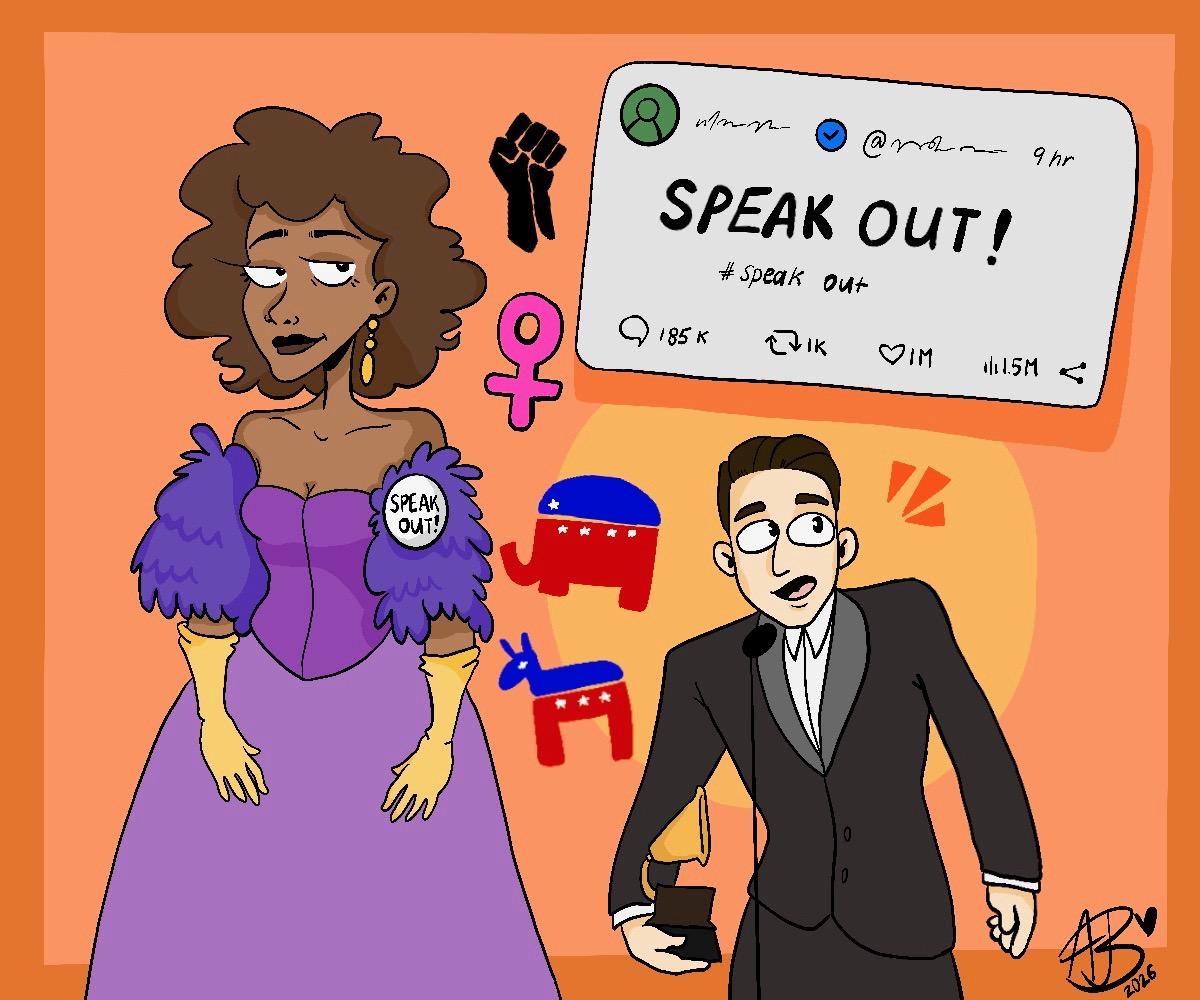
Celebrities also use their influence to impact social and political action, which begs the question — what role do celebrities have in political advocacy, and should they bear any responsibility for social or political issues?
Celebrity activism can cover a wide range of social issues and political problems.
Audrey Hepburn, a prominent actress in the 1950s and 1960s, was a hugely influential social activist. She served as United Nations Children’s Fund (UNICEF) ambassador from 1988 to 1993, and she worked tirelessly to advocate for children’s rights, according to UNICEF.
Many more celebrity artists have followed in Hepburn’s social action footsteps: Michael J. Fox advocates for Parkinson’s disease, Angelina Jolie advocates for refugee relief and Oprah Winfrey advocates for women’s and children’s needs globally.
Like politicians, celebrities are highly publicized individuals and many of them are voters. In many ways, they do and should have a role in politics.
On Sept. 10, 2024, the day after a key presidential debate, Taylor Swift posted to her Instagram page an official endorsement of Kamala Harris for president. In this post, she notably encouraged her audience to do their own candidate research and to register to vote, according to her Instagram.
The vote.gov website reportedly had over 400,000 users the following day compared to the average 30,000 it saw over the week prior to Swift’s post, according to CBS News. This highlighted the huge impact Swift’s statement had on voter registration and demonstrated her role in political advocacy.
Many more celebrities around this time also publicly announced their endorsements for a 2024 presidential candidate, according to Spectrum Local News.
Celebrities have socially acted by wearing “Be Good” pins — a reference to an Immigration and Customs Enforcement (ICE) agent’s recent killing of Renee Good in Minneapolis — to public functions, according to NPR. Additionally, “ICE Out” pins have been worn by celebrities at high-profile events, such as the Golden Globes, as a response to ICE activities, according to NPR.
Celebrity artists have also spoken out about political and social problems at high profile events. At the Grammy Awards, several artists highlighted political and social unrest in their speeches, such as Bad Bunny saying “ICE Out” and Billie Eilish commenting “No one is illegal on stolen land,” according to The New York Times.
Many artists like Mark Ruffalo and Billie Eilish have worn pins in support of Artists4Ceasefire for the past 2 years highlighting their continued political engagement, according to NPR. This passionate organization lobbies for a permanent ceasefire between Palestine and Israel, according to Artists4Ceasfire.
From protesting, such as wearing pins, to widespread social action, like financially contributing to foundations, celebrity artists demonstrate they can benefit others and be a force for good when it comes to social and political influence.
Celebrities engaging in politics can give their audiences, such as college students, more political exposure too. This increased exposure can help students get a better understanding of social service and leadership, possibly encouraging them to get more involved in social change.
Studies show a correlation between increased civic engagement, such as volunteering and participating with community organizations, leads to better psychological, behavioral and physical well-being, according to the National Library of Medicine.
Celebrity artists have the same dilemmas we do concerning how they dedicate their efforts and time to promote social good, except with more responsibility and publicity.
There is a greater call for celebrity artists to increase their political involvement and social advocacy because the publicity they receive when they advocate for these issues promotes social transformation and civic engagement in their audiences.
In many ways, the political atmosphere is polarized, according to the Carnegie Endowment. This makes promoting civic issues such as helping those in need, refugee relief and advocating for children’s rights more important than ever.
Celebrity artists should increase their social and political advocacy, and audiences should take inspiration from this by increasing their participation in democracy and finding their own ways to support social good.
___________________
Follow the Graphic on X: @PeppGraphic
Contact Alyssa Hunnicutt via email: alyssa.hunnicutt@pepperdine.edu