
Although they joined more than 1,000 other firefighters in battling the recent blaze, life at station 88 is usually more subdued.
By Kimiko Martinez
Lifestyles Editor
They drop everything when the bell goes off. But most days, the life of the firefighters at Los Angeles County Fire Station 88 is fairly simple.
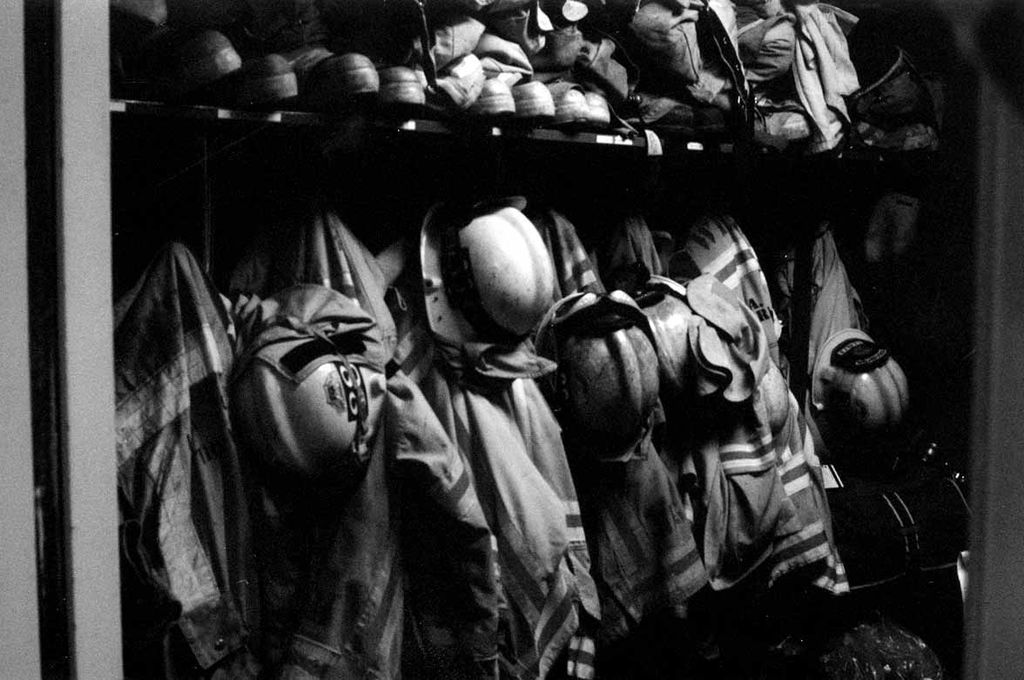
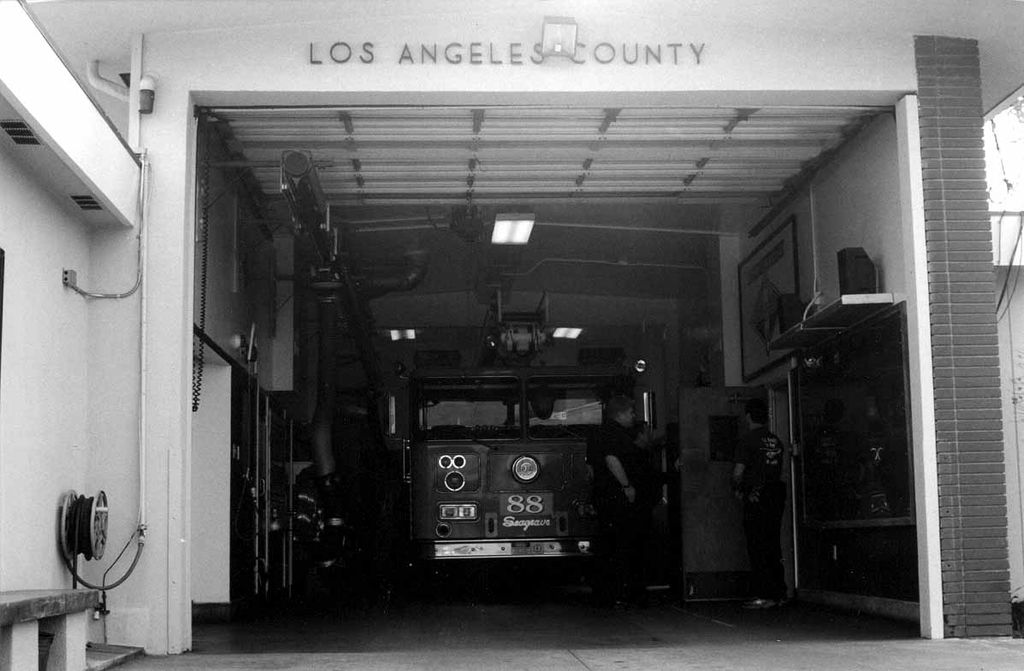
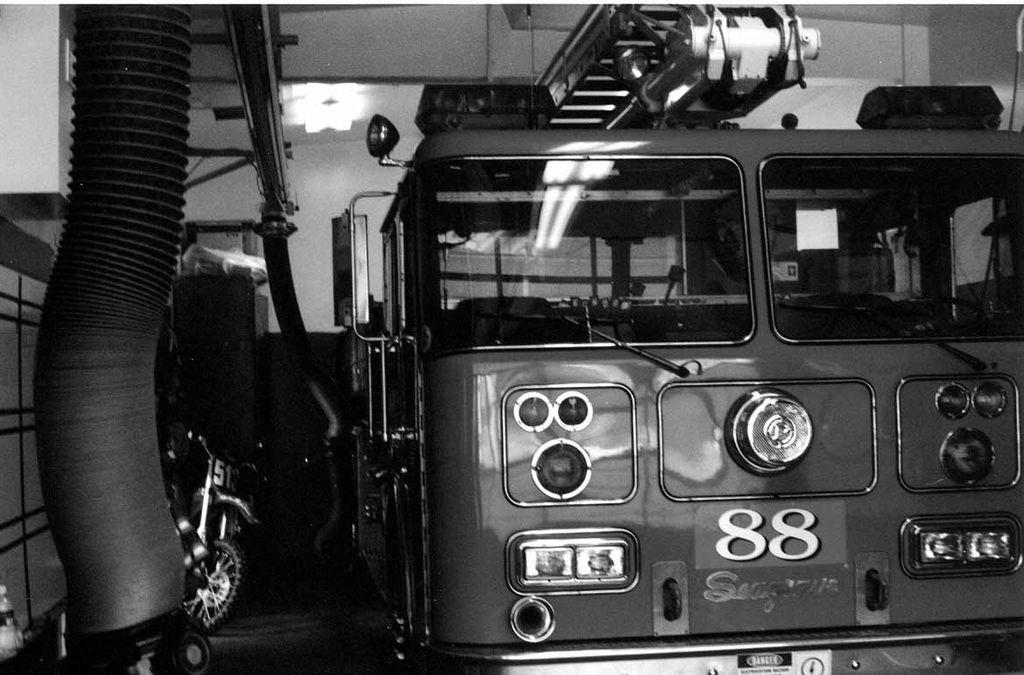 Not nearly as glamorous or eventful as what many in the public would imagine, a typical day at the firehouse might entail checking equipment, doing drills, getting in some exercise and cleaning toilets. But whether it’s housework or bench presses, the minute that bell sounds, the men of station 88, tucked away behind the Ralphs shopping center, are out the door.
“Percentage-wise we probably have the same amount of fire calls as other companies,” Captain Lynn Mohr said, explaining, however, that Malibu’s small population translates to fewer total calls. “We’re not as busy as lots of the (Los Angeles) city stations, but we’re not as slow as some stations, either. It’s a nice balance, because if you’re too slow, it’s boring. But if you’re too busy, you don’t sleep at night.”
Although most people think of these men in full gear battling blazes, firefighter Dave Salhus, who has been at the station since 1996, said approximately 90 percent of the calls they go out on are medical calls or traffic accidents.
Early last week, however, the company joined more than 1,000 other firefighters from San Diego to San Luis Obispo to fight the flames that numerous media outlets claimed were “threatening multi-million dollar homes.”
 “The media blows it out of proportion,” said Mohr, who’s been at station 88 for 12 years, and was around for the big brush fires that threatened the Malibu campus in 1993 and 1996.
“Back in the day, the Indians and animals all just moved out of the way. No one tried to put out fires. It was a natural part of life,” Mohr said, reflecting on the evolution of firefighting. “And if people have all the brush around their property cleared, they’re probably going to be okay.”
He added that because of where the fire started the threat was limited.
“The ocean is a natural barrier,” he continued. “(The fire) could only go so far. It’s when fires start over the hill when things can get bad.”
Firefighter Mark Rotondo agreed.
“This one was actually pretty small,” Rotondo said, who’s been around since 1995. “The main fire was pretty much one day, one night.”
 And some men at the fire never even got to see any action.
“There’s a lot of waiting and hanging out,” Rotondo said, explaining the organization and work distribution at a typical wildfire. “The flow chart is huge.”
With fire season reaching its peak in late summer/early fall, last week’s series of brush fires in Latigo, Corral and Trancas Canyons, which burned approximately 1,300 acres, came somewhat as a surprise.
But that element of surprise comes with the territory.
And it’s what many of these men live for.
Malibu Fire Facts
JAN. 2003: A wind-whipped blaze, possibly sparked by power lines, damages three homes and forces evacuations of scores of residences in Encinal and Decker canyons.
OCT. 1996: A brush fire ignited by an arcing power line destroys 10 homes in Malibu, Calabasas Canyon and Corral Canyon, and burns close to 14,000 acres.
NOV. 1993: Three people die when an arson-suspected blaze roars through Calabasas, Malibu, Topanga Canyon, Rambla Pacifica and Tuna Canyon, destroying 388 structures, including 268 homes. Flames encircled the Malibu campus and threatened several structures. More than 20 students lost their homes and possessions, and damage is estimated at more than $219 million, including nearly $11 million in public property losses.
OCT. 1985: Two arson-caused brush fires in Malibu, one on Piuma Road and another in Decker Canyon, destroy six homes, causing more than $1 million in damage.
OCT. 1982: A wind-driven fire sweeps from Dayton Canyon, northeast of Canoga Park, to the Malibu coast, destroying 97 homes and burning 54,000 acres. Damage is estimated at $8.5 million.
Source: Los Angeles Times archives
January 16, 2003