
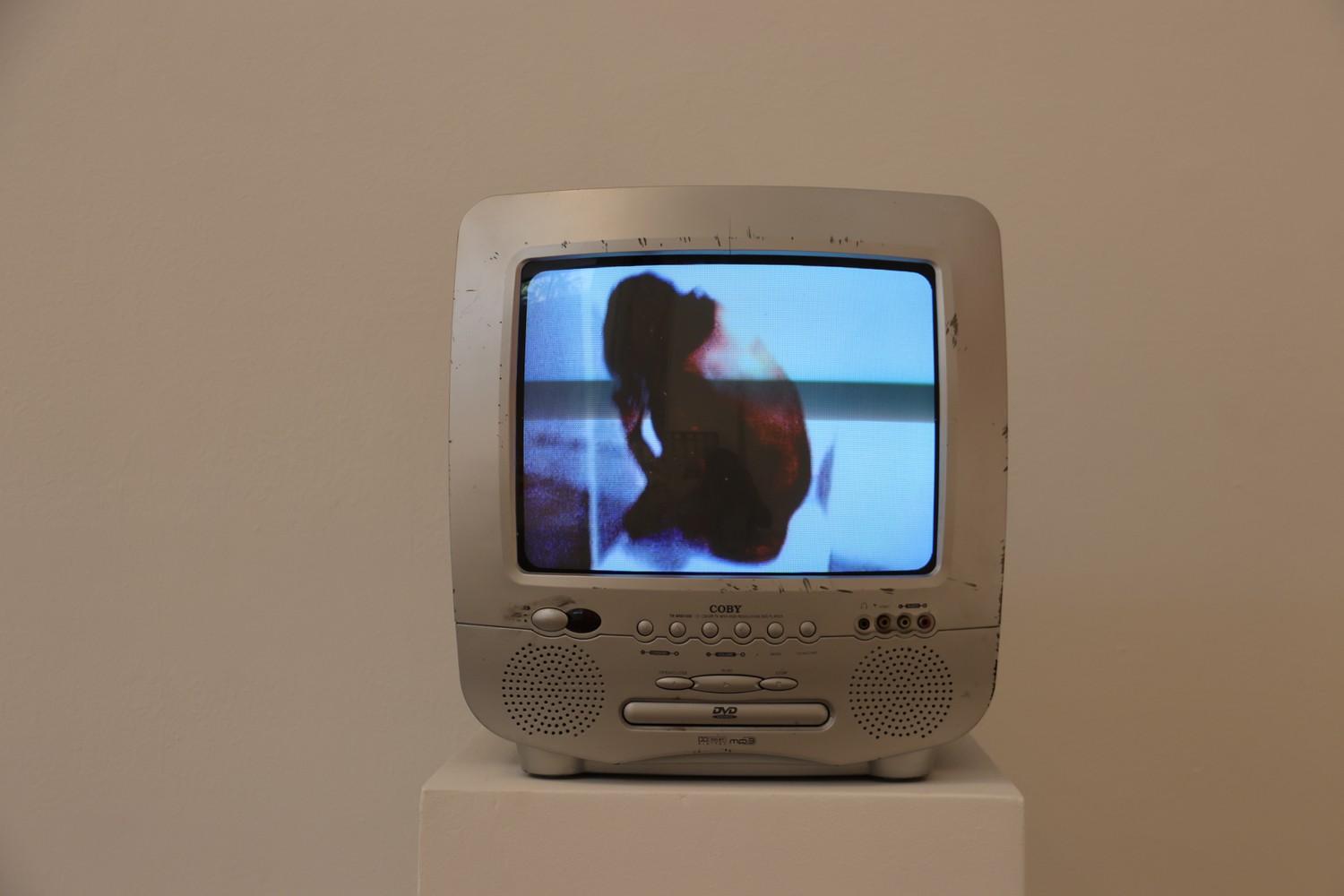
“Valley Girl” by senior Julianna Thomas displayed in the Weisman Museum for the annual senior exhibition April 16. Thomas said she believes artists should have the freedom to create what they choose, backed by a university that fully supports their expression. Photos by Soliel Lara Aponte.
“Ridiculous.”
That is how senior Art major Julianna Thomas said she felt when she first heard the news about the censorship of the Frederick R. Weisman exhibition “Hold My Hand in Yours.”
Pepperdine authorities censored the Weisman Museum’s most recent exhibition Oct 8, which was scheduled until March 29. The University shut down the exhibition after publicly explicit political content was displayed, which the University said it avoids due to its nonprofit status. Over 20 artists removed their featured art in protest against the censorship — this led to the Weisman removing the exhibition as a whole, according to previous Graphic reporting.
With only a few weeks until graduation, Thomas said she hasn’t let the censorship change the way she has created art at Pepperdine. If anything, the incident heightened awareness of how students’ artwork might be perceived.
“I’m not scared of the administration, but it’s also definitely something that we think about more now,” Thomas said.
Thomas, fellow senior Art major Sebastian Gonzalez and Studio Art Professor Ty Pownall reflected on their initial emotions and how those feelings evolved into conversations surrounding freedom of expression in the community and the role Pepperdine plays in protecting student artwork.
Initial Shock
For Gonzalez, learning the news of the censorship came through a friend. At first, he lacked knowledge of the situation, though once he pieced it all together, Gonzalez said he felt conflicted.
Gonzalez raised the question of “whether the cost was worth it.” He expressed how the University worked hard to build a reputation within the artistic community, but now due to a disagreement over what should and shouldn’t be displayed in the museum, Gonzalez said the University’s credibility might be damaged.
“You want to be a space for people to show their creative endeavors, not the opposite,” Gonzalez said.
The thought of censorship had never crossed Thomas’ mind in her four years at Pepperdine. When she and other students in the art program tried to create a peaceful congregation to speak up about the censorship, Pepperdine Advancement quickly shut them down.
“It just felt like we weren’t being taken seriously,” Thomas said. “That was the most disheartening thing. People just kind of saw it as a non-issue — I think that factored even more into our anger.”
Thomas said no fear was instilled; instead, the art students found support from faculty and students in other programs, which was all they needed.
“The sheer number of people who express their distaste makes the students feel really safe and really seen,” Thomas said.
Pownall said as a professor, he felt bewildered by the censorship. He explained seniors and students from other art classes met with art faculty to go over what had transpired. Pownall also stated his position on the matter during these conversations.
“I told them, ‘I’ll back you no matter what,’ to help those students be the best artists they can be,” Pownall said.
Feelings That Linger
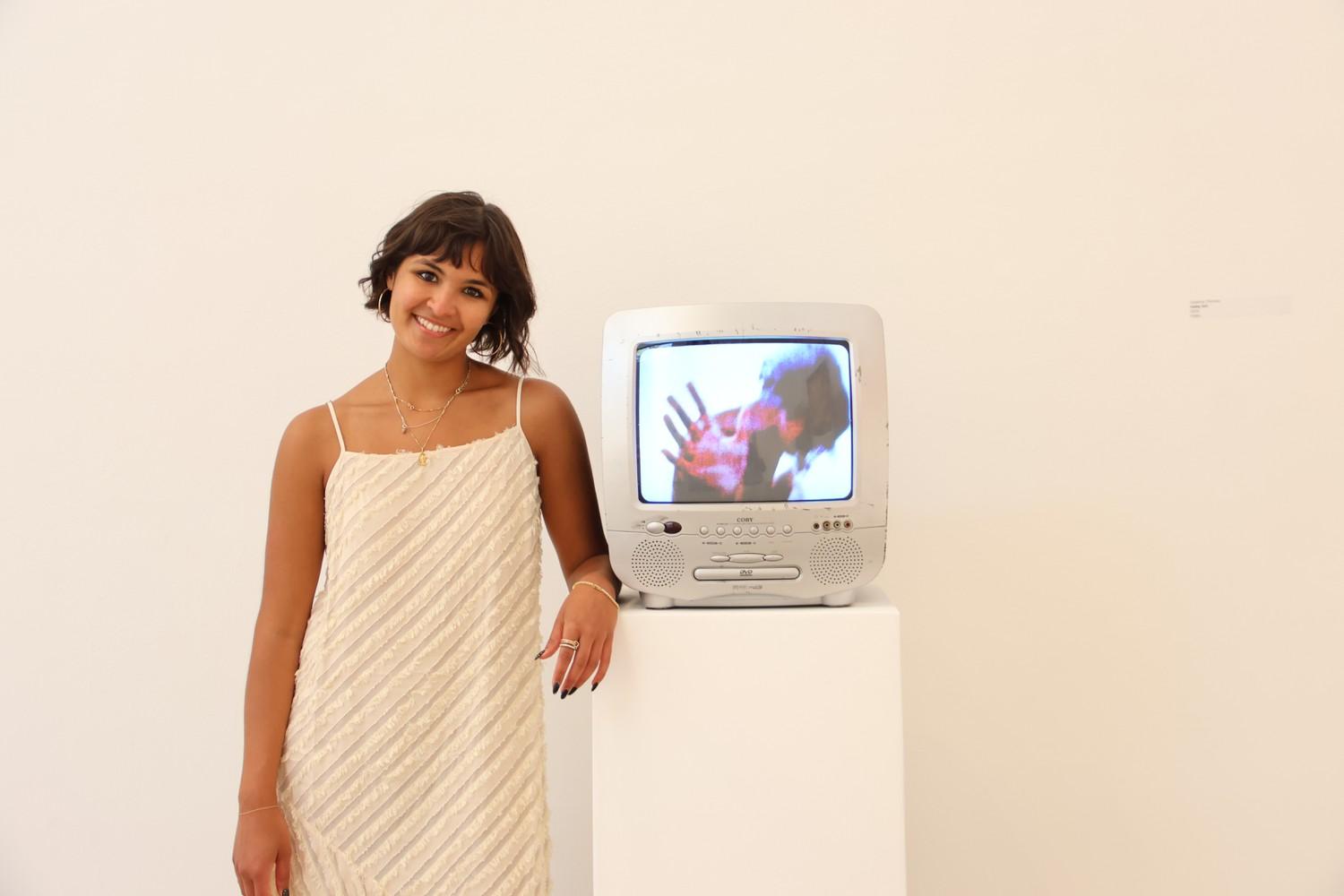
Senior Julianna Thomas stands next to her art piece, “Valley Girl.”
Simultaneously, the Weisman censorship has prompted more candid discussions about artistic freedom, and many art students feel worried — but not intimidated — and more driven to keep advocating for free speech on campus, according to Pownall.
“Concerned about being censored, maybe, but avoidant, no,” Gonzalez said. “It makes them [students] want to continue to start conversations.”
Pownall said he saw his students express anger, but now, mostly disappointment. He understands his students feeling “very powerless to make any sort of change.”
“They are mostly disappointed in a school that, for the most part, they love,” Pownall said. “With anything you love, you get really disappointed.”
Now, students and faculty are demanding ways for Pepperdine to prioritize its art students and honor their work as personal expression.
Pownall and faculty have advocated for structural reforms to the Weisman Museum’s management in the aftermath of the censoring, claiming that the museum’s existing position under the University’s fundraising arm, Advancement, contradicts its function as an artistic space.
Pownall said housing the museum under Advancement rather than under the Provost’s Office is “very atypical” and can result in circumstances like these, when artistic choices are impacted by outside interests. He said the institution’s response has come in silence.
“No one is stopping by my office to tell me that they’re excited about my ideas,” Pownall said.
Thomas said she agrees with this proposed change of management, emphasizing the Weisman should be overseen by academics and not Advancement.
“It needs to be considered a part of the academic institution, as most museums are,” Thomas said.
Thomas stressed how museums are one of the few places in the larger art world where the significance and message of the piece are prioritized before financial gain. Therefore, for society as a whole, museums are of extreme value and almost sacred places.
“Pepperdine needs to just center the Art Department as something to be proud of, not something that they’re ashamed of,” Thomas said.
Thomas said for her senior exhibition, which displays a piece called “Valley Girl” at the Weisman on April 16 at 5 p.m., she will display a piece that will probably turn heads.
“It will be a film about how we are constantly scrutinizing our bodies and of the current beauty standards,” Thomas said. “I’m naked in a display case, but nothing is showing, but I know not everyone is going to like it, and that’s fine.”
Gonzalez said he also has future concerns about the broader issue with the University’s administration, questioning whether financial goals are taking precedence over support for student expression, even while the Art Department itself has continued to be successful and encouraging.
“I get it, money is important; I really understand that,” Gonzalez said. “But these are your students. You should be taking care of us.”
___________________
Follow the Graphic on X: @PeppGraphic
Contact Soliel Lara Aponte via email: soliel.lara@pepperdine.edu or via Instagram @soliellarajournalism